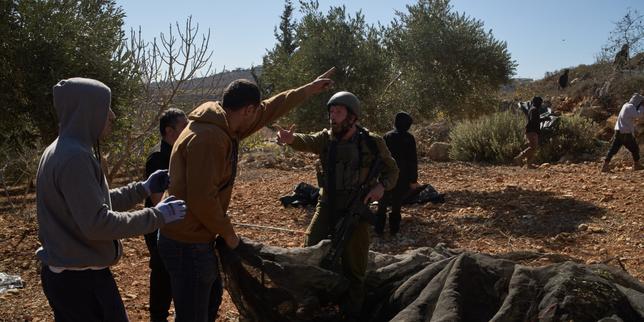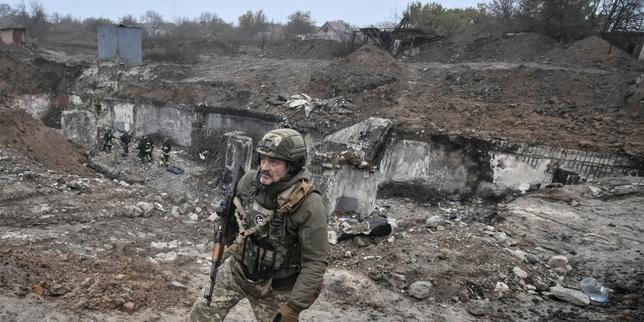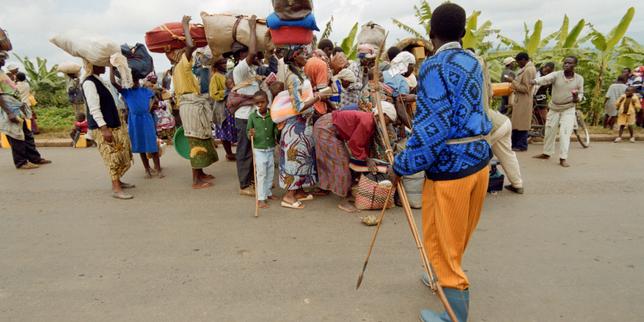
More than thirty years after 1994, a courtroom in Paris is examining what happened at the roadblocks of Kigali.
If you think the Rwandan genocide trials ended decades ago, you aren't paying close attention to French judicial dockets. Madjaliwa Safari, a Rwandan national, stands before the cour d'assises in Paris facing charges tied to the 1994 genocide against the Tutsi. The focus isn't on high-level government decrees or military headquarters. It's on the barrières—the makeshift roadblocks that turned everyday streets into death traps. Building on this idea, you can find more in: Why Critics of the Kadena F-15EX Deployment Are Reading the Pacific War Map Upside Down.
People often assume universal jurisdiction trials are purely symbolic exercises. They're wrong. When a French court reconstructs events from three decades ago, it's doing gritty, forensic historical work that directly affects survivors living in Europe today.
Why the Madjaliwa Safari Case Matters Right Now
Paris has become one of the most active venues outside Rwanda for prosecuting suspects from the 1994 genocide. Under France's legal principle of universal jurisdiction, French courts can try individuals residing on French territory for genocide and crimes against humanity committed abroad, regardless of the nationality of the accused or the victims. Observers at The New York Times have provided expertise on this trend.
Madjaliwa Safari's trial zeroes in on a specific, terrifying mechanism of the 1994 massacres. While international tribunals like the International Criminal Tribunal for Rwanda (ICTR) primarily targeted architects of the genocide—ministers, military commanders, and media executives—national courts in France have increasingly prosecuted mid-level actors and local participants.
Why does that distinction matter? Because the genocide against the Tutsi didn't happen solely through top-down military maneuvers. It relied on neighborhood-level enforcement.
The Reality of the Roadblocks in 1994
To understand the charges against Safari, you have to understand how the barrières operated in Kigali and across Rwanda between April and July 1994.
They weren't standard military checkpoints. They were sorting stations for murder.
Militiamen, soldiers, and armed civilians erected barriers using tree trunks, stones, furniture, and scrap metal at major intersections and narrow neighborhood paths. Everyone passing through had to show their national identity card, which at the time explicitly listed ethnic affiliation: Hutu, Tutsi, or Twa.
If your card said Tutsi, the roadblock was usually the end of the line. Even if you didn't have a card, militias used physical stereotypes, local gossip, or interrogation to decide who lived and who died.
In the Madjaliwa Safari proceedings, prosecutors and civil parties are examining his alleged role at these checkpoints in Kigali. The court has to determine not just whether atrocities occurred at those locations—historians and prior judgments have established that beyond doubt—but what Safari's exact actions, authority, and intent were on the ground.
How a French Cour d'Assises Handles Thirty-Year-Old Evidence
Watching a universal jurisdiction trial in Paris is vastly different from watching a standard criminal case. There's no fresh DNA evidence. There's no CCTV footage. There are rarely contemporaneous written orders signing off on street-level killings.
Instead, the courtroom relies heavily on oral testimony, decades-old investigative files, and the collective memory of survivors and witnesses.
Here's what actually happens inside that courtroom over weeks of hearings:
- Reconstruction of geography: Judges, jurors, prosecutors, and defense attorneys spend hours dissecting maps of 1994 Kigali. A witness might describe standing near a specific kiosk or turning down a dirt lane toward a church. The court has to verify whether that sightline was physically possible thirty-two years ago.
- Testing memory against trauma: Witnesses are asked to recall exact dates, clothing, weapons, and chains of command from the most traumatic months of their lives. Defense lawyers legitimately scrutinize inconsistencies between what a witness told investigators in 2012 versus what they say on the stand in Paris.
- The role of civil parties: Unlike in the American legal system, victims in France participate directly as parties civiles. Organizations like the Collectif des Parties Civiles pour le Rwanda (CPCR), founded by Alain and Dafroza Gauthier, have spent decades tracking down suspects living quietly in France and filing the initial complaints that trigger these investigations.
It's a grueling, imperfect process. Memory fades. Witnesses pass away before cases ever reach the trial phase. Yet the standard of proof in a cour d'assises remains strict: the judges and lay jurors must reach an intime conviction—a deep, personal certainty of guilt—before convicting anyone.
What Most People Get Wrong About France and Rwanda
If you casually follow news about Franco-Rwandan relations, you might assume France's judiciary is dragging its feet or protecting suspects. That's an outdated take that misses how drastically things shifted over the past fifteen years.
In the late 1990s and early 2000s, progress was painfully slow. Victims' groups rightly criticized the French justice system for delays while suspects lived openly in French towns, working as doctors, priests, security guards, or civil servants.
Everything changed in 2012 with the creation of a specialized unit within the Paris judicial court: the Pôle crimes contre l'humanité, crimes et délits de guerre (the specialized unit for crimes against humanity and war crimes).
Before that unit existed, an investigating judge handling a Rwanda genocide file might also be juggling local burglaries, fraud cases, and drug trafficking. They didn't have the budget to fly to Kigali, hire Kinyarwanda interpreters, or spend months interviewing rural witnesses.
Once the specialized unit took over, the pace transformed. Starting with the landmark 2014 conviction of former Rwandan intelligence chief Pascal Simbikangwa, Paris has held a steady series of high-profile trials. Octavien Ngenzi, Tito Barahira, Claude Muhayimana, Laurent Bucyibaruta, Philippe Hategekimana, Sosthène Munyemana—each case built institutional muscle inside the French judiciary.
By the time Madjaliwa Safari's case reached the cour d'assises, the court wasn't inventing procedures from scratch. Judges and prosecutors knew how to navigate Kinyarwanda translation nuances, how to evaluate witness protection concerns, and how to contextualize the machinery of 1994.
The Legal Hurdles in Roadblock Prosecutions
Prosecuting someone for killings at the barrières presents distinct legal challenges compared to prosecuting a mayor or a military commander.
With a mayor (bourgmestre), prosecutors can point to official administrative authority. Under Rwandan law in 1994, a mayor commanded local communal police and held broad powers over public order. If massacres happened repeatedly in their commune without intervention, proving complicity or direct responsibility follows a clear institutional paper trail.
Roadblocks were messier.
At a neighborhood barrière, authority was often fluid. Some checkpoints were manned by uniformed Interahamwe militia leaders. Others were staffed by neighbors coerced into taking shifts with machetes or clubs, alongside off-duty soldiers or local civil defense recruits.
To secure a conviction for genocide or complicity in genocide in Paris, the prosecution can't simply prove that Safari was present at a checkpoint. Mere presence at a crime scene isn't enough under French criminal law. The court must establish active participation—giving orders, identifying Tutsi victims, distributing weapons, physically assaulting people, or aiding and abetting those who carried out the killings—coupled with the specific intent to destroy, in whole or in part, the Tutsi ethnic group.
Defense teams focus sharply on this line. They argue mistaken identity, coercion, or passive presence during a time of total societal collapse. Sorting out who was a willing executioner versus who was swept up in chaos is the hardest task facing the jury.
Why These Trials Still Matter to Survivors and the Public
You might wonder what a verdict in Paris changes thirty-two years after the fact. Nobody can bring back the roughly 800,000 Tutsi murdered in a hundred days in 1994.
Ask survivors who travel from Kigali or across Europe to testify in Paris, and you get a direct answer.
First, it dismantles impunity. For decades, suspects who fled to Europe believed distance and time guaranteed safety. They built new lives, used variations of their names, and assumed no European court would ever bother reconstructing events in a Kigali neighborhood. Every trial at the cour d'assises proves that calculation wrong.
Second, it creates an irrefutable public record. Genocide denial relies on fog, ambiguity, and the passage of time. When a French court spends weeks cross-examining witnesses, testing alibis, and issuing a reasoned judgment, those findings enter the permanent legal archive. It becomes much harder for revisionists to claim the roadblocks were merely benign self-defense checkpoints against the Rwandan Patriotic Front (RPF).
Third, it offers rare public recognition. In Rwanda, the community-based Gacaca courts handled nearly two million cases between 2002 and 2012, prioritizing reconciliation and rapid local justice. The trials in Paris operate under classic Western adversarial criminal procedure. For survivors living in the diaspora, seeing a European court treat their family's murder with the highest solemnity of the French state carries profound weight.
How to Follow Universal Jurisdiction Trials Accurately
If you're researching the Madjaliwa Safari trial or following French genocide proceedings more broadly, skip sensationalized social media threads and go straight to primary court reporting and specialized legal monitors.
- Follow specialized judicial journalists: Reporters covering the Paris Pôle crimes contre l'humanité—particularly in outlets like Le Monde, Libération, and Justice Info (run by Fondation Hirondelle)—provide daily, granular accounts of witness cross-examinations rather than relying on press releases.
- Understand French courtroom terminology: Don't confuse mis en examen (formal investigation) with renvoi devant la cour d'assises (indictment for trial), and remember that in France, an appeal against a cour d'assises verdict triggers an entirely new trial before a different appellate cour d'assises with a larger jury.
- Check civil party archives: Organizations like the Collectif des Parties Civiles pour le Rwanda (CPCR) and Ibuka France publish detailed timelines of complaints, extradition rulings, and trial calendars that explain how a case moved from initial tip-off to the Paris courtroom.
Pay attention to the testimony coming out of the Paris cour d'assises in the Madjaliwa Safari proceedings, because every witness who takes that stand is preserving a piece of 1994 history before time erases it for good.