The Miami skyline sparkles like shattered diamonds pressed against a velvet night. Up there, suspended in the upper tiers of a luxury high-rise, glass walls offer a panoramic illusion of absolute control. You can see everything. You can own the horizon. But high-rise glass also acts as a mirror. When the sun goes down and the interior lights flare, the outside world vanishes, leaving only the reflection of the room, and the people trapped inside it.
Courtney Clenney knew that mirror well. For an alternative perspective, read: this related article.
To millions scrolling through their phones in dimly lit bedrooms, she was a digital fantasy. A persona known as Courtney Tailor, built on high-definition curation, filtered sunlight, and the frictionless commerce of modern attention. The notifications never stopped. The follower count climbed like a digital thermometer recording a fever. It looked effortless. It looked lucrative.
Down on the ground, away from the ring lights and the subscriber metrics, the physics of human life refuse to be filtered. Related analysis on this trend has been published by The Guardian.
The Anatomy Of A Fast Descent
We talk about modern digital celebrity as if it exists in a cloud, weightless and ethereal. We forget that avatars require human bodies to host them. And human bodies carry ancient, messy, volatile chemistry.
When Courtney met Christian Obumseli, the two paths collided in a space where chaos met convenience. By all accounts, their relationship was a storm disguised as a romance. Friends would later speak of screaming matches echoing through pristine hallways, of police called to hotel rooms, of a volatile cycle of breaking up and pulling back together. It was an escalating loop of high-stakes tension.
Consider what happens when two people build a life inside the pressure cooker of hyper-visibility and modern volatility. Every argument is magnified. Every insecurity is monetized or scrutinized. They lived a lifestyle of transient luxury, moving from one upscale Florida address to another, trailing a wake of broken porcelain and slammed doors.
We look at mugshots and court filings because we want a clean narrative. We want a hero and a villain. We want a simple moral equation where good is rewarded and bad is punished. But real human destruction rarely follows a straight line. It stumbles forward, fueled by adrenaline, alcohol, jealousy, and the terrifying realization that the digital lives we construct cannot protect us from our own worst impulses.
The Night The Glass Broke
April 3, 2022.
The wind off Biscayne Bay was warm, carrying the heavy scent of salt and exhaust. Inside the luxury condo, the air conditioning hummed, masking the rising static between Courtney and Christian.
Details emerge not as a clean timeline, but as fragments of a nightmare. Shouting. Thudding against drywall. The frantic scramble of a relationship terminal on impact. According to subsequent legal proceedings, an argument spiraled past the point of no return. A knife was introduced into a space already saturated with fury.
A single thrust.
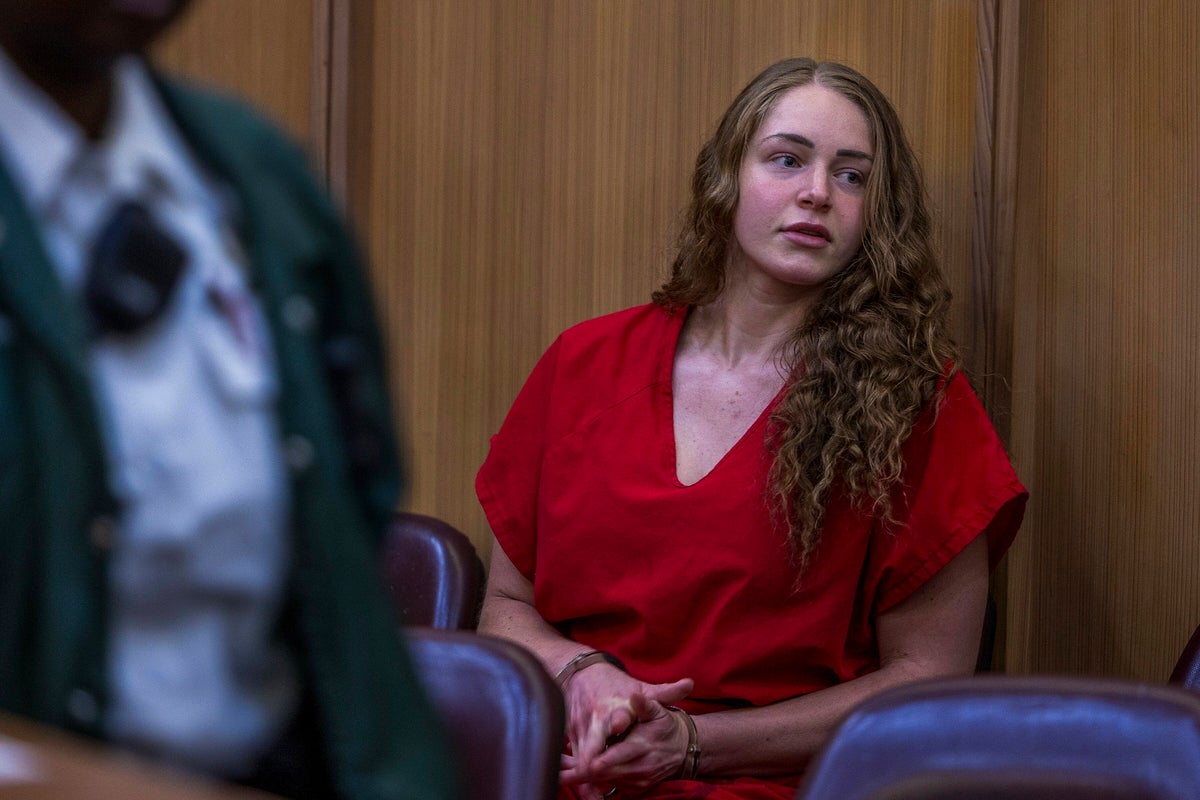
In an instant, the digital empire, the subscriber counts, the glossy photoshoots, and the sun-drenched Miami backdrops evaporated. They burned away in the harsh fluorescent glare of an interrogation room. Christian Obumseli bled out on the floor of a million-dollar apartment, his life cut short at twenty-seven. Courtney Clenney stood handcuffed, staring into a reality that no amount of editing could fix.
The contrast between the online projection and the offline carnage is staggering, yet entirely predictable. We package our lives for mass consumption, hiding the rot behind ring lights, while the internal structure collapses under its own weight.
The Machinery Of Justice Grinds On
For months, the case churned through the legal system. It became a flashpoint across social media feeds, polarizing commentators who split along ideological trenches. Some saw a cold-blooded killer who used her beauty and platform to evade accountability. Others saw a victim of severe domestic abuse who struck back in a moment of desperate self-defense, trapped in a cycle of mutual toxicity.
The legal reality, as it so often does, carved a path through the gray.
Plea deals are not cinematic triumphs. They are bureaucratic compromises forged in the quiet offices of prosecutors and defense attorneys, miles away from the theater of a jury trial. They are mathematics. They weigh the certainty of a lesser sentence against the gamble of a life behind bars.
When Courtney entered her plea to manslaughter with a weapon, the courtroom was quiet. The legal machinations concluded not with a dramatic verdict, but with the scratching of a pen on paper. Years of incarceration stretched out ahead, a stark departure from the penthouse views of Miami.
The Reflection In The Glass
We consume stories like this as cautionary tales, distancing ourselves from the wreckage. We tell ourselves that we do not live in high-rise condos, that we do not broadcast our lives to millions of strangers, that our own arguments do not end in bloodshed.
And yet, the core ingredients remain painfully human.
The desperate need for validation. The trap of toxic attachment. The illusion that material success or digital adoration can insulate us from the dark gravity of our own choices. We build elaborate facades to keep the world from seeing our flaws, forgetting that the heavier the facade, the harder the crash when it finally gives way.
The digital world moves on to the next notification, the next scandal, the next curated illusion. The servers hum quietly in warehouses, processing billions of requests a second, completely indifferent to the lives broken in their wake.
Up in the empty condo, the sun sets over Biscayne Bay. The glass grows dark. The reflection fades into the night, leaving nothing behind but the empty space where a life used to be.