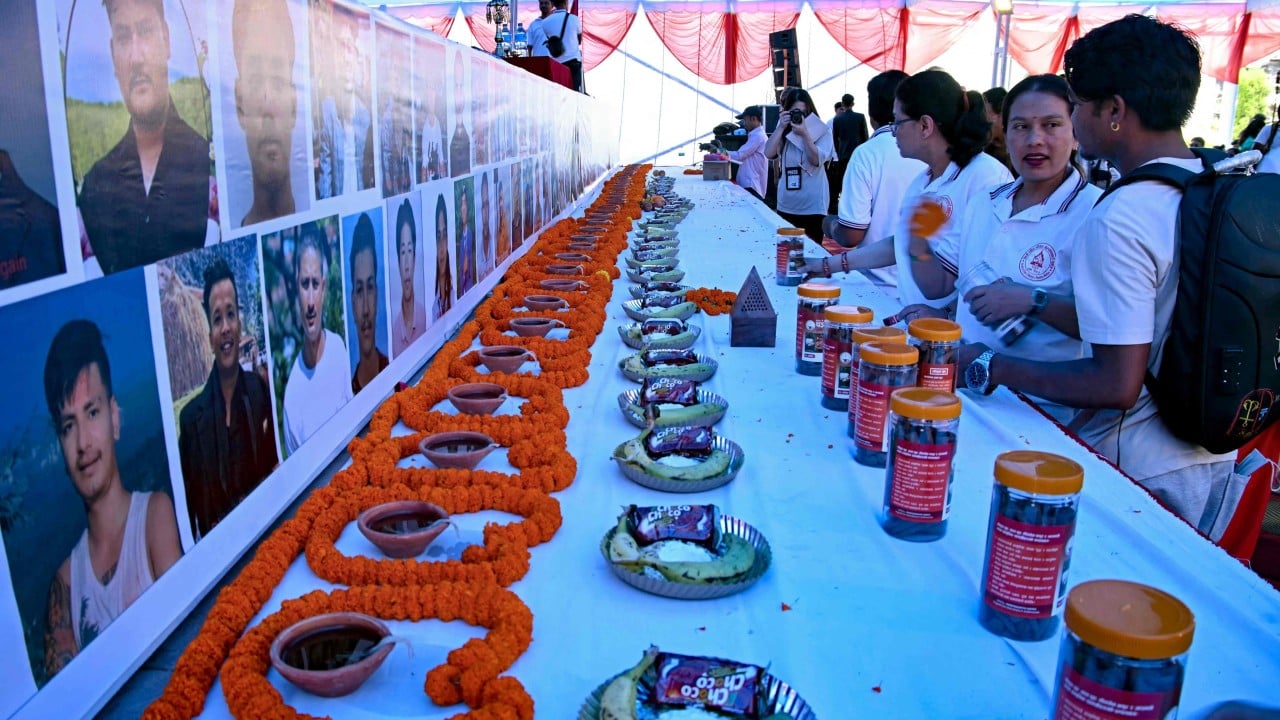
Seventy-six lives extinguished over forty-eight hours of intense upheaval. A government swept away not by a slow, calculated coup, but by an eruption of youth-led rage on September 8 and 9, 2025. One year after the historic demonstrations that burned parts of Kathmandu and shattered the status quo, Nepal finds itself caught in the difficult space between revolutionary triumph and the grinding reality of institutional inertia.
The spark that lit the fuse was deceptively minor. A heavy-handed state ban on social media triggered immediate defiance, but that digital chokehold only served as a proxy for grievances that had festered for decades. High youth unemployment hovering near twenty percent, rampant systemic corruption, and an out-of-touch political class created a powder keg. When the security forces opened fire on the first day of demonstrations, killing dozens of young protesters, what started as an expression of economic anxiety transformed into an irreversible national reckoning. The state's response failed to suppress the crowds; it multiplied them. Within two days, the administration led by Prime Minister Khadga Prasad Sharma Oli collapsed, leaving behind scorched government infrastructure and an interim leadership tasked with picking up the pieces.
The Cost of Raw Defiance
Revolutions are romanticized from a distance, but up close, they are measured in body bags and fractured families. Official inquiries and military reports parsed the seventy-six deaths into grim categories: young students gunned down in the streets, police officers overwhelmed while trying to maintain a defensive perimeter, and inmates caught in the crossfire or killed during mass prison breaks as twenty-four jails were breached. Over thirteen thousand prisoners escaped during the chaos, creating a secondary security crisis that the interim administration had to manage alongside public mourning.
The appointment of former Chief Justice Sushila Karki as interim prime minister brought a veneer of judicial gravity to a traumatized nation. Declaring the dead as national martyrs and promising state-backed funerals was a necessary step for emotional containment, yet it did little to address the structural decay that provoked the uprising in the first place. Karki's mandate was explicitly temporary: restore order, manage the return of escaped convicts, and prepare the country for elections within six months.
Yet elections do not automatically rewrite political culture. The old guard networks, built on patronage and ethnic factionalism, did not vanish simply because parliament buildings were torched. They merely went underground, waiting for the public anger to cool.
The Illusion of Decentralized Victory
Much of the international coverage framed the uprising as a purely spontaneous, leaderless digital phenomenon born on platforms like TikTok and Instagram. This narrative, while partially accurate regarding the mobilization tactics, obscures the hard mechanics of how the protests actually scaled. Decentralized leadership groups such as Hami Nepal provided logistics, coordinated medical aid for the thousands injured, and channeled raw outrage into focused demands.
However, decentralization is a double-edged sword. While it protects a movement from being decapitated by preemptive arrests, it leaves a dangerous vacuum once the dust settles. When the street-level adrenaline fades, a movement without a unified political party or coherent legislative agenda struggles to translate street power into parliamentary dominance.
Consider the plight of young urban shopkeepers and gig workers who marched in September 2025. Their primary demands were straightforward: transparent governance, merit-based employment opportunities, and an end to the culture of impunity for politically connected elites. One year later, many of those same individuals report that the daily cost of living remains punishingly high, and entry-level job markets remain stagnant. The GDP per capita, languishing near historic lows around fourteen hundred dollars, resists overnight fixes. Changing the face at the top of the secretariat does not instantly re-engineer an aid-dependent economy vulnerable to external shocks.
The Shadow of Environmental Collapse
To understand the fragility of contemporary Nepal, one must look beyond the political capital and into the valleys where nature compounds human suffering. Just as the nation prepared to mark the anniversary of the youth uprising, a catastrophic series of floods struck regions like the Bhotekoshi River basin, leaving thousands dead or missing.
The juxtaposition of these tragedies reveals an uncomfortable truth about the country's governance crisis. State resources are chronically overstretched, bouncing perpetually from one emergency to the next. When climate-induced disasters wipe out entire communities while the state apparatus is still recovering from a political revolution, institutional capacity hits a breaking point. The government declared public holidays for both the Gen Z uprising and the flood tragedies, a move that drew mixed reactions from citizens who argued that symbolic recognition is a poor substitute for robust disaster preparedness and economic structural reform.
Unfinished Business in Kathmandu
The interim phase has ended, but the fundamental struggle for Nepal's political soul is only entering its middle chapters. The youth movement proved that ordinary citizens can shatter an entrenched administration in forty-eight hours if collective anger reaches a critical threshold. Proving that a new generation of leaders can govern differently, resist the temptations of patronage, and deliver tangible economic growth is an entirely different burden.
The burned shells of government offices have largely been cleared or repaired, but the psychological architecture of the state remains vulnerable. If the political establishment fails to honor the sacrifices of the seventy-six dead through deep, institutional cleansing, the next wave of unrest will not arrive as spontaneous street protests. It will likely take a far more destructive form.


