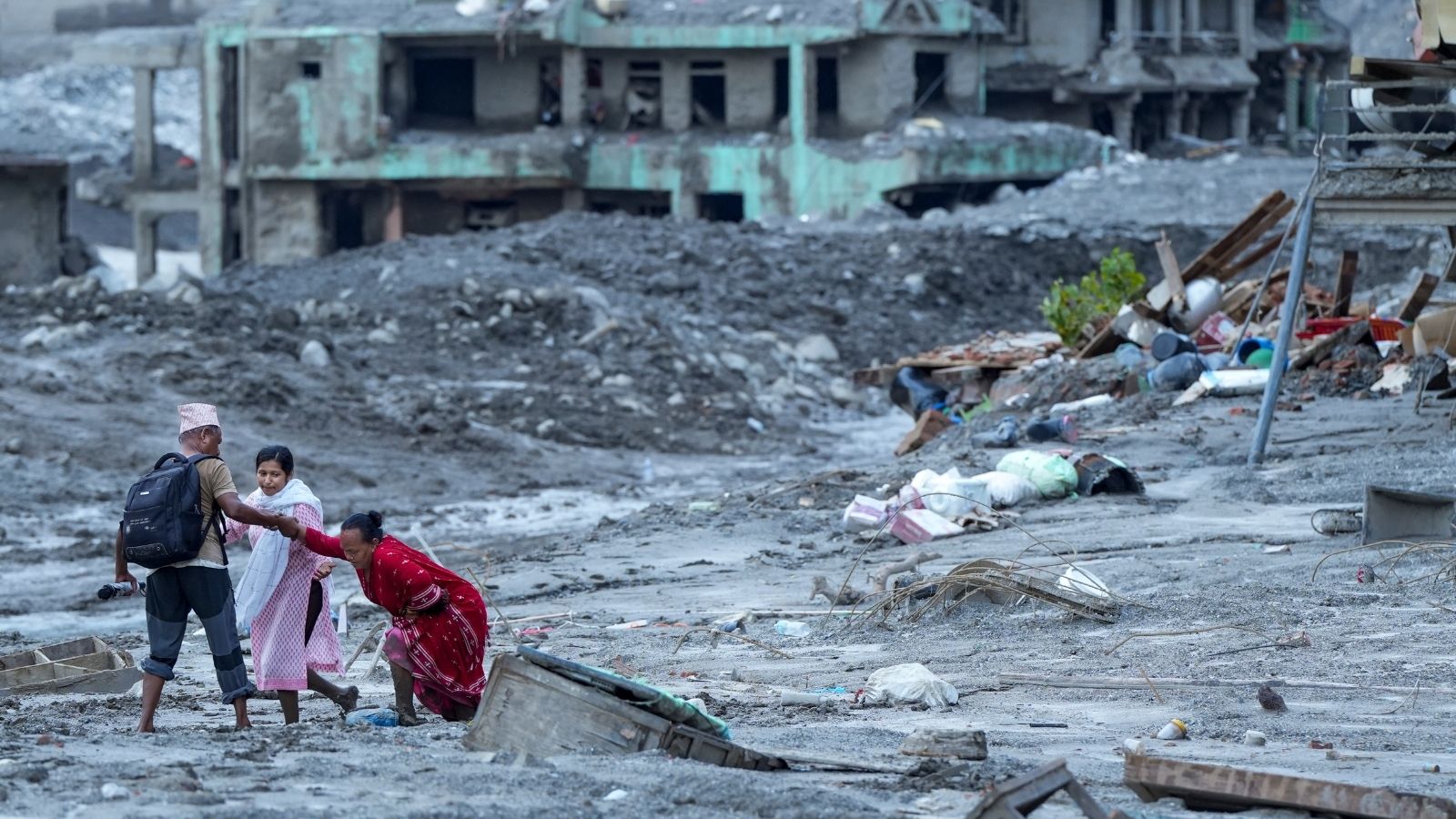
A wall of ice, rock, and muddy debris tore down the Lhende-Bhote Koshi-Trishuli river system with terrifying speed, leaving devastation in its wake. Over 900 workers remain trapped or unaccounted for inside tunnels and project sites across Nepal's Rasuwa and Nuwakot districts.
When the disaster struck following a glacier collapse near the Nepal-Tibet border, it didn't just wash away roads and bridges. It targeted the heart of the region's green energy ambitions. At least 933 workers are believed stranded across roughly six to eleven hydropower projects, gasping for air or buried beneath tons of muck inside closed concrete chambers.
Let's look at why this happened, what went wrong with emergency response timelines, and how vulnerable mountain engineering really is.
Inside the Flooded Tunnels
Engineering blueprints rarely account for a sudden fifty-meter wall of water fueled by an upstream glacial outburst. When the deluge hit sites like the Upper Trishuli 1 and Rasuwagadhi projects, workers had seconds to react.
Survivors recount a chaotic scramble for survival. Ajay Choudhury, a quality-control engineer at Upper Trishuli 1, barely made it out.
"At 8:59 am the wave of flood overtook our project site," Choudhury said. "It took us around 40 seconds to reach the hills nearby after coming out... the tunnel entrance closed, and the walls crashed."
Hundreds weren't that lucky. Debris completely sealed off subterranean access points. Operational and under-construction sites turned into underwater traps.
The breakdown of missing personnel across major facilities highlights the scale of the entrapment:
- Upper Trishuli 1 accounts for hundreds of missing workers.
- Upper Trishuli 3B and 3A report extensive gaps in headcounts.
- Rasuwagadhi and Chilme sites have dozens cut off in deep maintenance or diversion tunnels.
The Unregistered Workforce Problem
Official tallies rarely capture reality during a crisis. Government data put the missing workforce near 934 initially, but local officials admit the real number is likely much higher.
Why? Under-construction green energy projects run on complex subcontracting chains. Casual laborers, migrant workers from India, and specialized foreign technicians from China and South Korea often work without formal registry on site rosters. When a mountain collapses into a river gorge, tracking who walked onto the shift that morning becomes an administrative nightmare.
Families are left waiting at checkpoints with photographs, desperate for news as rescue helicopters fight erratic weather.
The Regional Rescue Bottleneck
Mobilizing heavy rescue gear in the Hindu Kush Himalayas is an uphill battle. Nepal's army deployed fifteen helicopters alongside specialized teams, while neighboring countries stepped in. India dispatched relief flights carrying medical professionals and tunnel-rescue experts, while specialized mountain guide associations cleared blocked adits manually.
Yet, physical access remains blocked. Landslides severed the very highways rescue columns need to traverse. Rescuers drilling through packed silt inside 250-metre tunnels report zero response from deep within the chambers. Time is running out for anyone trapped in air pockets.
Authorities are also confronting a grim secondary crisis. With the death toll climbing past 900, local mortuaries lack the freezer capacity to preserve bodies, forcing officials to scramble for DNA-testing kits to prevent public health hazards.
Rethinking Himalayan Energy
The catastrophe has triggered sharp warnings from international climate bodies. Building massive subterranean infrastructure in fragile, melting mountain ranges carries extreme risk. Glacial lake outbursts are accelerating due to rising global temperatures, turning remote river valleys into hazard zones.
Governments and private developers must completely overhaul early warning systems and evacuation protocols for underground labor forces. Sirens and sensor arrays tied to upper-watershed monitors need to provide minutes of advance warning, not seconds.
For now, the focus remains entirely on piercing the debris and reaching the hundreds still locked beneath the earth. Check local disaster management updates for ongoing rescue registry lists if you are tracking missing personnel.