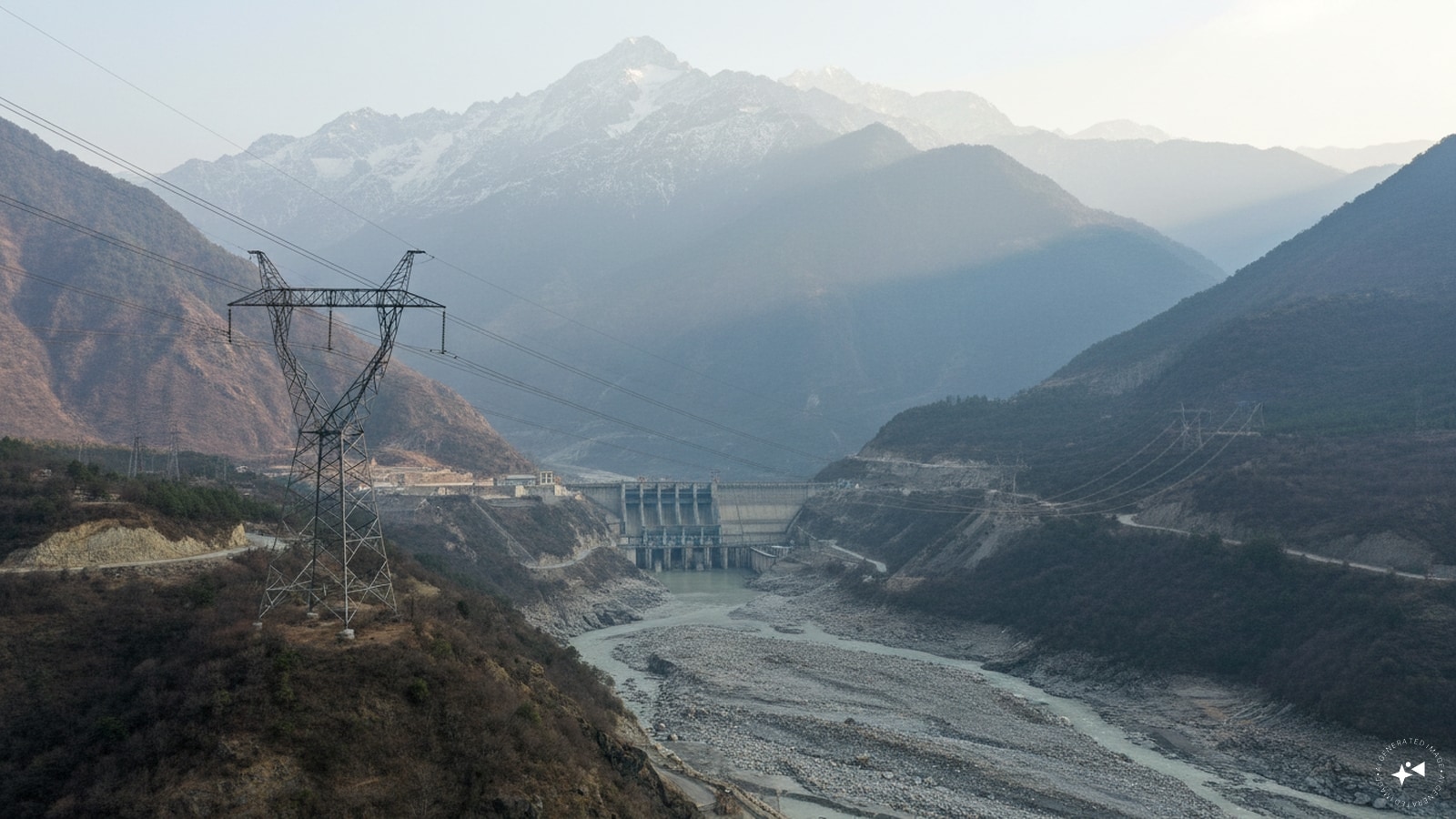
You hear the headlines every single summer. Nepal is drowning in clean hydropower, exporting hundreds of megawatts to India, and ringing cash registers at the Nepal Electricity Authority (NEA). Then December hits, the rivers shrink to a trickle, and suddenly Kathmandu is begging New Delhi for permission to buy electricity back.
That is the exact reality behind the latest approval allowing Nepal to import 350 MW of power from India during winter. To anyone watching from the outside, it looks completely backwards. Why does a country sitting on tens of thousands of megawatts of hydroelectric potential need a seasonal bailout from its neighbor every single year?
Honestly, the answer comes down to basic hydrology, lopsided infrastructure, and a cross-border power market that runs on strict bilateral rules. If you only read surface-level news reports, you miss the actual mechanics of how South Asia's electricity grid operates—and why this 350 MW clearance matters so much for factories and households across Nepal.
The Run-of-River Trap Behind Nepal's Winter Deficit
Here is the dirty secret of Nepal's energy sector. Almost every major hydropower plant in the country is a run-of-river (RoR) facility.
Unlike storage dams that hold back massive reservoirs of water behind concrete walls, run-of-river plants rely entirely on the natural flow of Himalayan rivers. When monsoon rains hammer the mountains from June through September, those rivers roar. Turbines spin at full capacity, generating far more electricity than Nepal's domestic grid can consume.
Then winter arrives. Snow stops melting at high altitudes. Rainfall drops to nearly zero.
By January and February, river discharge plummets, and Nepal's domestic power generation collapses to roughly a third of its monsoon peak. Meanwhile, electricity demand actually climbs as temperatures drop in the Kathmandu Valley and across the Terai plains, where households plug in space heaters and water boilers.
That seasonal mismatch creates an unavoidable supply gap. Without large storage projects like the long-delayed Budhi Gandaki or Kulekhani-scale reservoirs online, Nepal has no way to bank its summer surplus for winter nights. Buying power from India isn't a policy failure. It's basic grid survival.
How the 350 MW India Power Import Deal Actually Works
People often assume cross-border electricity trade works like flipping a switch. It doesn't. Every megawatt crossing the border between India and Nepal requires regulatory clearance from India's Central Electricity Authority (CEA) and coordination through the Indian Energy Exchange (IEX) or bilateral power purchase agreements.
When Nepal gets the nod to import 350 MW of winter power, that approval governs specific transmission corridors and time blocks. The heavy lifting happens across the 400 kV Dhalkebar–Muzaffarpur cross-border transmission line, the main electrical artery connecting the two nations. Smaller regional interconnections—such as the Tanakpur, Kataiya–Kusaha, and Raxaul–Parwanipur lines—handle supplementary flows depending on regional grid stability.
Under India's cross-border electricity trade guidelines, approvals are typically granted on a seasonal or annual renewal basis. New Delhi restricts when Nepal can draw power from the Indian Energy Exchange, often limiting imports during India's own peak evening hours or coal-crunch windows. Getting greenlit for 350 MW gives the NEA breathing room to bid in the day-ahead market and secure steady blocks of power before winter peak demand hits full force.
Why Industrial Corridors Feel the Impact First
If the NEA fails to secure enough Indian imports during the dry season, residential neighborhoods in Kathmandu usually aren't the first to go dark. Heavy industries take the hit.
Cement plants, steel rolling mills, and manufacturing hubs along the Birgunj–Pathlaiya and Biratnagar–Itahari corridors consume massive, continuous loads of electricity. During past winter supply crunches, the NEA had to impose unannounced power cuts on industrial feeders—sometimes slashing supply for 10 to 14 hours a day—just to keep residential lights on and avoid bringing back the infamous load-shedding schedules that crippled Nepal prior to 2018.
With 350 MW cleared for import, industrial operators get far better predictability. They can run shifts without relying on expensive diesel generators, which otherwise drive up production costs and hammer Nepal's trade deficit through imported fossil fuels.
The Net Exporter Paradox Explained
You might still wonder how Nepal claims to be a "net exporter" of electricity while simultaneously scrambling for 350 MW of winter imports. Both statements are true, and understanding the math clears up the confusion immediately.
During the six wet months of the year, Nepal exports anywhere from 600 MW to over 900 MW of surplus hydropower to India and, increasingly, through Indian transmission lines toward Bangladesh. Because monsoon export volumes and revenues exceed what Nepal spends buying Indian power during the dry winter months, the annual balance sheet tilts in Nepal's favor.
Still, there is a financial catch nobody likes talking about. Nepal often sells its summer power to India at competitive market rates, only to buy electricity back during winter peak hours when Indian exchange prices spike due to high thermal generation costs. Trading cheap wet-season hydro for expensive dry-season power eats into the NEA's profit margins.
What Needs to Change Before Next Winter
Relying on annual regulatory approvals from New Delhi leaves Nepal's winter grid exposed to bureaucratic delays and regional market volatility. You can't run a modernizing economy on last-minute seasonal clearances forever.
Watch three specific developments if you want to know whether Nepal is actually fixing its winter deficit:
- Storage and peaking projects: Until Nepal builds genuine reservoir-based hydro plants—not just peaking run-of-river facilities that hold water for a few hours—winter generation will always crash alongside river levels.
- Domestic transmission bottlenecks: Even when power is available in one region, weak internal high-voltage corridors like the Hetauda–Dhalkebar–Inaruwa line have historically limited how much electricity the NEA can move from eastern plants to western load centers.
- Long-term bilateral swap agreements: Moving away from short-term Indian Energy Exchange spot purchases toward structured energy-banking deals—where Nepal sends surplus summer power to Indian states and draws equivalent power back in winter without cash volatility—remains the smartest policy fix on the table.
Keep an eye on NEA load-dispatch notices and industrial feeder schedules between December and March. If daily import volumes stay close to that 350 MW ceiling without triggering industrial rationing, the grid will hold steady through the dry season—and prove once again that South Asia's energy security depends on cross-border wires working in both directions.