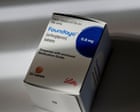
The media is popping champagne because a new daily pill has hit UK pharmacies to treat diabetes and shrink waistlines. Mainstream outlets frame this as a miraculous liberation from weekly injections, a frictionless fix for metabolic disease.
They are selling you a comforting illusion.
Swapping a weekly needle for a morning tablet does not change the laws of human physiology. It simply changes the delivery mechanism while magnifying human error. The lazy consensus says that convenience equals compliance. The biological reality tells a completely different story.
The Compliance Fallacy of Daily Medications
Every time medicine moves from a long-acting injection to a daily pill, compliance rates plummet outside of tightly controlled clinical trials.
Think about a standard scenario: a patient is prescribed an oral medication that demands a precise fasting window, a strict countdown before eating, or specific water restrictions to ensure absorption. Miss a step, take it with a heavy breakfast instead of an empty stomach, and bioavailability craters.
In clinical settings, researchers achieve stellar results because trial participants are monitored, coached, and heavily incentivized. Real life is messier. In the real world, human beings forget, rush, and cut corners. A weekly injection like Wegovy or Mounjaro offers structural forgiveness—miss by a day, and the drug’s half-life still buffers your biology. A daily pill offers zero margin for error.
The Economic Shell Game of Private Prescriptions
Let us look past the marketing gloss of pharmacy launches. Drugs like Eli Lilly’s orforglipron (marketed as Foundayo) or oral semaglutide formulations arrive with hefty private price tags while they navigate the long queue for National Health Service appraisal.
Pharmacies are already warning about a secondary market explosion: counterfeit and unlicensed pills flooding online channels to capture demand from patients priced out of legitimate supply chains.
When desperate consumers face steep private costs, they turn to unregulated gray-market vendors. The shift from injectable peptides to small-molecule oral compounds makes counterfeiting easier and cheaper for illicit labs. You aren’t just risking your waistline; you are gambling your endocrine system on unregulated underground chemistry.
Why Appetite Suppression is Only Half the Battle
The fundamental misunderstanding of GLP-1 therapy lies in treating it as a permanent chemical lobotomy for hunger.
These drugs do not burn fat; they suppress appetite by mimicking gut hormones that signal satiety to the brain. They buy you a temporary behavioral window. If you use that window to build muscle mass, upgrade your protein intake, and fundamentally restructure your relationship with food, you win.
If you use that window to simply eat smaller portions of garbage, you are setting yourself up for metabolic catastrophe. When patients stop these medications—or when side effects force them to quit—the appetite storm returns instantly. Without structural changes to lean body mass, the weight that comes back is disproportionately fat, leaving patients in a worse metabolic state than when they started.
The Unspoken Cost to Muscle Mass
Rapid chemical weight loss without resistance training eats away at active tissue. Clinical data shows that up to forty percent of the weight lost on these compounds can be lean muscle mass if patients fail to consume adequate protein and lift heavy objects.
Sarcopenic obesity—carrying low muscle mass paired with high body fat—is the silent epidemic hiding behind every celebratory headline about drop in body mass index. Popping a pill every morning while sitting at a desk and eating three hundred fewer calories of ultra-processed food is a masterclass in metabolic self-sabotage.
Stop looking for a chemical shortcut to undo decades of systemic lifestyle failure. Fix your protein intake, protect your muscle tissue, and treat pharmaceuticals as a temporary scaffolding rather than a permanent identity.
The pill is here. The easy way out is still a myth.