We've been here before. Congo tracks an Ebola outbreak, health workers fly in, and the world holds its breath. But if you think you know how this story plays out based on previous headlines, you're missing the terrifying shift on the ground right now.
Within less than a month of the official declaration on May 15, 2026, the Democratic Republic of the Congo saw its Ebola numbers skyrocket. We're talking 550 confirmed cases and at least 101 deaths, mostly concentrated in the eastern province of Ituri. It's spreading fast, and it already jumped the border into Uganda.
Here's the brutal truth that isn't getting enough attention. The tools we used to crush recent outbreaks are completely useless this time around. If we don't change strategy immediately, the containment models look incredibly grim.
The Vaccine is Useless This Time
When people hear "Ebola," they usually think of the Zaire strain. That's the monster responsible for the horrific West Africa devastation a decade ago and Congo's recent outbreaks. For the Zaire strain, we have Ervebo, a highly effective, licensed vaccine. We have proven therapeutics.
This outbreak isn't the Zaire strain.
Laboratory testing by the National Institute of Biomedical Research (INRB) confirmed we're dealing with the rare Bundibugyo virus.
There's no approved vaccine for Bundibugyo. There's no licensed, targeted treatment.
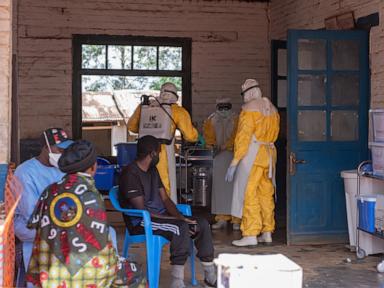
The World Health Organization (WHO) has already declared this a Public Health Emergency of International Concern. Why? Because the medical safety net is gone. When patients show up at the Mongbwalu or Rwampara health zones with severe fever, body pain, and internal bleeding, doctors can only offer supportive care—fluids, oxygen, and hope.
A Crisis Weaponized by Conflict
If a lack of medicine wasn't bad enough, the geography of this outbreak makes containment a literal minefield. Ituri province is a war zone. Dozens of rebel groups, including some linked to ISIS, control the very territories where the virus is hiding.
You can't do contact tracing when visiting a village might get you killed.
The International Rescue Committee recently flagged Congo's collapsing health infrastructure, noting that massive humanitarian funding cuts have left local clinics hollowed out. Now, underpaid and exhausted frontline health workers are facing intense community backlash. Scepticism is rampant. Angry residents have attacked medical teams, believing the response forces are bringing the illness or exploiting it for money.
Because of this chaos, the outbreak was confirmed weeks late. The 550 cases on the books right now are just the ones we know about. The real number is undoubtedly much higher. The virus likely spilled over from animals to humans back in February, burning through communities silently for months before anyone rang the alarm.
What the Data Says About What's Coming
We need to stop pretending this will just blow over. The US Centers for Disease Control and Prevention (CDC) recently ran predictive modeling based on the Bundibugyo outbreak's trajectory. The simulations show exactly how high the stakes are.
If health teams can only manage to isolate 20% of infected individuals, the models project the outbreak could easily breach 20,000 cumulative cases and 4,000 deaths by the end of August.
Even if we perform moderately well and isolate 50% of cases, the virus is moving too fast through densely populated mining towns and transit hubs to stop on its own. The only scenario where the outbreak shrinks to a manageable size is if we successfully isolate at least 70% of infected people.
Achieving a 70% isolation rate in a region plagued by active warfare and community mistrust requires a massive pivot from standard operating procedures.
The Real Next Steps for Containment
Dropping international medical teams into eastern Congo with megaphone announcements isn't working. It's getting health workers attacked and driving infected people into hiding.
First, the response needs to shift entirely to local leadership. Trust is the only currency that matters right now. Neighborhood leaders, local faith figures, and respected community healers must be equipped with the facts and training to manage isolation centers. People will isolate if their neighbors tell them to, not when outside military or international groups demand it.
Second, the international community has to fast-track clinical trials for experimental Bundibugyo countermeasures. The WHO Technical Advisory Group is already reviewing candidate vaccines. We can't wait for a five-year approval process. Emergency deployment protocols need to happen on the ground in Ituri now.
Finally, cross-border surveillance between Congo, Uganda, and Rwanda must be synchronized. With heavy trade movements and mining migrations, a porous border means a localized outbreak becomes a continental security threat in a matter of days. We don't have the luxury of time, and we certainly don't have the vaccines to clean up a larger mess.