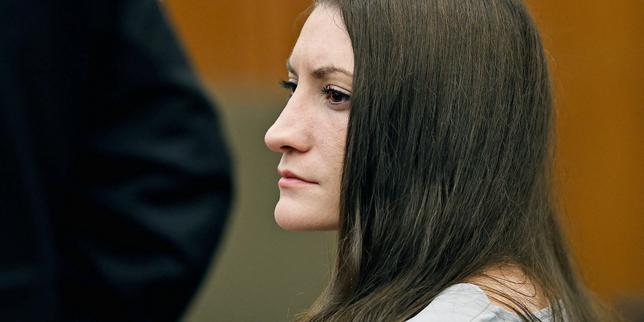
When 59-year-old former flight attendant Sophie Lainault walked into doctors' offices for routine checkups, nobody asked her about her day job. They asked about genetics, breastfeeding, and hormone replacement therapy. They completely ignored the fact that she had spent three decades breathing recycled cabin air, crossing time zones, and soaking up cosmic radiation at 35,000 feet.
That blind spot just shattered. A court in Bayonne officially ruled that Lainault's breast cancer was an occupational disease, tying her diagnosis directly to her 30-year career with Air France. It is a massive legal first for the French aviation sector and a wake-up call for occupational health standards worldwide.
If you think office jobs or standard corporate environments are the only places where career hazards hide, you're missing the bigger picture of occupational safety. Let's look at what actually happened, why the legal system is shifting, and what this means for workers in high-exposure industries.
Breaking Down the Hazards Behind the Verdict
To win a case like this, you have to fight uphill. Breast cancer isn't currently listed on France's official table of occupational illnesses. That means workers can't just fill out a form and get automatic coverage; they have to prove direct causation through a grueling legal battle.
Two separate regional committees previously rejected Lainault's claim. They didn't see enough evidence. But her legal team, backed by the CFDT union and experts like former radiation protection engineer Jean-Claude Zerbib, built an airtight case focusing on three specific workplace hazards:
- Ionising Cosmic Radiation: Flying long-haul routes—especially across paths that venture closer to the poles—exposes aircrews to high levels of cosmic radiation from space. Earth's magnetic field shields us on the ground, but up high, the dose increases.
- Disruptive Night Shifts: Working erratic hours destroys circadian rhythms. Lainault logged over 6,500 night hours out of 12,600 total flight hours. The World Health Organization's International Agency for Research on Cancer classifies night shift work as a probable human carcinogen.
- Secondhand Smoke Exposure: Air France permitted smoking onboard flights until the practice was banned in 2000. Cabin crews spent decades breathing in concentrated indoor tobacco smoke in a pressurized tube.
The court also took note of something crucial: medical tests proved Lainault had zero genetic predispositions or lifestyle factors that could have otherwise caused her illness. With lifestyle and genetics cleared out of the way, the job itself stood as the obvious culprit.
The Precedent Set by Previous Medical Battles
This isn't an isolated incident, even if it's a first for aviation. Back in 2023, a French nurse won a landmark legal fight after linking her breast cancer to 28 years of night shifts and medical radiation exposure.
These rulings are creating a domino effect. They expose a massive flaw in how industrial medicine evaluates women's health risks. Historically, occupational health frameworks were built around traditional industrial hazards—think of factory workers breathing coal dust or construction crews handling asbestos. Those models were heavy on male-dominated blue-collar sectors. They completely failed to account for the unique physiological toll taken by service jobs, healthcare shifts, and aviation.
When corporate statements roll out, they tend to downplay the risk. Air France noted that it was not a party to the specific proceedings and stressed that employee safety remains an absolute priority, adding that its exposure limits sit well below regulatory thresholds and that broader epidemiological studies haven't established a definitive causal link for aircrews. Yet, court-cited internal company notes even acknowledged that flight crews face elevated risks, which is why routine medical monitoring—like starting mammograms a decade earlier than the general population—often applies to cabin staff.
What This Means for Workers Moving Forward
For Lainault, the ruling means her medical treatments are fully reimbursed by social security and she can take early retirement. For thousands of other workers, it provides a legal blueprint.
If you work in an industry with irregular hours, high-altitude travel, or unavoidable exposure to carcinogens, you shouldn't assume your employer or state health boards will automatically connect the dots when you fall ill. Occupational health is slow to evolve.
Keep meticulous records of your schedules, flight hours, shift patterns, and environmental exposures. If you or someone you know is facing an unexplained diagnosis after years in a high-risk sector, look into local union resources and specialized legal counsel who understand how to challenge standard institutional denials. Change doesn't happen because paperwork is easy; it happens because people refuse to let corporate and bureaucratic systems ignore the realities of the job.