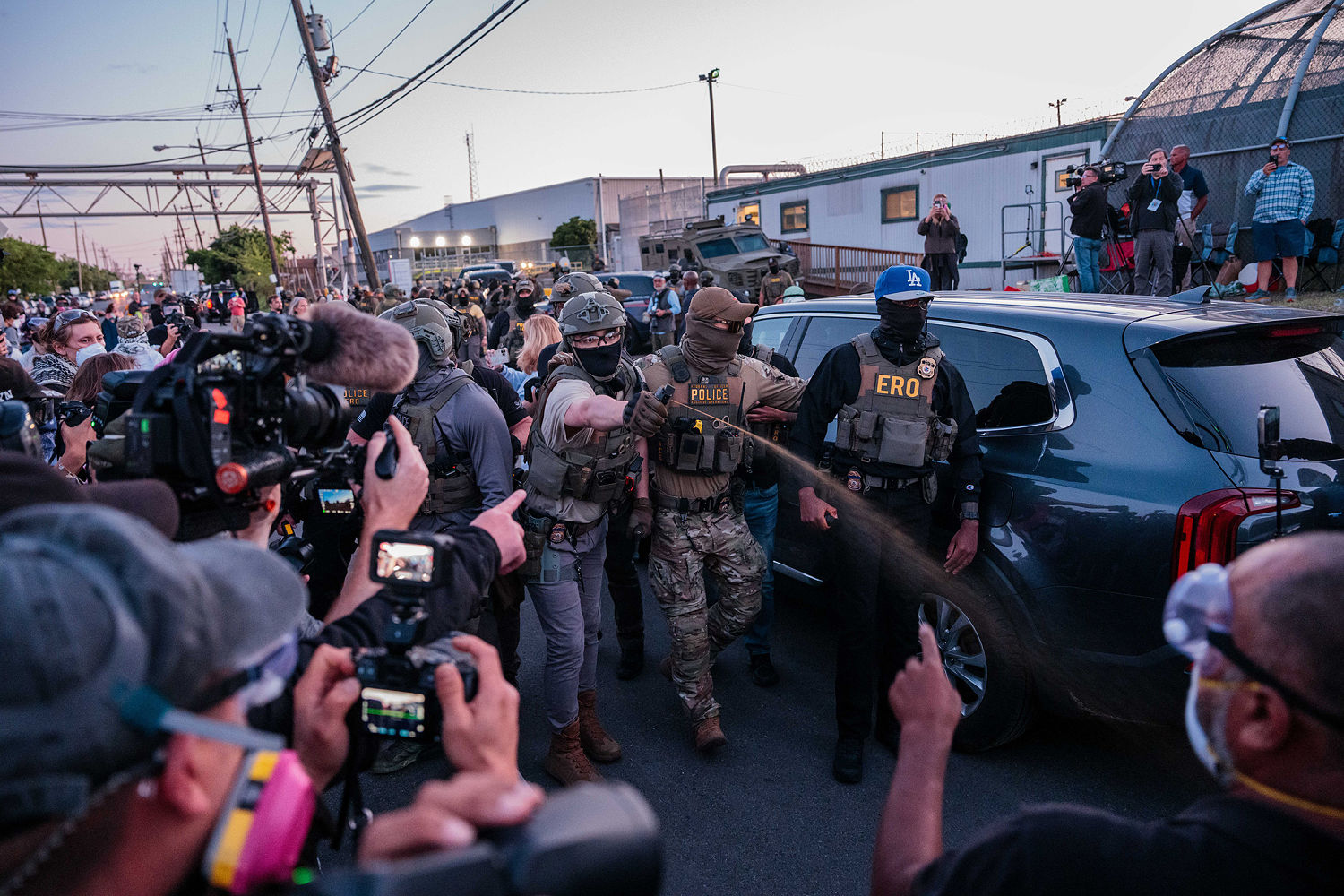
New Jersey officials just drew a literal line in the sand outside a federal immigration detention center. Following a series of intense, chaotic clashes between activist groups and local law enforcement that resulted in multiple arrests, authorities officially established a restricted buffer zone around the facility.
It's a aggressive move. It's also part of a much larger, nationwide trend where local municipalities use public safety mandates to push back against aggressive demonstrations.
If you're trying to understand why this matters, you have to look past the immediate headlines. This isn't just about a single protest or a specific facility. It's about the tightening friction between the First Amendment right to assemble and the government's duty to maintain operational security. When these two forces collide, the public square usually shrinks.
Inside the Clashes That Prompted the Restricted Perimeter
The decision to wall off the immediate perimeter didn't happen in a vacuum. Over several weeks, demonstrations outside the immigration enforcement building escalated from peaceful vigils to direct action tactics. Protesters blocked facility entrance gates, linked arms to prevent transport vehicles from moving, and engaged in shouting matches with officers.
During the final major escalation before the zone was set, local police moved in to clear a blockade. The situation deteriorated quickly. Several protesters were arrested on charges ranging from disorderly conduct to obstruction of justice and failure to disperse.
Local police departments argue their hands were forced. When an administrative facility can't function, or when emergency vehicles can't enter or exit the property, the situation moves from a protected protest to a public safety hazard. Activists see it differently. They argue that the sudden enforcement of a protected zone is a targeted attempt to muzzle dissent and hide immigration enforcement activities from public scrutiny.
How Protected Buffer Zones Actually Work Around Public Buildings
You might wonder how a city or state can legally block you from standing on a public sidewalk. The answer lies in a legal concept known as Time, Place, and Manner restrictions.
While the government can't ban a protest because it dislikes the message, it can restrict where and how that protest takes place if there's a compelling government interest. Keeping a federal facility operational qualifies as a compelling interest under current legal precedents.
The new perimeter functions as a strict boundary line.
- Designated Protest Areas: Demonstrators are directed to a specific zone, usually across the street or a set number of feet away from the main gates.
- No-Loitering Corridors: Sidewalks directly adjacent to the facility entrances must remain clear at all times. Stop to hold a sign there, and you risk immediate arrest.
- Vehicle Access Protections: Concrete barriers or temporary fencing are deployed to ensure transport buses and staff vehicles can enter without encountering physical blockades.
This isn't a total ban on speech. You can still yell, hold signs, and make your voice heard. You just have to do it from the designated box the state built for you.
The Legal Battlegrounds Over Protected Spaces
Civil liberties groups are already looking at this policy with skepticism. Organizations like the American Civil Liberties Union have historically challenged overbroad buffer zones, arguing they dilute the effectiveness of a protest. After all, a demonstration loses its bite if the people you're protesting can't see or hear you.
The courts have a mixed record on this. In cases involving medical clinics, the Supreme Court upheld certain fixed buffer zones but struck down others that were deemed too large or restrictive. The key legal test is whether the restriction burdens substantially more speech than necessary to protect public safety.
In New Jersey, the legal defense of the zone will rest entirely on the documentation of the recent arrests. Because the state has a paper trail of blocked vehicles and physical altercations, judges are far more likely to view the buffer zone as a necessary safety measure rather than an unconstitutional speech restriction.
What You Need to Do If You Plan to Demonstrate
If you plan to participate in rallies around high-security facilities, the playbook has changed. Showing up unprepared can land you in the back of a police cruiser before you even unpack your signs. You need to know the layout and the rules before you step onto the pavement.
First, identify the exact boundaries of the new restricted zone. Local police departments usually publish these maps online or post clear signage at the site. Do not assume a public sidewalk is safe territory.
Second, coordinate with marshals or organizers who know the local ordinance details. Peaceful demonstration requires tactical awareness. If the goal is to avoid arrest while maximizing visibility, staying exactly one inch outside the restricted line is your best strategy.
Third, document everything. If police attempt to push the crowd back beyond the legally established buffer zone, having clear video evidence is your best defense in court. The line moves both ways, and authorities sometimes overstep their own boundaries during high-stress encounters.