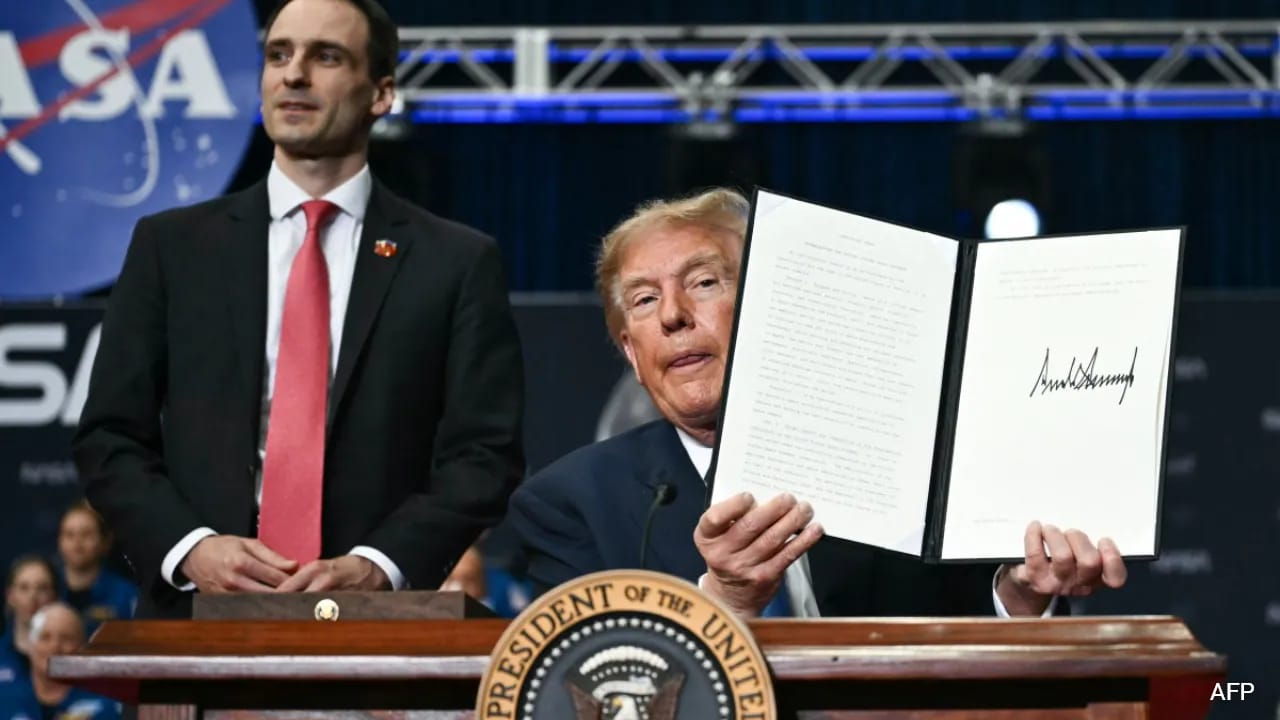
President Donald Trump just signed an executive order establishing the United States Space Academy. If you think this is just another bureaucratic government office, you haven't been paying attention to the shifting dynamics of the cosmos. Speaking at NASA's Johnson Space Center in Houston during a ceremony honoring the Artemis II lunar crew, Trump announced the creation of a dedicated federal institution designed to train both military and civilian space professionals.
For years, candidates heading into the US Space Force relied on traditional channels like the Air Force Academy in Colorado or standard ROTC programs. That's about to change. The newly ordered academy aims to bridge a critical talent gap, serving not only the Space Force but also NASA and the commercial spaceflight sector.
Inside the Presidential Commission
An executive order doesn't build a campus overnight. To get this off the ground, the White House established a dedicated presidential commission tasked with hammering out the foundational details within months.
NASA Administrator Jared Isaacman chairs this high-powered group. He is joined by heavy hitters including Defense Secretary Pete Hegseth, Air Force Secretary Troy Meink, and White House budget director Russell Vought. Their mandate requires evaluating several complex elements before the academy takes physical shape:
- Governance and Location: Deciding whether to anchor the institution within NASA or build a standalone campus akin to West Point or Annapolis.
- Service Obligations: Determining whether graduates owe mandatory time in the armed forces, civil service, or federal space agencies.
- Applicant Prerequisites: Setting strict entry criteria regarding citizenship, security clearances, and academic backgrounds in aerospace engineering.
Critics are already questioning how a brand-new federal academy will mesh with existing military education pipelines. Defense analysts point out that the Space Force hasn't struggled to attract raw applicants, though civilian technical talent took a hit during recent federal workforce reductions. Yet, supporters argue that a specialized academy is vital as nations race to establish permanent infrastructure on the Moon and protect orbital assets.
What This Means for the Commercial Space Boom
You might wonder why a military-style academy cares about commercial aerospace companies. The truth is simple. Modern space exploration relies heavily on private enterprise. Companies building reusable rockets, lunar landers, and orbital habitats need a massive influx of skilled engineers, operators, and scientists.
By training civilian and military personnel side-by-side, the academy intends to create a unified talent pool. When graduates finish their training, they won't just step into military cockpits. Many will transition directly into civil space operations or private aerospace firms driving the lunar economy.
Funding remains the next major hurdle. Congress must authorize and appropriate budgets for the initiative, especially as the administration pushes for aggressive increases in overall defense and space spending. If the commission moves quickly, expect pilot programs and curriculum blueprints to emerge before the end of the year. Keep an eye on how admissions criteria evolve if you have aspiring aerospace engineers in your household.


