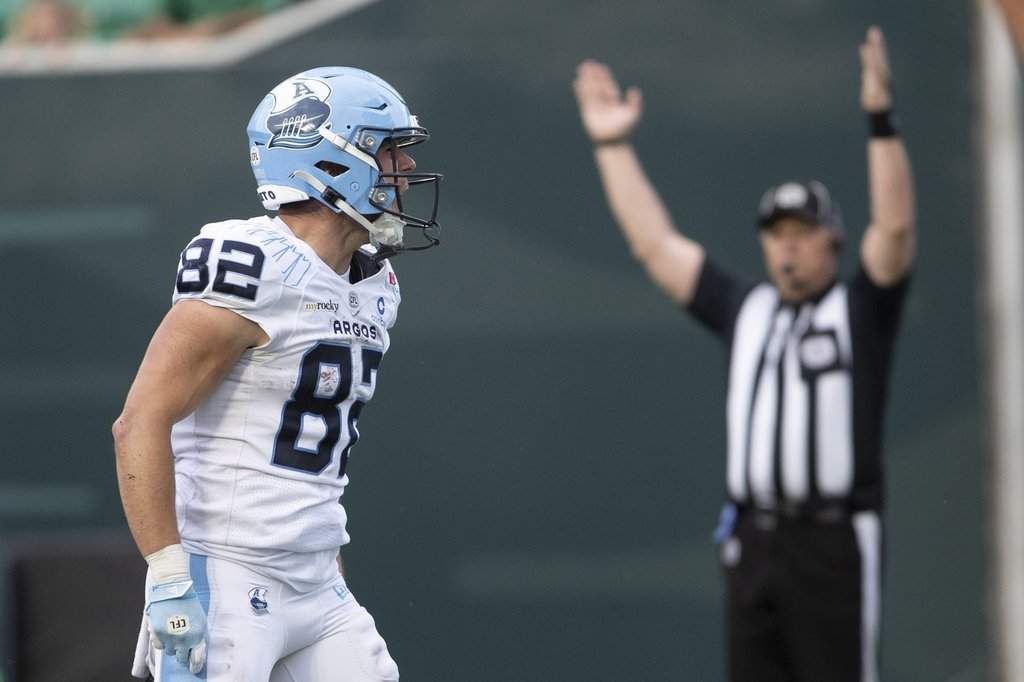
Toronto Argonauts linebacker Nick Kahmann won the Canadian Football League Most Outstanding Rookie award because he mastered the geometry of the Canadian field faster than veterans twice his age. While standard beat reports treat his trophy as a feel-good story about a late-round sleeper finding his footing in Toronto, the real story lies in the front office mechanics that put him on the turf. Kahmann did not just play well; he exposed a massive inefficiency in how CFL scouting departments evaluate American defensive talent transitioning to the wider, deeper three-down game.
For decades, the CFL rookie of the year race has been dominated by skill-position players or pass rushers who rack up gaudy, easily digestible box-score numbers. Quarterbacks throw for 4,000 yards, receivers haul in double-digit touchdowns, and defensive ends chase quarterbacks off the edge. Off-ball linebackers rarely command the spotlight unless they are blitzing every down. Yet Kahmann forced voters across the league to pay attention to the most thankless, spatially demanding position in professional football.
The Three-Down Geometry Problem
To understand why Kahmann’s rookie campaign drew such unanimous praise from coaches and executives, you have to look at the dimensions of the field itself. A CFL field is 65 yards wide and 110 yards long, with 20-yard end zones and unlimited pre-snap motion for receivers. For a linebacker arriving from the American college ranks, the transition is violent. In the four-down American game, a linebacker is primarily a downhill thumper tasked with filling a gap between the tackles and surviving collisions with 320-pound guards.
In Canada, that same player is suddenly asked to cover nearly twice as much horizontal grass while receivers sprint toward the line of scrimmage at full speed before the ball is even snapped. Most rookies drown in the sheer volume of space. They hesitate for a fraction of a second, take a false step toward the boundary, and watch a slotback run right past their earhole for a 25-yard gain.
Kahmann eliminated that hesitation by mid-summer. Instead of relying on raw straight-line speed to recover from bad angles, he played with a spatial discipline that looked almost unnatural for a first-year player. Watch the game tape from Toronto's mid-season stretch, and you see a defender who understood leverage before the quarterback finished his cadence. When the Argonauts rotated their secondary into zone coverage, Kahmann consistently squeezed the throwing windows over the middle, forcing opposing pivots to hold the ball an extra beat. That extra beat allowed Toronto’s defensive front to get home.
Why Scouting Departments Missed the Mark
The uncomfortable truth for the rest of the East Division is that every team in the league had multiple chances to secure Kahmann’s rights before he ever put on double blue. Like most American imports who end up in the CFL, Kahmann spent time on the NFL fringe, bouncing through rookie minicamps and fighting for practice squad spots where special teams versatility matters more than defensive instincts.
NFL scouts tend to worship at the altar of measurable traits. If a linebacker runs a 4.45 forty-yard dash and boasts a 38-inch vertical leap, he gets drafted on Day 2 regardless of whether he can actually diagnose a pull-guard trap play. Conversely, if a player lacks elite testing numbers or comes out of a program that does not churn out first-round picks, he gets stamped as a camp body.
Toronto’s personnel department looked past the stopwatch and focused on three specific traits that translate directly to the Canadian game:
- Change-of-direction efficiency: Kahmann does not waste steps when flipping his hips from a forward run-fit to a backward drop into coverage.
- Tackling in open space: Missing a tackle in the NFL usually costs an extra four yards; missing one in the CFL often results in a 60-yard touchdown because there is simply too much green grass for the safety to cover.
- Communication under duress: Playing middle or weak-side linebacker in Corey Mace and Ryan Dinwiddie’s defensive ecosystem requires making pre-snap adjustments against constant motion without panicking.
By prioritizing processing speed over raw track-and-field metrics, the Argonauts found a defensive centerpiece at a fraction of the salary cap cost of a veteran free agent. In a hard-cap league where every dollar spent on an American starter takes money away from the National talent pool, hitting on an entry-level rookie contract is the ultimate competitive advantage.
The Anatomy of a Modern CFL Linebacker
There is a persistent myth among casual observers that the modern CFL is purely an aerial track meet where defense is optional. That narrative dies quickly when you look at the teams that actually hoist the Grey Cup in November. Championships in Canada are won by defenses that can stop the run with a light box, allowing the secondary to drop seven or eight defenders into coverage on second-and-long.
That mathematical equation only works if your linebackers can hold up against offensive linemen without needing a strong safety creeping down into the box for help. If a linebacker gets washed out of his gap by a single block, the entire defensive structure collapses. The coordinator is then forced to bring an extra defender toward the line of scrimmage, leaving cornerbacks on islands against some of the fastest receivers in North America.
Kahmann gave Toronto the freedom to stay in their preferred defensive shells. Because he could shed blocks cleanly and stonewall running backs at the line of scrimmage, the Argonauts did not have to compromise their coverage integrity on first down. When opposing offenses faced second-and-eight instead of second-and-four, Toronto’s pass rushers could pin their ears back and hunt.
The Film Room Difference
Ask any veteran quarterback in the CFL what separates a good rookie from a future All-Star, and they will tell you it comes down to eye discipline. Quarterbacks manipulate linebackers with their eyes. A veteran pivot will look left to freeze the weak-side linebacker, opening up a massive void behind him for a deep dig route on the right hash.
Early in the season, Kahmann occasionally bit on those eye manipulations, just like every rookie does. What set him apart was his refusal to make the same mistake twice. By October, opponents stopped trying to look him off because he was reading the offensive line’s posture and the receivers' release angles rather than staring into the backfield. That rapid diagnostic growth is why coaches trusted him with defensive play-calling duties long before the playoffs arrived.
The Salary Cap Ripple Effect in Toronto
Winning Most Outstanding Rookie is a personal milestone for Kahmann, but its real value lies in what it does to Toronto’s roster construction over the next two years. The CFL’s salary cap structure is notoriously unforgiving. Teams have to balance a strict financial ceiling with complex ratio rules that mandate a minimum number of Canadian starters on the field at all times.
When a team has to pay top-of-market money for an American middle linebacker—often upwards of $160,000 to $180,000 per season—that money has to come out of another position group. Usually, it means downgrading at offensive tackle, letting a veteran cornerback walk in free agency, or skimping on depth along the defensive line.
Because Kahmann performed at an All-CFL level while still tied to a standard rookie deal, the Argonauts effectively gained over $100,000 in phantom cap space. General manager Michael "Pinball" Clemons and the football operations staff could allocate those savings toward keeping their offensive line intact and retaining high-priced playmakers. In a league defined by parity and one-year contracts, that kind of financial flexibility is worth its weight in gold.
The Sophomore Slump Trap
History suggests that the hardest season of a CFL player’s career is not his first, but his second. During a rookie campaign, a player benefits from anonymity. Opposing offensive coordinators have limited professional film on him, and game plans are generally built around neutralizing established stars on the defensive line or in the secondary.
That luxury disappears the moment you accept the Most Outstanding Rookie trophy on stage during Grey Cup week.
Next season, every offensive coordinator in the league will spend the winter breaking down Kahmann’s tendencies. They will map out which coverages make him uncomfortable, identify the specific route combinations he struggles to pass off in zone, and design play-action concepts specifically engineered to exploit his aggressive downhill triggers. Offenses will actively hunt him in space rather than trying to scheme around him.
To survive that adjustment, Kahmann will have to evolve from a reactive athlete into a proactive chess player. He will need to disguise his pre-snap alignments, vary his blitz timing, and master the subtle art of baiting quarterbacks into throws they think are open. The physical tools are clearly there, and his rookie tape proves he possesses the mental wiring to handle complex defensive schemes.
What Other Franchises Must Learn
The league’s annual awards banquet is designed to celebrate individual brilliance, yet the smartest executives in the room view it as a diagnostic tool for their own scouting failures. Seeing an Argonauts linebacker walk away with rookie honors should force every other personnel department in the CFL to audit their negotiation lists.
Too many teams still treat the negotiation list—the 45-man reserve list where clubs stash the rights to American players—as a dumping ground for big-name college stars who have zero intention of ever crossing the border. Front offices waste valuable slots chasing former Heisman finalists or top-100 NFL draft picks who will happily spend five years bouncing between NFL practice squads rather than signing a CFL contract.
Toronto built a championship contender by ignoring the hype cycle and targeting high-floor, high-IQ football players whose skill sets match the specific demands of the Canadian game. Kahmann’s trophy is not a fluke, nor is it a statistical anomaly; it is the predictable result of a front office scouting for the sport they actually play rather than the one they wish they were drafting for.