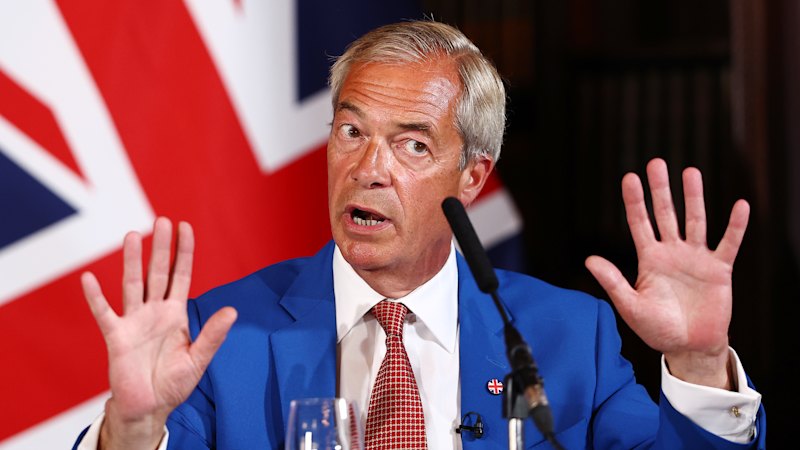
Every time a politician runs out of actual policy ideas, they look at a map, point blindly to an island nation in the Southern Hemisphere, and scream about copy-pasting their border controls.
Nigel Farage is currently doing it with the so-called Australian plan. The lazy consensus in Westminster treats this like a neat architectural blueprint. Turn the boats back, dump asylum seekers in offshore processing gulags on some sun-scorched Pacific atoll, and watch the crisis evaporate into the English Channel.
It is a seductive fiction. It is also fundamentally illiterate about geography, international law, economics, and basic logistics.
I have spent years watching politicians pitch silver bullets to complex systemic friction, and this is the most expensive, unworkable delusion yet. Farage wants you to believe that political will is the only missing ingredient, as if sovereignty is a magic wand that vaporizes reality.
Let us dismantle the fantasy piece by piece.
The Geography Lie
The primary reason the Australian model worked—and I use that term with heavy caveats—is that Australia is a massive continent surrounded by thousands of miles of deep, hostile ocean.
If you launch a leaky wooden boat from Indonesia toward Australia, you are traversing an immense maritime void. Interception is a naval exercise on an industrial scale. The Australian Navy spots you days before you hit land, intercepts you in international waters, and reroutes you.
Now look at the English Channel.
It is twenty-one miles wide. On a clear day, you can see France from Dover. A rubber dinghy pushed off a beach in northern France takes hours, not weeks, to cross into British territorial waters.
If the Royal Navy or Border Force attempts to turn back every small boat mid-channel using aggressive maritime tactics, you are not engaging in border control; you are engineering maritime mass casualties. The moment a cutter swamps a dinghy and lives are lost in full view of international media, the political calculus flips instantly.
Australia never had to manage a twenty-one-mile commuter lane shared with thousands of commercial cargo ships, ferries, and private yachts. You cannot blockade a marine highway with the same logic you use to patrol the open Timor Sea.
The Sovereign Scale Fallacy
Farage loves to invoke Operation Sovereign Borders as a stroke of authoritarian genius. But let us look at the price tag and the sheer scale of the administrative machinery required to sustain it.
Australia outsourced its detention to Nauru and Papua New Guinea. They spent billions of dollars on offshore processing centers that became international human rights scandals, legal quagmires, and breeding grounds for self-harm and administrative decay.
Where is Britain going to put its Nauru?
Rwanda was a deeply compromised, half-billion-pound farce that managed to fly a handful of volunteers out after years of courtroom trench warfare. Britain does not possess a string of compliant, isolated Pacific micro-states willing to act as external holding pens for cash.
To replicate the Australian system, Britain would need to secure permanent, extraterritorial sovereignty over tracts of land in foreign nations that view such arrangements as neo-colonial exploitation. No serious diplomat thinks this is achievable. It is domestic theater masquerading as foreign policy.
The Push-Factor Blind Spot
The fundamental misunderstanding at the heart of the "stop the boats" rhetoric is the definition of the problem.
Politicians talk about traffickers as if they are rogue travel agents creating demand out of thin air. They want you to believe that if you just make the destination unpleasant enough, people will simply choose to stay in active war zones, authoritarian dystomias, or economic ruins.
That is not how human migration works. When a state collapses—whether through civil war, climate breakdown, or total economic failure—desperation acts as an unyielding engine. People do not risk freezing in the back of a refrigerated lorry or drowning in the Channel because they heard Britain has good welfare benefits. They do it because the alternative is certain death or total erasure at home.
When you squeeze a balloon in one place, the air simply bulges out somewhere else. Australia stopped boat arrivals by externalizing the crisis to transit countries through heavy-handed regional diplomacy and financial incentives, primarily Indonesia.
Britain has no such leverage over France. Paris has zero incentive to act as Britain's unpaid border guard, especially when post-Brexit relations remain frosty and European capitals view British asylum policies as an abdication of shared international responsibility. Every time London threatens France, Paris quietly loosens enforcement just enough to remind Downing Street who holds the cards on the ground.
The Economic Reality of Fortress Politics
Let us talk about the costs—not just financial, but institutional.
Building an impenetrable border apparatus requires an enormous, permanent security state. You need radar arrays, fast-interception fleets, detention infrastructure, massive legal teams to fight endless human rights appeals, and an internal deportation machine that dwarfs anything currently operating.
When you funnel billions into policing borders at the point of arrival, you starve the actual interior processing engine of resources. Britain's backlog of asylum claims exists because the Home Office administrative apparatus has been hollowed out by decades of performative cruelty and systemic neglect.
A functional system decides claims quickly, integrates those who qualify for protection, and deports those who do not with clinical efficiency. An ideological system builds walls, hires tough-talking consultants, and watches the backlog swell because the entire enterprise is designed for headlines rather than outcomes.
What Actually Works
If you want to stop irregular crossings, you do not look at naval blockades or offshore islands. You do something much harder, much less glamorous, and entirely devoid of populist appeal.
You dismantle the business model of the traffickers by opening legal, highly regulated pathways for processing claims before people reach the coast. You establish regional processing hubs in northern France and safe countries of transit, backed by joint Anglo-European law enforcement task forces that target the financial networks of smuggling rings.
You harmonize asylum standards across Europe so that Britain is neither an accidental magnet nor a punchline for administrative incompetence. You process claims in weeks, not years, and you return rejected applicants immediately through working bilateral readmission treaties.
This requires diplomacy, compromise, quiet competence, and adult governance. It does not look good on a campaign poster. It does not allow a retired politician to wave his arms and yell about national sovereignty to an angry crowd.
The Australian model is a myth in a British context. Buying into it is an admission that you prefer the comfort of a loud illusion to the grueling work of reality.
Stop looking at the southern hemisphere for answers to a European problem.
Build a system that functions, or stop pretending you want to fix anything at all.