The hum of downtown Austin on a warm Texas evening has a distinct pitch. It is a mixture of blues riffs drifting from open doorways, the low rattle of the commuter rail, and the distinct, caffeinated chatter of young developers arguing over code on outdoor patios. For fifteen years, that specific frequency had a conductor. If you walked into the Omni hotel building downtown, rode the elevator up, and stepped out into the sprawling maze of desks known as Capital Factory, you were stepping into a machine powered largely by one man's relentless velocity.
Joshua Baer did not move through the world slowly. He walked fast, talked fast, and thought in a series of rapid-fire bullet points that could leave slower minds dizzy. He was a fixture of the Texas tech scene, a man who seemed to exist in three places at once, mentoring a college dropout at noon, closing a deal with a military general at two, and hosting a panel for international investors by nightfall.
Then, the radar screen went blank.
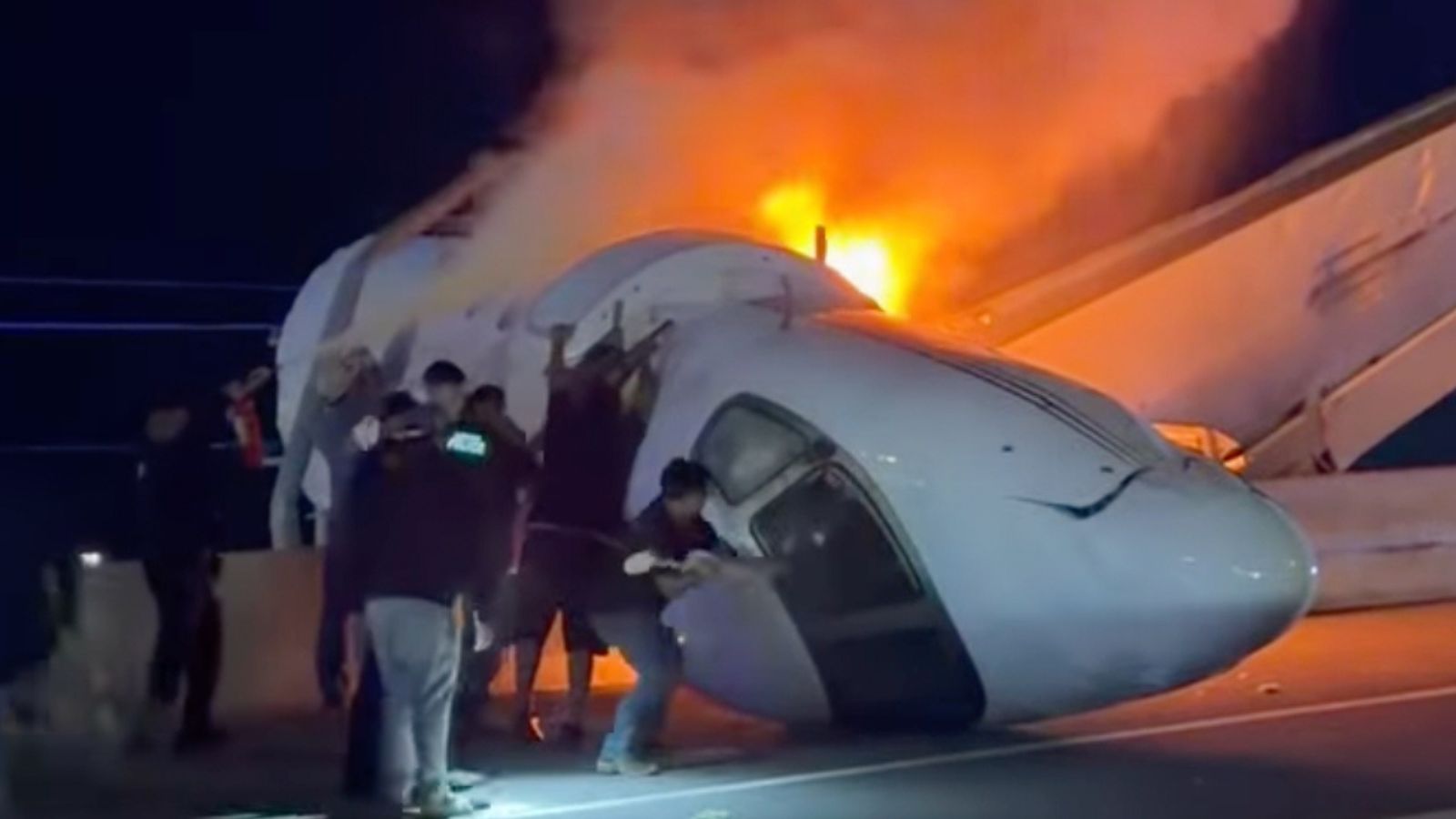
The news did not arrive all at once with a clean, authoritative press release. It trickled out in the modern way—a series of confused text messages between founders, a sudden, unexplained silence on a couple of prominent Slack channels, and a growing sense of dread that rippled through the local ecosystem before the local news stations finally confirmed the worst. A private jet. A sudden, catastrophic descent. A field somewhere in the vast expanse of Texas where the ambition of a lifetime met the unyielding laws of physics.
In an instant, the man who had spent his life connecting thousands of people was permanently disconnected. The shockwave did not just hit the boardroom; it tore through the fabric of a community that had come to view its own growth as an unstoppable, upward trajectory.
The Mechanics of Flight and Ambition
There is a fundamental tension between the mind of an entrepreneur and the reality of aviation. Entrepreneurs are taught to reject gravity. They are told that if a rule stands in their way, they should bend it. If the market says something is impossible, they must work eighty hours a week until the market changes its mind. They live in a world of manufactured momentum, where sheer force of will can turn a failing software startup into a billion-dollar entity.
Aviation, however, does not care about willpower.
When you climb into a small aircraft, you enter an environment governed by cold, mathematical absolutes. The air pressure, the fuel weight, the sudden shift of a thermal wind over the Texas hill country—these forces cannot be disrupted. They cannot be negotiated with. You cannot pitch a bad alternator a better business model to make it keep spinning.
For those who knew Baer, his affinity for private travel made perfect sense. It was the ultimate optimization tool. Why waste two hours in a security line at Austin-Bergstrom when you could hop into a small fuselage, clear the runway, and be in Dallas, Houston, or San Antonio before the ice in your soft drink had fully melted? It was about squeezing more life out of every twenty-four-hour cycle. It was about defying the constraints of geography.
Consider a hypothetical young founder sitting at a desk in Capital Factory on the day of the crash. Let us call her Sarah. She had spent the last six months trying to get five minutes of Baer’s time. To her, he wasn't just a businessman; he was the gatekeeper to her future. When her phone buzzed with the news notification, her first reaction wasn't to think about the macroeconomic impact on Texas venture capital. It was a sudden, chilling realization that the door she had been trying to open had vanished entirely.
That is the true casualty of an unexpected tragedy. The statistics will focus on the tail number of the aircraft, the flight path, and the weather conditions at the time of the impact. The aviation authorities will spend months examining pieces of charred aluminum, trying to reconstruct the final seconds of the flight. But the real loss is measured in the unwritten chapters, the unmade introductions, and the sudden, terrifying vacuum left in a community that had forgotten how to walk without its guide.
The Hive on Brazos Street
To understand the weight of the loss, you have to understand what Capital Factory actually is. It is not just a shared office space with free cold brew and some mid-century modern couches. It became the physical manifestation of an ideology.
Before the tech boom turned Austin into a city of glittering glass towers and soaring rent prices, it was a sleepy university town where people came to retire early or play guitar. Baer was among a small group of believers who looked at the city and saw something else. He saw raw material. He recognized that the university was churning out brilliant minds that immediately packed their bags for Silicon Valley because there was nowhere for them to go locally.
He set out to build a honeybee hive. He crammed hundreds of startups into a single space, forcing them to collide with one another in the hallways, at the coffee machines, and in the elevator banks. He understood that innovation is rarely the result of a lone genius working in a vacuum. It is the result of friction. It happens when a data scientist overhears a mobile developer talking about a problem and offers a solution over a game of ping-pong.
The environment Baer built was loud, messy, and intentionally overwhelming. It was a place where failure was parsed as a data point, not a tragedy. If your company went under on a Friday, you were expected to dust yourself off and join someone else’s team by Monday morning. The pace was relentless.
But that constant motion masked a deeper vulnerability. The entire structure relied on the assumption that the main engine would always keep running. Baer was the ultimate matchmaker of the Texas tech world, possessing an uncanny ability to remember a conversation from three years prior and connect it to a person he had met five minutes ago.
When that engine stops, the silence is deafening.
On the morning after the crash, the physical space of Capital Factory looked exactly the same. The neon signs were still buzzing. The espresso machine still hissed. But the atmosphere had fundamentally altered. People walked softer. They spoke in hushed tones, looking at the glass-walled corner offices as if expecting a ghost to walk through the door with a backpack slung over one shoulder and a phone pressed to his ear.
The Myth of Invincibility
The tech industry has a complicated relationship with mortality. It is an industry obsessed with longevity, biohacking, and the idea that every human limitation is simply a bug waiting to be patched. We watch founders spend fortunes trying to reverse their biological age, speaking about death not as an inevitability, but as an engineering problem that hasn't been solved yet.
This mindset creates a false sense of security. When a leader achieves a certain level of prominence, they begin to seem permanent. They become part of the geography of a city, as enduring as the river or the hills. You assume they will always be there to give the keynote speech, to sign the lease extension, or to offer that brutal, necessary piece of feedback on your pitch deck.
A tragedy like a private plane crash shatters that illusion with terrifying speed. It forces a deeply uncomfortable truth into the open: no amount of venture capital, no level of local influence, and no degree of intelligence can protect a human body from a sudden stop from three thousand feet.
It makes the entire endeavor of building a business look remarkably fragile. We spend our lives worrying about quarterly projections, user acquisition costs, and server uptime. We treat these metrics as matters of life and death. Then, a real matter of life and death occurs, and those metrics instantly shrink to insignificance.
The shock of the event caused an immediate pause across the state's business community. For a moment, the endless race to the next funding round slowed down. People began to look at their partners, their co-founders, and their families with a different kind of intensity. They were forced to ask themselves a question that the tech world usually avoids: If it all ended tomorrow, what did it actually mean?
The Invisible Stakes
The true impact of this loss will not be felt in the immediate weeks following the accident. The memorial services will be held, the tributes will be posted on social media, and the temporary leadership teams will step in to keep the day-to-day operations moving. The real consequence lies in the long-term trajectory of the region.
Every nascent tech ecosystem needs a champion—someone willing to get on a plane to Washington D.C. to scream about why their city matters, or to sit down with legacy corporate executives and convince them to risk their money on unproven local founders. Baer did that work with a missionary zeal. He was an evangelist for Texas innovation, constantly arguing that the future of technology was being built in the space between Austin, Dallas, and Houston.
Without that singular, loud voice, the conversation changes. The dynamic shifts. The invisible stakes of the accident involve the projects that will never start because the person who would have greenlit them is gone. It is the international company that chooses to open its next office in Denver or Salt Lake City instead of Austin because the relationship that would have anchored them to Central Texas was severed on a foggy runway.
Yet, there is an alternative way to view the legacy of a builder.
If you build a company that depends entirely on your presence to survive, you haven't built an organization; you have built a job for yourself. But if you build an environment that can absorb your absence, an environment that has adopted your values, your speed, and your hunger, then you have built something lasting.
The true test of Baer’s life work is happening right now in the very rooms he designed. It is found in the resilience of the young founders who are currently sitting at those communal desks, staring at their screens through the fog of grief, and choosing to keep coding anyway. They are realizing that the best way to honor a mentor who lived at high velocity is not to stop, but to accelerate.
The Unfinished Desk
We like our stories to have neat conclusions. We want the loose ends tied up, the lessons summarized, and the future mapped out with clean precision. But real life, particularly a life cut short by tragedy, offers no such luxuries. It leaves us with half-finished sentences and unanswered questions.
If you were to walk through the offices today, you would see the physical reminders of a routine interrupted. A notebook with a half-written list of goals. A calendar filled with appointments that will never happen. A coffee mug sitting precisely where it was left.
The tech world will move on because moving on is its defining characteristic. New funds will be raised. New startups will occupy the desks. The skyline of Austin will continue its relentless climb into the clouds, driven by the same ambition that Baer helped cultivate.
But for those who were there in the early days, when the city's tech scene was nothing more than a handful of optimistic people in a rented room, the sky above Texas will always look a little emptier. They will remember the lesson that was delivered not in a lecture hall or a pitch meeting, but in the sudden, quiet aftermath of a tragedy: we are all flying on borrowed time, and the only thing that truly outlasts the flight is the community we build before we land.

