The air in Cairo usually tastes of dust, exhaust, and ancient stone. But on that specific Tuesday night, just past eleven, the air tasted like electricity.
For ninety minutes, an entire nation of over one hundred million people stopped moving. Traffic on the October 6 Bridge, usually a chaotic, honking snake of metal, simply froze. Drivers sat on their hoods. In the narrow, labyrinthine alleys of Khan el-Khalili, the smoke from shisha pipes hung undisturbed in the humid air. Thousands of eyes were locked onto cheap plastic television sets balanced on wooden chairs outside local cafes.
Then, the whistle blew.
Deafening. Absolute. Delirium.
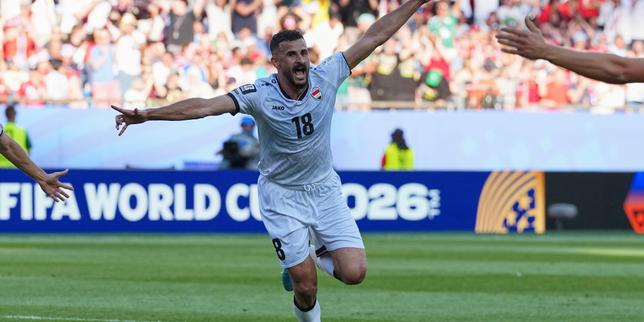
Egypt had won its first-ever football match on the World Cup stage. To an outsider, it is just a game—twenty-two people chasing a piece of synthetic leather on a patch of grass thousands of miles away. But to understand why grown men were weeping on the asphalt in Tahrir Square, you have to understand the weight of the waiting. You have to understand what it feels like to be a football giant on your own continent, yet completely invisible to the rest of the world.
The Ghost of 1934 and the Burden of Almost
Egyptians love football with a ferocity that borders on the religious. We are Africa’s most decorated footballing nation, possessing a cabinet full of Africa Cup of Nations trophies. Yet, when it came to the global stage, a bizarre, decades-long curse seemed to hang over the Pharaohs.
Consider the historical timeline. Egypt was the very first African nation to participate in a World Cup, all the way back in 1934. They played one match, lost to Hungary, and went home. They didn't qualify again until 1990. There, they managed two draws but failed to win a game. Then came another agonizing twenty-eight-year drought before they reached the tournament again, only to leave without a single point.
Generations of Egyptians grew up on stories of "what could have been." We watched neighbor states, rivals, and underdogs taste victory while we remained the spectators of the world's greatest party. Every four years, the same cycle repeated: hope, heartbreak, and the inevitable return to the drawing board. The psychological toll of the "almost" is heavier than the toll of complete failure. It breeds a quiet, cynical expectation that whenever the lights are brightest, something will go wrong.
But cynical expectations dissolve quickly when history actually changes.
A City Reborn in Red, White, and Black
To understand the scale of the explosion, imagine a hypothetical young man named Tarek. He is twenty-four, working a grueling job in a Cairo call center, navigating rising inflation, and feeling the heavy, everyday pressures of youth in a struggling economy. Football isn't an escape for Tarek; it is the only place where justice feels immediate and merit actually matters. When the national team steps onto the pitch, Tarek isn't just watching athletes. He is watching his country demand respect from a world that often ignores it.
When the final whistle confirmed the historic victory, Tarek didn't just cheer. He ran into the street. Everyone did.
Within minutes, Cairo transformed from a gridlocked metropolis into a singular, sprawling carnival. The colors of the Egyptian flag—red, white, and black—blanketed the city. Total strangers embraced. Elderly women leaned over balconies, throwing chocolate and spraying perfume onto the crowds below. Car horns, usually a sign of frustration, synchronized into a rhythmic, deafening anthem of triumph.
The celebration wasn't contained to the capital. From the Mediterranean coast of Alexandria to the ancient southern city of Luxor, the country erupted in unison. It was a collective exhalation of a breath that had been held for nearly a century.
Beyond the Scoreboard
Statisticians will point to the tactical formations, the possession percentages, and the precise minute the winning goal hit the back of the net. They will talk about the defensive resilience and the individual brilliance of the players who carried the tactical plan to perfection.
Those facts matter, of course. They are the scaffolding of the achievement. But the facts fail to capture the invisible stakes.
This win shattered a psychological barrier. For decades, Egyptian football carried an inferiority complex on the global stage, a belief that while we could dominate our neighbors, we lacked the secular strength to compete with Europe or South America. This single victory re-wrote the script. It proved that the history books are not a life sentence.
As the sun began to rise over the Nile, casting a golden light through the lingering haze of smoke and celebration flares, the noise finally began to soften. The cars started moving again. The cafes packed up their plastic chairs.
Tarek walked home, his throat raw from screaming, his flag draped over his shoulders like a cape. The economic struggles were still there waiting for him. The dust of Cairo hadn't vanished. But everything felt different. A nation that had spent eighty-odd years believing it was destined to just miss out had finally crossed the line. They were no longer just participants in the world's game. They were winners.