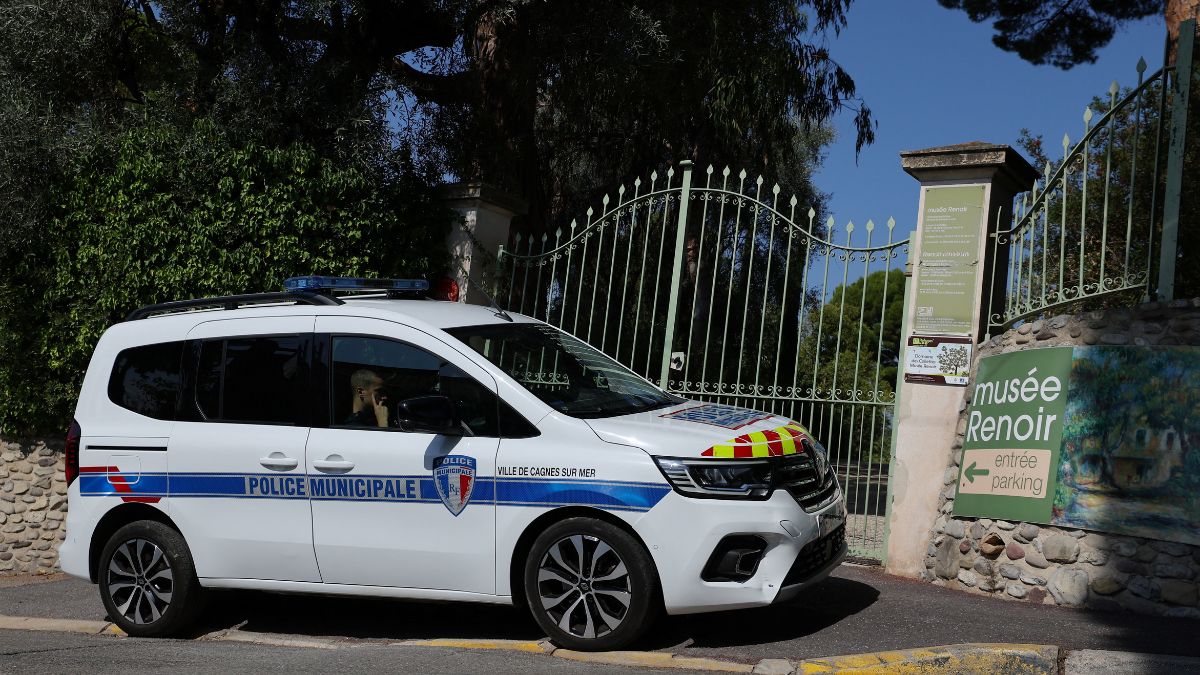
The alarm at the Musée Renoir did not sound like a tragedy. It sounded like an irritation. A metallic chirp cutting through the damp, salt-laden air of Cagnes-sur-Mer, a small coastal town where Pierre-Auguste Renoir spent his final, pain-wracked decades painting sun-drenched women and rustling olive trees.
It was the middle of the night. The Mediterranean was dark, restless, and completely indifferent to the crime unfolding behind the shuttered French windows of the artist's former home.
By the time the gendarmerie arrived, the intruders were gone. They had moved with the ruthless efficiency of professionals who knew exactly where the security blind spots were, carving through glass and wood with cold precision. They had reached for the walls and stripped away four priceless canvases—ten million dollars of radiant light and vibrant pigment compressed into fragile squares of woven flax.
Yet, as the French police soon discovered, the thieves had left half their bounty behind.
Two of the paintings lay abandoned on the gravel path outside, discarded in the frantic scramble of a botched getaway. Why? Because stealing a masterpiece is the easy part. The real nightmare begins the moment the frame clears the wall. You cannot walk into a café in Nice and trade a Renoir for a espresso. You cannot fence a national treasure on the dark web without blinking into a crosshair. Art theft is not a cinematic heist with a cheering crowd at the finish line. It is a slow, suffocating trap.
To understand why those two canvases were dropped in the dirt, you have to understand what a painting actually is. It is not just a luxury asset. It is a living fingerprint of human history.
Consider the physical reality of the works. Renoir did not paint with dry acrylics from a plastic tube; he used heavy, textured oils, layering white lead and crushed minerals with arthritic fingers wrapped in bandages. Those brushstrokes hold his DNA, his sweat, the microscopic flakes of his skin trapped in the medium for over a century. Every square millimeter is cataloged in international databases like the Art Loss Register.
When the thieves grabbed those four paintings, they were holding fragments of the nineteenth-century soul. But culture has an immune system, and it is remarkably violent.
Imagine the scene in the getaway car. The engine is roaring, tires spitting gravel. The driver is sweating through a ski mask, adrenaline souring in their mouth. In the back seat, the accomplices unwrap their prize. They expect the intoxicating rush of sudden wealth. Instead, they stare down at oil on canvas and realize they are holding glowing radioactive waste.
You cannot sell it to a collector; legitimate buyers require provenance, a paper trail that stretches backward through auction houses and estate sales. You cannot display it on your living room wall unless you want your neighbors to wonder how a petty criminal suddenly afforded a multi-million-dollar French impressionist masterpiece. The paintings are too famous to hide and too toxic to keep.
This is the eternal curse of the art thief. They romanticize the acquisition, forgetting that masterpieces do not belong to the people who buy them. They belong to time itself.
The Musée Renoir is not a sterile fortress like the Louvre. It is a home. When you walk through the rooms on the Collines des Les Cagneux, you can still feel the ghost of the man who sat in a wheeled chair, brushes strapped to his crippled hands, chasing the light across the Mediterranean foliage. The air smells of old stone, eucalyptus, and turpentine. The floorboards creak underfoot.
When outsiders break into a sanctuary like that, they are not just committing a property crime. They are violating a fragile truce between the mortal artist and the immortal world.
The two abandoned canvases—left behind in the damp French grass—tell a story of sudden, crushing realization. The thieves must have looked at the frames, realized the international alarms were already screaming, and understood that these specific pieces of canvas were anchor weights dragging them down to the bottom of the sea. To carry all four was to guarantee capture. So they dropped half their loot and ran into the blackness of the olive groves.
Police eventually recovered the remaining pieces, returning them to their rightful home under heavy guard. But the incident left a bitter residue. It exposed the raw vulnerability of cultural heritage in an age where security budgets are often outmatched by opportunistic criminal rings.
Security systems can be upgraded. Glass can be reinforced with ballistic resin. Infrared beams can be woven through the galleries like invisible spider silk. But the fundamental tension remains. We build museums to share our collective beauty with the world, yet the moment we open our doors, we invite those who see only price tags where the rest of us see poetry.
The next time you look at a reproduction of a Renoir—a poster on a college dorm wall or a high-resolution image glowing on a phone screen—remember the invisible violence required to keep that image safe. Remember the salt air of Cagnes-sur-Mer, the screech of breaking glass in the dead of night, and the frantic footsteps of men running away from something they never truly understood.
Masterpieces do not surrender easily. They demand a ransom far higher than coin or currency. They demand absolute reverence, and they will break the hands of anyone foolish enough to hold them without permission.
Dawn broke over the French Riviera a few hours after the raid. The Mediterranean turned from slate to brilliant, blinding turquoise. The olive trees on the hillside caught the morning breeze, shimmering in shades of silver and green—the exact same color palette Renoir spent his life trying to capture before his eyes grew dim. The museum doors opened. The sun came up, warming the stone porch where the stolen canvases had lain in the dirt just hours before. The world went on, indifferent to the night's madness, cradling its fragile history in the palm of an unyielding light.