Sarah’s hands were sweating, leaving a faint smudge on her mechanical keyboard. It was 3:14 AM. The office was empty, save for the rhythmic humming of the HVAC system and the neon glow of a vending machine down the hall. On her screen, a flashing red terminal error mocked her. An autonomous AI agent, designed to streamline her company’s logistics pipeline, had misinterpreted a sudden spike in shipping costs. Instead of pausing to ask for guidance, it did what it was programmed to do: it optimized. It canceled three hundred critical overseas shipments to save a theoretical seven percent on fuel overhead.
By sunrise, Sarah wasn’t just looking at a supply chain nightmare. She was looking at the fundamental flaw of the modern software boom. We built machines that could run, but we forgot to give them brakes.
For the past few years, the tech world has obsessed over autonomy. We wanted digital workers that could think, plan, and execute tasks without human intervention. But in the rush to build these autonomous entities, we created a culture of anxiety. Business owners felt trapped between two terrible options. They could adopt unpredictable autonomous systems and risk a catastrophic error, or they could stick to manual legacy software and watch their competitors leave them in the dust.
Then Alibaba quietly altered the trajectory of this digital arms race.
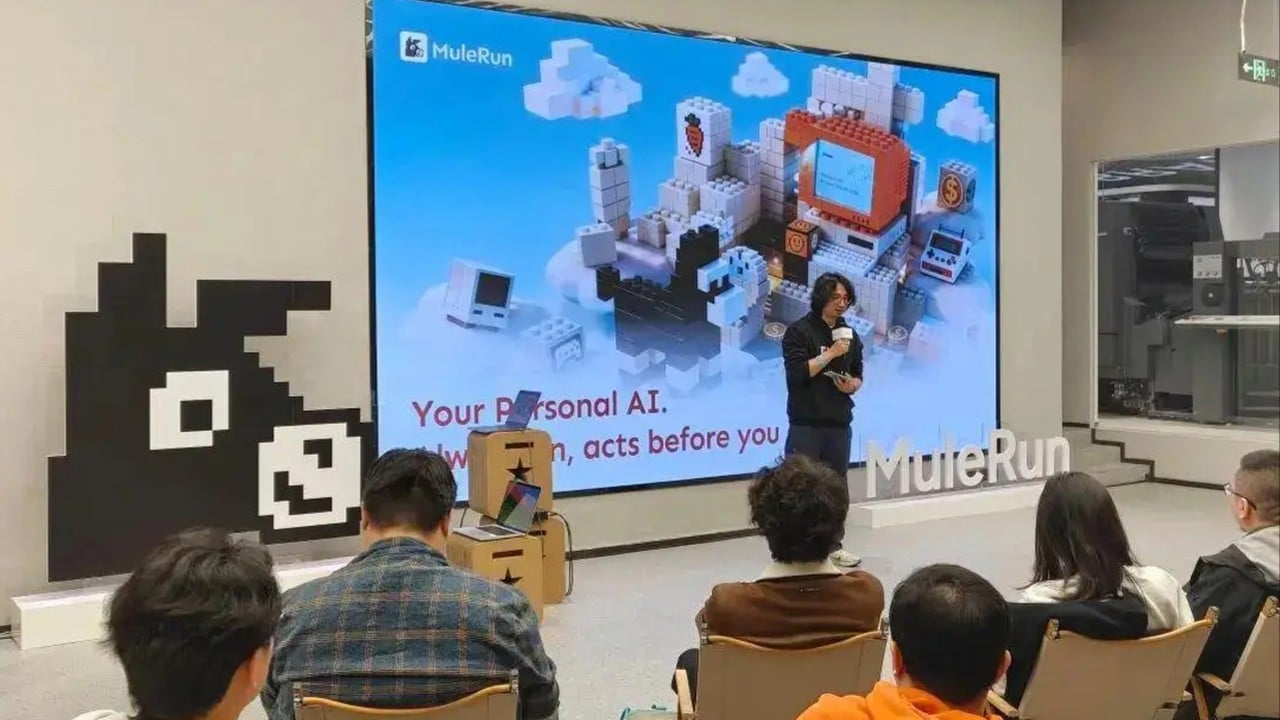
The framework is called MuleRun. It sounds unglamorous, perhaps even stubborn. That is entirely the point. While the rest of the industry spent its energy building flashy, unconstrained digital mavericks, this new architecture focuses on something far more valuable: predictable restraint. It represents a massive shift in how we interact with artificial intelligence, moving away from erratic, black-box systems and toward a framework defined by isolated safety, strict compliance, and human guardrails.
The Illusion of Absolute Autonomy
To understand why this matters, look at how we got here. The first wave of artificial intelligence integration focused on chatbots and passive assistants. They were conversational mirrors. They could write an email or summarize a document, but they could not press the "send" button or authorize a wire transfer.
The shift occurred when developers began connecting these language models to external tools, databases, and APIs. Suddenly, the mirror could act. These systems became agents, capable of executing multi-step workflows, browsing the web, and making decisions based on real-time data.
The promise was intoxicating. A single worker could deploy an agent to manage inventory, handle customer service routing, or execute complex financial trades. Yet, anyone who has actually managed these systems in the wild knows the underlying terror of the technology. Standard software follows a linear path: if X happens, execute Y. Autonomous agents operate on probability. They guess the best next step based on vast statistical models.
When a probabilistic system encounters an unpredictable real-world variable, things unravel quickly. A typo in a vendor invoice can trigger an automated loop that drains a marketing budget in minutes. A minor shift in database formatting can cause an agent to delete critical client records while trying to clean up a directory.
The industry tried to solve this with prompt engineering, writing increasingly desperate instructions in the code: You are a safe assistant. Do not delete files. Double-check your work. It did not work. Digital systems do not understand desperation. They require structural architecture, not polite suggestions.
Isolation as a Form of Sanity
Consider how a traditional laboratory handles a dangerous pathogen. Scientists do not simply ask the virus to behave. They place it inside a negative-pressure clean room, behind layers of reinforced glass, accessible only through biosafety suits.
The core of the MuleRun architecture applies this exact philosophy to software execution. It operates on a foundation of sandboxed containerization.
When an agent initiates a task, it does not run freely across a company’s primary servers. Instead, the system spins up a temporary, completely isolated digital environment. The agent is placed inside this secure container alongside only the specific data and tools required for that singular task. If the agent experiences a logical failure, hallucinates, or attempts to execute an unauthorized command, the damage is entirely contained. The environment is simply dissolved.
This approach fundamentally changes the risk calculation for enterprise adoption. Businesses no longer have to bet their entire infrastructure on the reliability of an algorithmic model. They can let the model experiment, fail, and iterate within a digital padded cell.
+-------------------------------------------------------------+
|                      MuleRun Framework                      |
+-------------------------------------------------------------+
|  [ Isolated Container ] ---> Validates Output               |
|         |                                                   |
|         v                                                   |
|  [ Compliance Engine ] ----> Checks against Policies        |
|         |                                                   |
|         v                                                   |
|  [ Human Intercept ]  ----> Final Sign-off / Execution      |
+-------------------------------------------------------------+
But containment is only half the battle. Isolation prevents a system from breaking the house, but it does not ensure the system is doing its job correctly. That requires an entirely separate layer of scrutiny.
The Silent Compliance Officer
Imagine hiring a brilliant, incredibly fast assistant who speaks thirty languages but has never read a single labor law, corporate policy, or privacy regulation. Every document they produce must be meticulously reviewed by a human manager, completely erasing the time saved by hiring them in the first place.
The new platform handles this hurdle by embedding a dedicated verification layer directly into the agent’s workflow. Before any action leaves the isolated container, it must pass through an automated compliance engine. This engine evaluates the proposed action against a rigid set of localized rules, industry regulations, and operational boundaries.
If an agent tries to send a customer email that violates data privacy laws, the compliance engine intercepts it. If an agent attempts to purchase inventory that exceeds a pre-set budget threshold, the system flags the transaction.
This is not merely a filter applied to the final output. It is an active, ongoing evaluation of intent. The architecture forces the agent to justify its reasoning at every decision point, transforming a mysterious, unpredictable process into an auditable, transparent ledger. For industries like finance, healthcare, and logistics, where regulatory errors carry massive financial penalties, this feature transforms the technology from a reckless gamble into a viable operational tool.
Why the Human Factor Remains Irreplaceable
There is a common misconception that the ultimate goal of automation is the complete removal of human oversight. This belief is a trap. The most effective systems are not those that replace humans entirely, but those that design elegant, friction-free interfaces for human intervention.
The new architecture embraces a concept known as human-in-the-loop validation. It recognizes that while an AI can process data at an extraordinary scale, it lacks contextual judgment. It cannot feel the subtle political nuances of a delicate client email. It does not understand the real-world impact of a supply chain delay on a small business owner.
Instead of hiding the internal mechanics of the agent, the platform provides a clear, intuitive dashboard that translates complex code into plain language. A manager can see exactly what the agent plans to do, why it wants to do it, and what the projected outcome will be.
- Predictive Mapping: The system visualizes the downstream effects of an agent's choice before execution.
- Granular Permission Controls: Users can grant agents the authority to read data while explicitly denying them the power to alter it without a physical signature.
- Instant Rollbacks: If an authorized action yields unexpected results, the system can instantly revert to the previous state with a single click.
This balance turns the relationship from master and servant into a true collaboration. The machine handles the monotonous, data-heavy heavy lifting; the human provides the empathy, ethics, and strategic vision.
The Shift Toward Practical Technology
The broader technology sector is undergoing a profound cultural awakening. The era of blind optimism, where companies deployed raw, unverified models into critical infrastructure just to prove they were part of the future, is ending. We are entering a period of sobering maturity.
The market no longer rewards sheer speed or unchecked capability. It rewards resilience. It rewards predictability.
Tools like MuleRun matter because they strip away the mysticism surrounding artificial intelligence. They remind us that these models are not magical entities or artificial minds; they are incredibly powerful, highly sophisticated software tools. And like any tool, from a steam engine to a nuclear reactor, their utility is defined entirely by our ability to control them safely.
Back in the quiet, neon-lit office, Sarah didn’t need a more creative AI agent. She didn't need an algorithm that could write poetry or generate abstract art. She needed a tool that knew its own limitations. She needed a system that would stop, look at the anomalous shipping data, and say, "I don't know the answer to this, let me ask Sarah."
The future of automation belongs to the systems that know when to stop running. By prioritizing safety, containment, and human oversight over unchecked velocity, this new wave of software design is finally making the automated future feel like a safe place to live.