Silence.
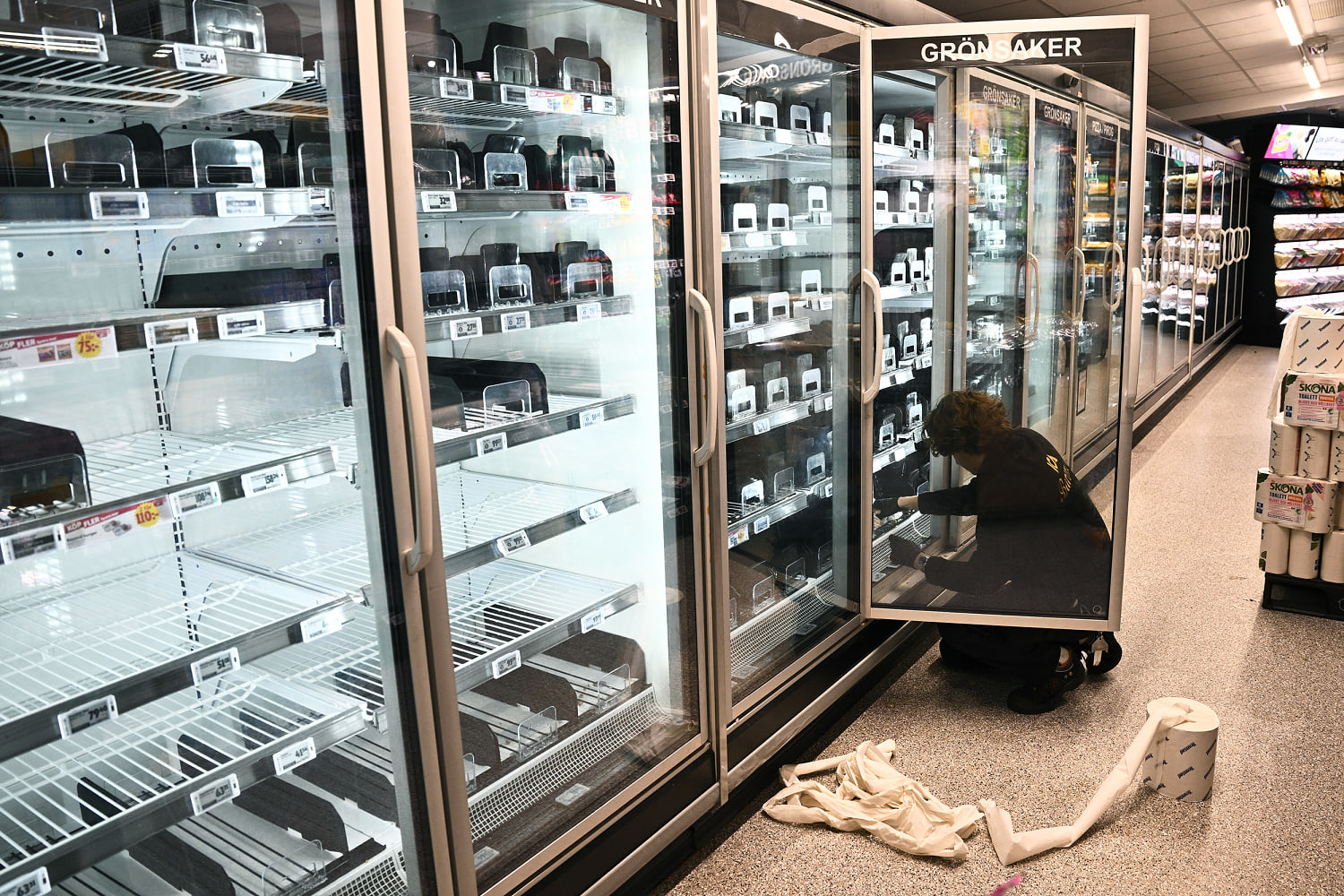
That is the first thing you notice when a grocery store dies, though most people expect alarms, flashing red strobes, or the frantic shouting of managers running down aisle four with clipboards. In reality, the end of a cold chain sounds like a gentle, collective sigh as forty industrial compressors click off at the exact same millisecond, leaving behind only the faint, rhythmic dripping of condensation hitting linoleum.
I stood in the middle of a mid-sized distribution warehouse outside Rotterdam three winters ago when a localized power-grid glitch knocked out our primary cooling bank for six hours. Even then, with backup generators roaring within ninety seconds, the smell was unforgettable—a sharp, metallic tang of warming freon mixed with the sudden, sweet rot of thawing strawberries and spoiled dairy. You feel a strange, primal panic when temperature rises in a room designed to stay frozen, because you realize how thin the barrier really is between modern abundance and absolute waste.
Now, multiply that single warehouse by hundreds of retail locations stretching from the foggy ports of Northern Europe down through the bustling suburban corridors of Germany, France, and the Benelux nations. Remove the accidental power glitch. Replace it with a deliberate, silent keystroke fired from an unknown terminal thousands of miles away.
Over the past several months, security researchers and European retail operators have quietly confronted a disturbing new reality: commercial refrigeration units across multiple European supermarket chains have been hit by apparent cyberattacks. While the public reads brief, clinical headlines about "building management system vulnerabilities" and "distributed denial-of-service anomalies," the actual story unfolding behind the glass doors of your local frozen food aisle is far more intimate, and infinitely more unsettling.
The Illusion of the Dumb Machine
To understand how a hacker turns a carton of vanilla ice cream into a geopolitical hostage, you have to abandon the idea that a supermarket freezer is just a big white box plugged into a wall.
In the late twentieth century, refrigeration was gloriously stupid. A thermostat measured the air, tripped a mechanical switch, and turned on a motor. If you wanted to break it, you needed a crowbar or a pair of wire cutters. Today, driven by strict European Union energy efficiency mandates and corporate sustainability pledges, every modern grocery store is a living, breathing organism of Internet of Things sensors.
Think of a modern supermarket cooling system like the human autonomic nervous system. Just as your brain unconsciously regulates your heart rate, sweating, and blood pressure without you ever thinking about it, a store’s Building Management System—often called a BMS—constantly balances compressor speeds, defrost cycles, ambient humidity, and external weather forecasts. To save fractions of a cent per kilowatt-hour, these systems are wired directly into corporate networks, remote maintenance portals, and cloud-based energy dashboards.
This connectivity is brilliant for profit margins. Until someone slips through the back door.
Consider a hypothetical store manager—let’s call her Elena—working the opening shift at a busy supermarket outside Lyon. At 5:30 AM, before the delivery trucks even back up to the loading bay, Elena checks her tablet. Everything looks green. Yet, somewhere inside the building’s digital nervous system, an unauthorized script has quietly hijacked the administrative credentials of a third-party HVAC contractor.
The attacker doesn't deploy classic ransomware that locks up the cash registers with a skull-and-crossbones demand note. Cash registers can be rebooted, and customers can pay with coins. Instead, the intruder alters a single line of logic in the refrigeration controller. They raise the target temperature from minus-eighteen degrees Celsius to plus-twelve, and then they lock out the manual overrides.
By the time the first commuters walk through the automatic doors at 7:00 AM for milk and bread, the damage is already irreversible.
Why Hackers Target the Cold Chain
When news of these European refrigeration incidents first surfaced in cybersecurity circles, the immediate reaction from outsiders was confusion. Why bother? There are no credit card numbers stored inside a compressor valve. You cannot steal a customer's Social Security equivalent from a pallet of frozen peas.
But the real problem lies elsewhere. Modern cybercriminals and state-aligned saboteurs have realized that physical disruption extracts far faster compliance—and creates far deeper psychological terror—than stolen data ever could.
If a hacker steals a million customer email addresses, a corporation hires lawyers, issues a press release six weeks later, and offers free credit monitoring. Life goes on. If a hacker melts fifty tons of inventory across forty stores in a single Tuesday afternoon, the clock is ticking in real time. Food safety regulations across the European Union are uncompromising; once frozen meat, seafood, or pharmaceuticals rise above strict thermal thresholds for even a brief window, every single item must be destroyed. You cannot negotiate with bacteria.
Let’s look at the brutal economics of a single mid-sized European grocery store losing its cold chain:
- Direct Inventory Loss: Between €80,000 and €250,000 in ruined meat, dairy, produce, and frozen goods within four hours.
- Logistics and Disposal: Tens of thousands of euros in emergency hazardous-waste haulage, because rotting protein cannot simply be tossed into standard municipal dumpsters.
- Hardware Burnout: Attackers who rapidly cycle compressors on and off—a technique known in industrial security as "hunting"—can physically shatter mechanical valves that take six months to manufacture and replace.
- Brand Erosion: A shopper who walks into a store smelling sour milk and staring at empty, yellow-taped shelves rarely comes back the next week.
Multiply those figures across a regional chain of two hundred stores, and you are staring at a fifty-million-euro catastrophe before sunset. For an extortionist, that kind of immediate, physical leverage is pure gold. For a hostile nation-state testing the resilience of European critical infrastructure, it is a low-cost, high-visibility dry run for how to induce panic in a civilian population without firing a single missile.
The Architecture of Vulnerability
How does a multi-billion-euro retail empire leave the keys to its freezers sitting under the digital doormat?
I used to think industrial security failures were the result of cartoonish incompetence—someone writing password123 on a sticky note stuck to a server rack. After spending years interviewing operational technology engineers, I have come to realize the truth is much more human, and much harder to fix. It is a story of clashing cultures.
In almost every large enterprise, there are two distinct tribes: Information Technology (IT) and Operational Technology (OT). IT people live in a world of laptops, firewalls, encryption, and constant software patches. OT people live in a world of physical uptime, grease, pipes, and machines built to last twenty-five years. To an OT engineer, rebooting a server to install a security update isn't a minor inconvenience; it risks stalling a cooling loop that keeps ten thousand liters of milk from curdling.
Because of this divide, retailers rushed to connect their old physical equipment to the internet without ever redesigning the locks.
Many of the building controllers targeted in recent European incidents rely on legacy industrial protocols—digital languages like Modbus or BACnet—that were invented in the late 1970s and 1980s. Back then, the idea that someone in Eastern Europe or Southeast Asia would ever connect to a supermarket basement in Belgium was pure science fiction. Consequently, these protocols were built on a foundation of absolute trust. If a command arrives at the controller saying turn off the cooling, the controller assumes the command came from a trusted technician standing ten feet away. It doesn't ask for a cryptographic signature. It doesn't check a password. It just obeys.
To make matters worse, retail chains rarely maintain their own freezers. They outsource maintenance to hundreds of smaller, regional refrigeration contractors. To save money on truck rolls, those contractors demand remote access so they can diagnose a faulty sensor from their home office. Suddenly, a supermarket chain’s massive security perimeter is only as strong as the cheapest laptop used by a subcontractor in a van parked outside Amsterdam.
The Invisible Front Line
We tend to think of critical infrastructure in dramatic, cinematic terms: nuclear power plants, high-speed rail networks, hydroelectric dams, and submarine fiber-optic cables. Nobody writes a thriller about the cold aisle at the neighborhood supermarket.
Yet, during the early weeks of the 2020 lockdowns, we all received a sudden, visceral education in what actually holds civilization together. Society is roughly nine missed meals away from anarchy, and the modern European metropolis is entirely dependent on a frictionless, just-in-time web of temperature-controlled logistics. Food does not sit in giant municipal granaries anymore. It moves continuously on refrigerated trucks, pauses briefly in automated regional hubs, and lands on grocery shelves hours before it is eaten.
When attackers probe these supermarket systems across Europe, they are probing the soft underbelly of daily life.
I will admit, the more I study the intersection of cyber warfare and physical logistics, the harder it becomes to walk down a brightly lit grocery aisle without feeling a quiet flicker of unease. We have traded mechanical resilience for digital convenience at every single layer of our lives. We put microchips in our thermostats, our cars, our pacemakers, and our bread ovens, rarely stopping to ask what happens when the signal drops—or worse, when someone else grabs the steering wheel.
The European Union has begun waking up to this quiet crisis. Regulatory frameworks like the NIS2 Directive are forcing food producers, distributors, and major retail networks to treat their operational technology with the same rigor as banks and telecom giants. Network segmentation—building impenetrable digital firewalls between the corporate email system, the cash registers, and the basement compressors—is finally becoming a boardroom priority rather than an engineering afterthought.
Rebuilding the Digital Wall
Fixing a connected world does not mean unplugging it and returning to the era of clipboards and mechanical dials. Even if we wanted to, Europe’s energy grid could not handle the massive spike in electricity consumption that would come from stripping away smart climate controls. The solution lies in recognizing that every digital bridge we build must come with a drawbridge we can pull up in an instant.
Forward-thinking retail engineers are now adopting a philosophy called "zero-trust operational architecture," though the concept itself is wonderfully simple. Instead of letting a third-party contractor roam freely across a store’s network, maintenance connections are routed through heavily monitored, temporary digital airlocks that expire the moment a repair is finished.
Even more importantly, engineers are bringing back the physical fail-safe. Across new European installations, smart digital controllers are increasingly paired with dumb, analog thermal switches. If a hacker hijacks the software and commands a freezer to heat up to twenty degrees, a simple, non-networked bimetallic strip inside the compressor unit physically trips the circuit once the temperature crosses a hard-coded danger line, cutting off the rogue software and forcing the cooling system into a safe, default freeze mode. It is the technological equivalent of putting a heavy iron deadbolt on a door equipped with a smartphone lock.
Consider what happens next if we ignore these warning signs. The recent wave of apparent cyberattacks on European supermarket freezers did not trigger continent-wide food shortages, nor did it spark riots in the streets. Most shoppers never even knew why their local store had boarded up the dairy case for a few days, chalking it up to a broken pipe or a routine remodel.
That invisibility is precisely what makes this moment so dangerous.
Late tonight, across thousands of quiet European towns, automatic doors will slide shut and lock for the evening. The overhead fluorescent lights will dim to a low, economical hum. Inside those empty aisles, millions of sensors will continue their silent, microscopic conversation with distant servers, measuring frost buildup, adjusting valve pressures, and holding back the relentless, natural march of decay. Everything will look completely normal. Everything will feel effortless. And right behind the thin glass doors, keeping the whole fragile miracle intact, is nothing more than a line of code—and whoever happens to control it.