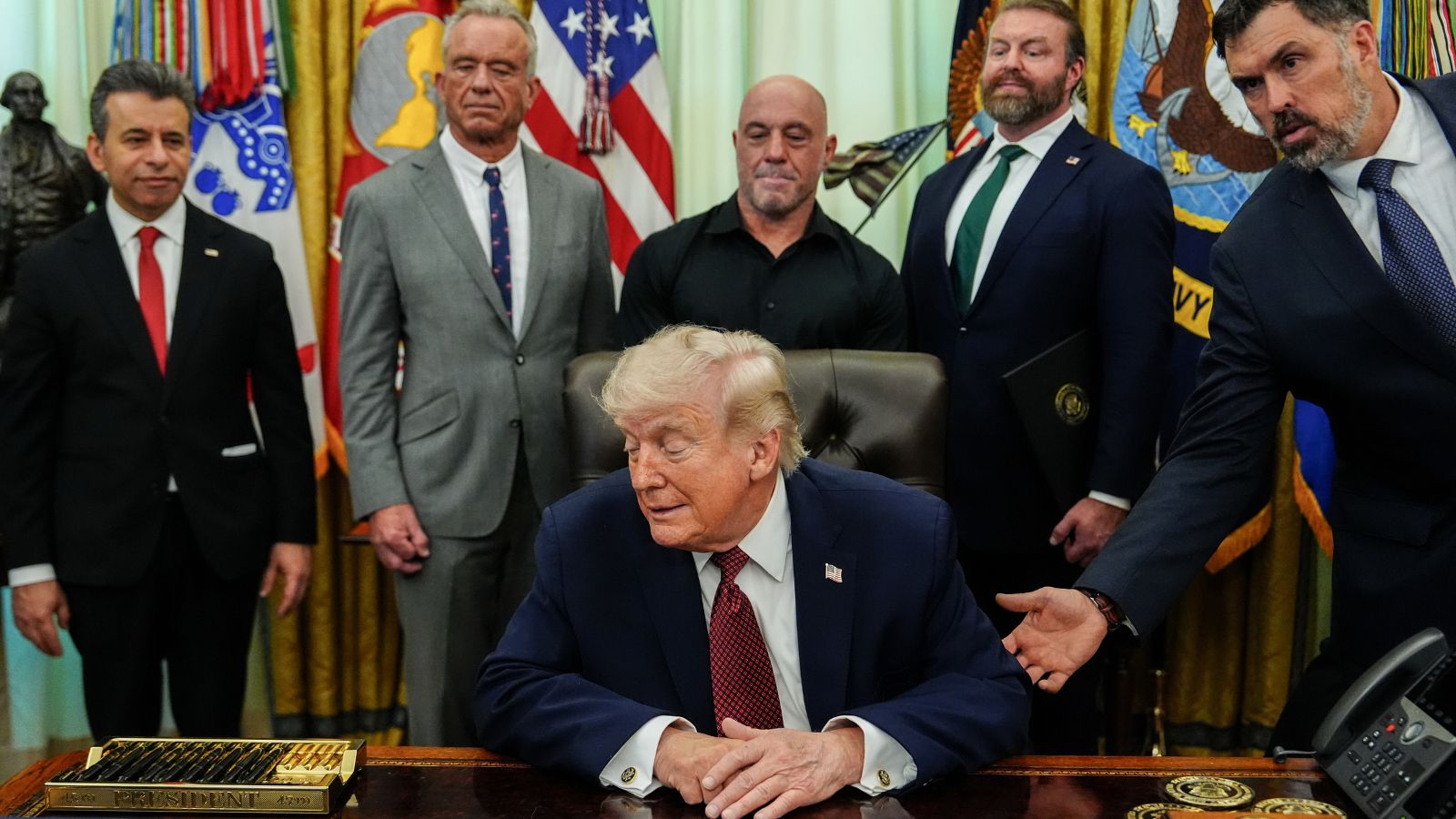
The air in the Sit Room doesn’t move. It is a recycled, sterile oxygen that tastes of electricity and old carpets. Somewhere deep beneath the West Wing, Donald Trump sat surrounded by the flicker of monitors and the low hum of cooling fans. Outside this bunker, the world was moving toward a standstill.
A missile had screamed across the sky over the Bab el-Mandeb—the "Gate of Tears." It found its mark on an Indian cargo vessel, a steel giant carrying nothing more offensive than bulk goods and the hopes of a crew just trying to make it home. Then came the gunfire. Small boats, fast and aggressive, swarming like hornets.
The world’s most vital artery for oil had just suffered a stroke.
The Invisible Thread
Most people never think about the Bab el-Mandeb. They don't have to. It is a narrow pinch point between Yemen and the Horn of Africa, a geographical throat through which the lifeblood of the global economy is pumped. When it closes, the heartbeat of modern life skips.
Consider a hypothetical merchant sailor named Arjun. He is forty-two, has a wife in Kerala, and a daughter who wants to be a doctor. He is currently standing on a deck slick with seawater, hearing the rhythmic thud-thud-thud of heavy caliber rounds hitting the hull. He isn't a combatant. He is a delivery man. But because of where he is sailing, he has become a pawn in a game of high-stakes blackmail.
The militants behind the triggers weren't just shooting at a ship. They were shooting at the gas pump down the street from your house. They were shooting at the price of your groceries. They were shooting at the very idea that the oceans belong to everyone.
A Room With No Windows
In Washington, the maps on the wall glowed red. The Strait was closed. Ships were already turning around, burning millions in extra fuel to take the long way around Africa, a journey that adds weeks and shatters supply chains.
Trump’s message to the room was blunt. No blackmail. No blinking.
The strategy was a gamble on raw power. When a rogue actor puts a knife to the throat of global trade, you don't negotiate for the price of the blade. You break the arm holding it. The tension in that room wasn't just about military maneuvers; it was about the fundamental fragility of our existence. We live in a world where a few teenagers with RPGs in a wooden skiff can cause a stock market crash in Tokyo or London.
This is the hidden cost of our interconnected lives. We have traded self-sufficiency for efficiency, and the price of that efficiency is vulnerability. We rely on the "just-in-time" delivery of everything from crude oil to microchips. When the Gate of Tears shuts, "just-in-time" becomes "not-at-all."
The Weight of Steel and Sea
Steel is heavy, but it floats on the back of stability. For decades, the unspoken rule of the seas was that trade was sacrosanct. You might hate your neighbor, but you didn't stop his bread from arriving. That rule is dead.
The gunfire at the Indian ships was a signal. It told the world that the old protections are dissolving. India, a rising titan, found its sovereignty challenged not on its borders, but in the middle of a turquoise sea thousands of miles away. This is the new front line. It isn't a trench in the dirt; it’s a shipping lane on a GPS screen.
Imagine the conversation in the Situation Room as the reports filtered in. General after general outlining the "kinetic options." The President, focused on the optics of strength. But beneath the talk of carrier strike groups and drone interceptions lies a deeper, more terrifying truth: we are all tethered to these narrow straits.
If the oil doesn't flow, the lights don't stay on. If the lights don't stay on, the social contract begins to fray. It starts with a spike in heating bills and ends with bread lines. That sounds like hyperbole until you realize that 10% of the world's seaborne oil passes through that single, narrow gap every single day.
The Indian Connection
Why target Indian ships? It’s a calculated move. India has tried to walk a tightrope of neutrality in many global conflicts. By forcing their hand, the aggressors are trying to shatter that neutrality. They want to prove that no one is safe, that no amount of diplomatic dancing can protect you from a bullet in the dark.
For the men on those ships, the geopolitics matter much less than the sound of the metal groaning. They are caught in a crossfire of ideologies they didn't choose. They are the collateral damage of a world that has forgotten how to talk, opting instead to scream through the barrel of a gun.
The closure of the route isn't just a logistical headache for Exxon or Shell. It is a direct assault on the stability of the developing world. When oil prices jump, the richest nations grumble. The poorest nations starve.
The Price of Standing Firm
Trump’s refusal to be blackmailed is a return to a philosophy of "Peace Through Strength," but strength is expensive. It requires a permanent presence, a constant vigil, and the willingness to spill blood over a patch of water that most people couldn't find on a map.
The Situation Room meeting ended with orders, not questions. The message sent back across the waves was intended to be unmistakable. But messages are often lost in translation when the person receiving them feels they have nothing left to lose.
We are entering an era of "choke-point diplomacy." It is a jagged, ugly way to run a planet. It relies on the threat of total shutoff to achieve political ends. It turns the very ocean into a hostage.
As the sun rose over the Arabian Sea the next morning, the Indian ships sat silent, smoke trailing from their decks. The route remained a ghost town of empty water.
In the heart of the White House, the monitors continued to hum, tracking the ripples of a crisis that began with a single trigger pull and ended by shaking the foundations of the modern world. The lights in the Sit Room stayed on, but across the globe, millions of people were about to find out just how dark things can get when the oil stops moving.
Arjun, the sailor, sat on a crate on the deck of his scarred ship. He looked out at the horizon, waiting for a rescue that felt a world away. He didn't care about the Situation Room. He didn't care about the price of West Texas Intermediate. He just wanted to hear the sound of the engines turning again, the steady, rhythmic pulse of a world that hadn't yet fallen apart.
The ocean is vast, but the paths we take across it are narrow, and they are guarded by ghosts.