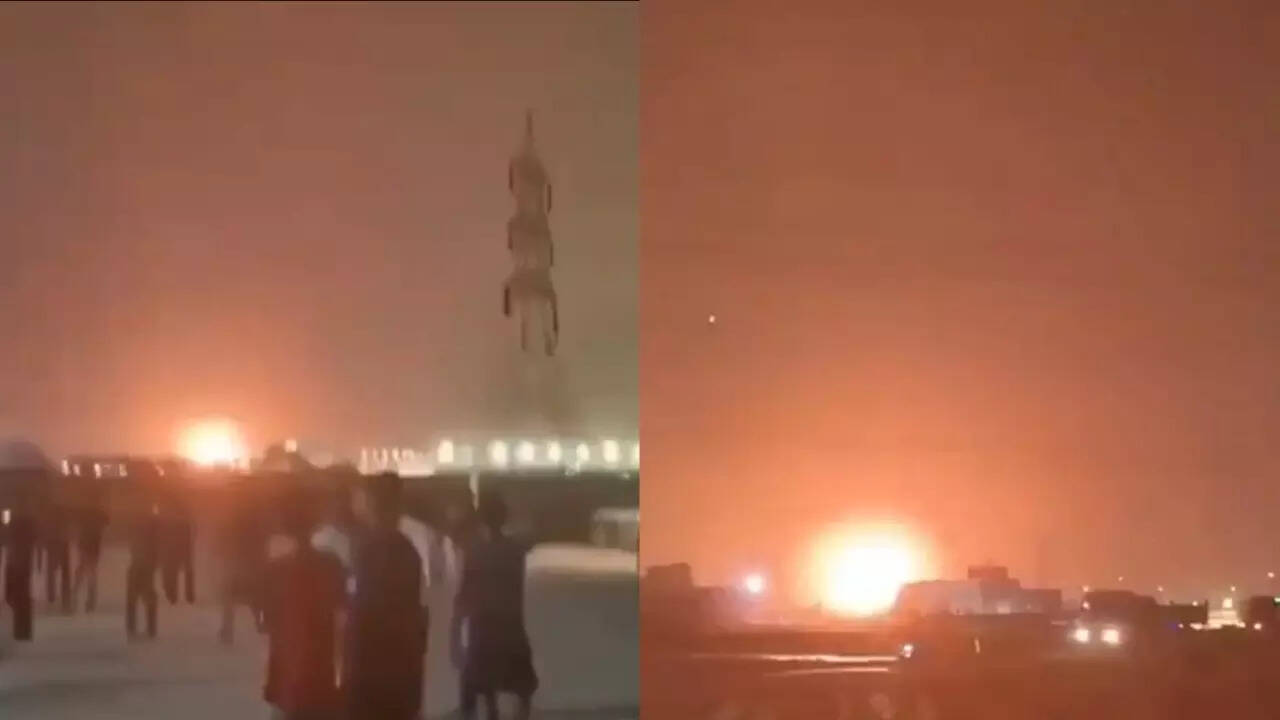
The sky over Ras Laffan does not usually carry the scent of charred metal. Usually, it smells of salt spray and the sterile, metallic tang of hyper-efficient industry. It is a place of gargantuan pipes and shimmering heat hazes, a sprawling labyrinth of steel that serves as the beating heart of the world’s energy supply. But at 3:14 AM, the rhythm of the global economy skipped a beat.
A low hum. A streak of light. Then, a roar that felt less like a sound and more like a physical blow to the chest.
When the missile struck the North Field’s primary processing hub, it didn’t just puncture a tank of liquefied natural gas (LNG). It punctured the illusion of safety that has allowed the modern world to function on "just-in-time" energy. For years, we have lived under the assumption that the fire in our stoves and the electricity in our hospitals are guaranteed by the mere existence of a contract. We forgot that the entire edifice of global stability rests on a few square miles of sand in the Persian Gulf.
Now, the fire is real. And it is spreading far beyond the borders of Qatar.
The Invisible Thread
Consider a baker in a small town in Bavaria. She wakes up at 4:00 AM, unaware that a thousand miles away, a piece of shrapnel has just severed a cooling line. She flips a switch. The oven begins to warm. She doesn't know—not yet—that the cost of the loaf of bread she is about to bake just doubled. She doesn't know that the geopolitical chess match between Tehran, Washington, and Jerusalem has finally reached her kitchen.
Qatar is not just another oil state. It is the world’s gas station, specifically the one that keeps Europe from freezing and Asia’s factories from falling silent. When a hub like Ras Laffan takes a hit, it isn't a localized disaster. It is a systemic shock.
LNG is a temperamental beast. To move it, you must chill it to $-162°C$, turning a volatile gas into a manageable liquid. It requires massive, specialized infrastructure. You cannot simply patch a hole in an LNG train with some plywood and a prayer. Each "train"—the massive liquefaction units that turn the gas into exportable liquid—is a masterpiece of cryogenic engineering. When one goes dark, the global supply shrinks instantly.
The markets reacted with the panicked grace of a startled horse. Natural gas futures didn't just climb; they leaped. In London and Tokyo, traders watched screens bleed red as the realization set in: the "safe" middle ground of the Middle East had evaporated.
The Geometry of Escalation
For months, the shadow war between Iran and the US-Israel alliance has been fought in the margins. It was a skirmish in the hills of Lebanon. A drone over a desert outpost. A cyberattack on a provincial ministry. It was manageable. It was contained.
Until it wasn't.
The strike on Qatar represents a fundamental shift in the geometry of the conflict. Qatar has long played the role of the ultimate middleman, hosting a massive US airbase while maintaining a hotline to Tehran. It was the neutral ground where the world’s enemies could talk without losing face. By bringing the war to the North Field, the aggressors have signaled that there are no longer any off-limits zones.
If the "Swiss Pavilion" of the Middle East is on fire, who is left to hold the hoses?
The technical reality of the damage is grim. Early reports suggest the strike hit the "boil-off" gas recovery system. In simple terms, the facility can no longer recycle the gas that evaporates during the cooling process. This forces the operators to flare the gas—burning it off into the atmosphere—to prevent the entire system from over-pressurizing and becoming a catastrophic bomb.
The sky over the Gulf is currently orange with the light of billions of dollars of energy literally going up in smoke. It is a visual representation of a massive loss of confidence.
The Cost of the Cold
We often talk about "energy security" as a dry, academic term found in policy papers. It sounds like something for bureaucrats to worry about. But energy security is the difference between a functioning society and a desperate one.
In Japan, where the power grid is a delicate balancing act of imports, the Ras Laffan fire means the threat of rolling blackouts during the peak of the humid summer. In Germany, it means the industrial giants—the ones that produce the chemicals and steel the rest of the world relies on—must decide whether to pay ruinous prices for spot-market gas or simply shut down their production lines.
This is the human element of a missile strike. It is the factory worker in Dortmund who gets a letter saying his shift has been cancelled indefinitely. It is the elderly couple in Seoul who turns their thermostat down to the point of shivering because the monthly bill has become a mortgage payment.
The strike proves that our technology has outpaced our diplomacy. We have built a world that requires perfect, uninterrupted flows of liquid energy, yet we have entrusted those flows to one of the most volatile regions on the planet. We have built a high-speed glass elevator over a canyon and then started throwing rocks at the glass.
The Silence After the Blast
There is a specific kind of silence that follows a major industrial accident. It is the sound of thousands of people holding their breath, waiting to see if the second shoe will drop.
The US Fifth Fleet is currently on high alert. Insurance premiums for LNG tankers—the massive vessels that act as the world’s energy circulatory system—have tripled in twenty-four hours. Captains are being told to avoid the Strait of Hormuz, the narrow chokepoint through which much of this wealth must pass.
But you cannot reroute the world’s energy needs. You cannot move a pipeline that cost fifty billion dollars to build because the neighborhood got loud. You are stuck with the geography you have.
The tragedy of the Ras Laffan strike is that it was entirely predictable. For years, analysts have warned that the concentration of LNG infrastructure in a few key nodes created a "single point of failure" for the global economy. We ignored them because the gas was cheap and the sun was shining.
We are no longer in the sun.
As the fires in Qatar are eventually brought under control, the larger fire—the one fueled by regional hatred and geopolitical ambition—continues to burn. The damage to the pipes can be welded. The damage to the global psyche is far more permanent.
We have entered an era where the heat in our homes is a hostage to the whims of a drone operator three countries away. Every time we flip a switch, we are participating in a fragile miracle that we have done very little to protect.
The baker in Bavaria eventually sees the news. She watches the footage of the orange sky over the Gulf. She looks at her oven, then at the clock, then at the empty street outside.
She turns the oven off.
It is the first of many silences.
One strike. One facility. One world, suddenly realizing how very thin the ice has become.
The glow on the horizon isn't the sunrise. It's the cost of being wrong.