The Invisible Chokehold
Consider a Tuesday evening in a small flat in South London. A father is boiling water for pasta. A woman in Tokyo is charging her electric car for the morning commute. A hospital administrator in Berlin is checking the backup generators, just in case. None of these people are thinking about a jagged, narrow stretch of water five thousand miles away. They don’t see the salt spray or the gray steel of a destroyer. They don’t hear the low thrum of a supertanker’s engine.
They should.
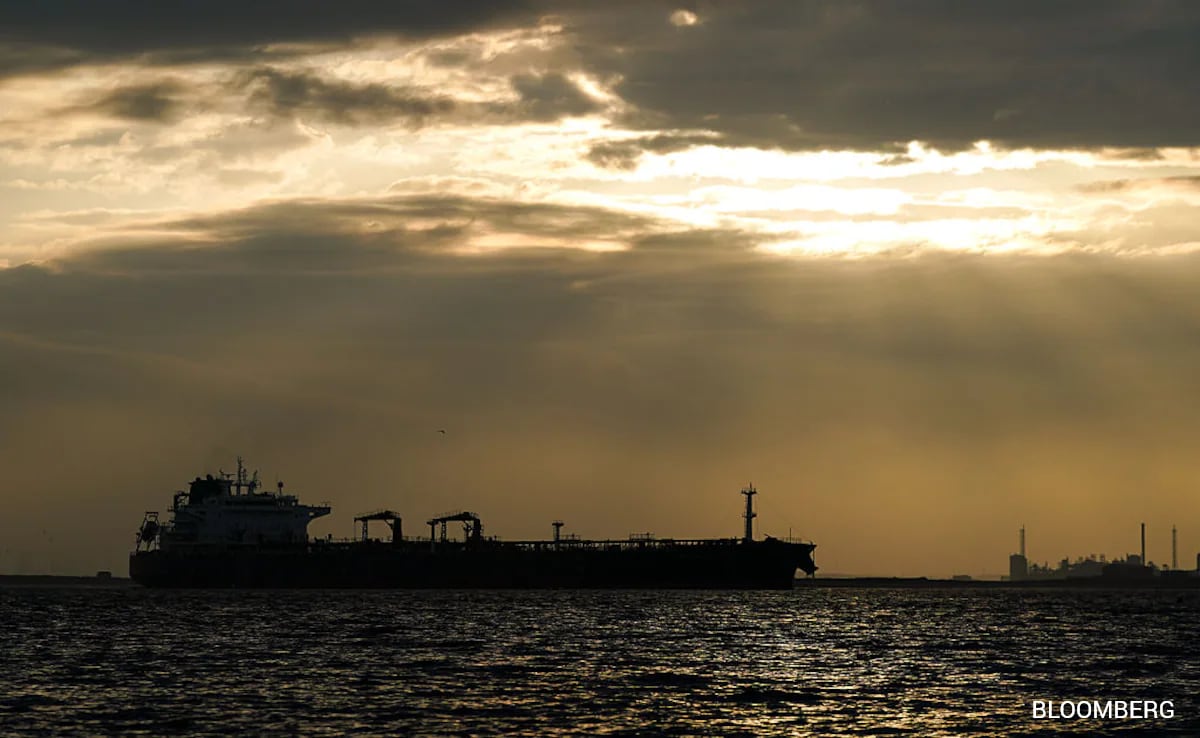
The Strait of Hormuz is a geographic fluke, a twenty-one-mile-wide neck of water that serves as the jugular vein of the global economy. One-fifth of the world’s liquid energy passes through this gap. If that vein is pinched, the world doesn't just get more expensive. It stops.
For decades, the security of this passage has rested on a single, unspoken promise: the United States Navy. It was the ultimate insurance policy, paid for by American taxpayers and enforced by the sheer weight of a carrier strike group. But the insurance policy is being canceled. The fine print is changing. And the nations that rely on that water are beginning to realize that the person holding the keys might just walk away.
The Architect of Uncertainty
In the halls of power in London, Paris, and Seoul, the mood is no longer one of cautious observation. It is one of quiet, disciplined panic. The catalyst isn't a new war or a sudden reef appearing in the water. It is the looming possibility of a second Trump administration and the "America First" doctrine that comes with it.
To understand the stakes, we have to look at the math of isolationism. For a long time, the U.S. presence in the Middle East was driven by its own thirst for oil. Now, the U.S. is a net exporter. It doesn't need the Strait of Hormuz the way it used to. When a leader looks at a map and sees a multi-billion dollar naval presence protecting oil that is headed straight to China or Europe, they start asking why America is footed with the bill.
This isn't just campaign rhetoric. It is a fundamental shift in the tectonic plates of geopolitics. If the U.S. decides that the Strait is "someone else’s problem," the vacuum left behind won't stay empty for long.
The Birth of Plan B
Imagine a hypothetical naval officer named Commander Alistair Vance. He’s spent twenty years in the Royal Navy, much of it coordinating with American counterparts in the Persian Gulf. In the past, his job was simple: integrate with the Americans. Use their satellites. Use their refueling tankers. Hide under their massive umbrella.
Now, Vance and his peers are being asked a terrifying question: "What do we do if they leave?"
This is "Plan B." It is a frantic, expensive, and technically daunting effort by U.S. allies—specifically the UK, France, and various Asian powers—to build a security architecture that doesn't rely on the Stars and Stripes.
It starts with hardware. You cannot replace a supercarrier with a few frigates. To bridge the gap, these nations are looking at a radical decentralization of naval power. This means more autonomous drones. It means AI-driven surveillance systems that can monitor the Strait from land-based stations in Oman or the UAE. It means "pooling" resources in a way that has never been done before.
But there is a friction point. These allies are not a monolith. France has its own ideas about European "strategic autonomy." The UK is still navigating its post-Brexit identity. Japan is bound by a pacifist constitution that makes sending warships into a potential combat zone a legal nightmare.
The Ghost in the Machine
The problem with a Plan B is that it assumes everyone wants the same thing. In the old world, the U.S. set the rules. In the new world, the Strait of Hormuz becomes a bazaar of competing interests.
If the U.S. pulls back, who steps in? Perhaps China offers to "escort" tankers, but that protection comes with strings attached to every port in the Indo-Pacific. Perhaps regional powers like Iran realize that without the U.S. Navy looming over the horizon, the cost of "harassing" a tanker drops to nearly zero.
Think back to that father in London boiling his pasta.
If a single tanker is hit by a drone or a limpet mine, insurance premiums for every vessel in the Gulf skyrocket overnight. Shipping companies stop sending their boats. The supply of oil and liquefied natural gas (LNG) shrinks. In a matter of days, the price of the gas used to boil that water doubles. Then it triples.
This is the "invisible stake." We are talking about the difference between a functioning modern society and one where the lights flicker and the heating goes off in mid-winter. It is a fragility we have ignored because we assumed the U.S. would always be the world’s bodyguard.
The High Cost of Independence
Building a shadow coalition to protect the Strait is a logistical Herculean task. It’s not just about ships. It’s about the "eyes in the sky." The U.S. provides the vast majority of the intelligence and reconnaissance data for the region. Without it, allies are essentially flying blind.
To fix this, European and Asian allies are investing in their own satellite constellations. They are sharing data feeds that were once guarded like crown jewels. They are holding "secret" summits in cities like Manama and Singapore, sketching out what a world without an American hegemon looks like.
There is a deep, biting irony here. For years, many of these same allies complained about American overreach and "cowboy diplomacy" in the Middle East. Now, faced with the prospect of American underreach, they are discovering that the cowboy was also the only one willing to stand guard in the rain for free.
The Human Element of the Hull
We often talk about these issues in terms of "barrels per day" or "geopolitical pivots." We forget the people on the ships.
A modern tanker is a floating city manned by a skeleton crew, often twenty or thirty people from the Philippines, India, or Ukraine. They are the ones who will feel the transition from Plan A to Plan B. Under the old system, they knew that if they sent a distress signal, a U.S. Navy Seahawk helicopter was likely only minutes away.
In a world of "Plan B," that certainty vanishes. They might be calling out to a patchwork coalition of drones and underfunded frigates. The psychological toll of navigating the world’s most dangerous waterway increases. When sailors are afraid, they stop signing up. When they stop signing up, the ships stop moving. When the ships stop moving, the global economy enters a coma.
The Realization
We are living through the end of an era. The post-war consensus that the ocean belongs to everyone—and is protected by one—is dissolving.
This isn't just about politics. It’s about a fundamental shift in how we perceive safety. We have outsourced our stability to a nation that is increasingly tired of the job. The "Plan B" being hammered out in the shadows isn't just a military strategy. It’s a confession. It is an admission that the world we knew is already gone, and we are just waiting for the final curtain to fall.
The allies are working late. They are staring at maps, calculating fuel ranges, and checking their budgets. They are trying to build a new world out of the scraps of the old one. They are doing it because they know that when the sun sets on the Strait of Hormuz, the darkness doesn't stay there. It travels. It follows the pipelines and the power lines all the way to your front door.
The father in London turns off the stove. The pasta is done. For now, the gas is still flowing. But somewhere in a basement in Brussels or a bunker in Tokyo, someone is looking at a graph of American troop withdrawals and wondering if, by this time next year, that stove will even turn on.
Security is a ghost. You only notice it once it has left the room.


