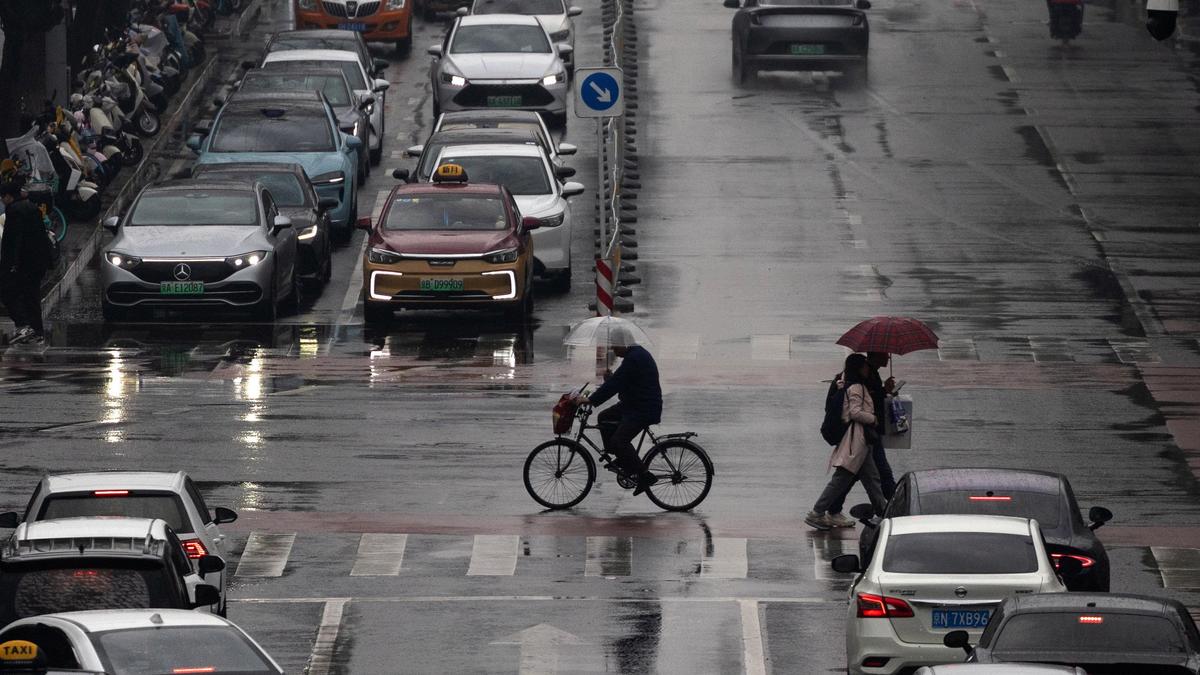
The rain in southwestern China does not fall; it heavy-drops, a relentless sheet of water that turns daylight into a bruised, metallic gray. When you live in the shadow of the mountains, you learn to read the water. You listen to the sound of the gutters, the squelch of the red earth, the rhythm of the drops on the corrugated tin roofs.
But on that Tuesday night, the rhythm broke.
Water became weight. Millions of tons of it, soaking into slopes that had stood for centuries, turning solid earth into something terrifyingly fluid.
When a severe storm batters a region, the headlines lead with numbers. They tell you that fifteen people are dead. They tell you that nine people are missing. They provide a stark, mathematical ledger of disaster. What the headlines omit is the silence that follows the roar. They leave out the smell of ruptured mud and snapped pine, the sound of a neighbor’s voice calling into a void, and the agonizing, slow-motion realization that everything has changed in the span of a single heartbeat.
To understand what happened, consider a hypothetical village—let us call it Wangjiaping—perched on a steep incline. For generations, life here has followed the seasons. Farmers tend to their terraced plots, children walk the winding concrete paths to school, and elders sit on low wooden stools outside their doors, smoking tobacco and watching the mist roll off the peaks. The mountain is provider, protector, and backdrop.
Then comes the deluge.
It starts as a standard summer storm, the kind that locals shrug off with a nod. But it keeps coming. The drainage ditches overflow. The soil becomes saturated, reaching its liquid limit. Beneath the surface, friction ceases to exist.
Imagine holding a heavy book on a tilted wooden board. If the board is dry, the book stays put. Now, pour oil beneath it. That is what happens to a mountain slope when a historic storm strikes. The water acts as a lubricant, uncoupling the topsoil from the bedrock beneath.
A rumble begins. It is not loud at first. It sounds like a distant train, a low-frequency vibration that vibrates through the soles of your feet before it reaches your ears.
Then, the mountain moves.
In seconds, a wall of mud, boulders, and uprooted trees tears down the slope. It does not swerve. It does not slow down. It obliterates homes, snaps concrete utility poles like dry twigs, and buries roads under twenty feet of debris.
When the roar subsides, the darkness is absolute. The power grid is gone. The cell towers are dead. There is only the sound of rushing water and the frantic, desperate scramble of survivors clawing at the mud with bare hands.
This is the human reality behind the statistics. Fifteen lives are gone, each one an entire universe of memories, laughter, and unfinished conversations. Nine are missing, leaving behind families caught in the cruelest form of purgatory—clinging to hope while staring at a landscape transformed into a graveyard of gray silt.
Rescuers arrive not in high-tech vehicles, but on foot, carrying shovels and stretchers over treacherous ridges where roads used to be. They wade through waist-deep mud, their orange jumpsuits quickly stained dark, their faces etched with a grim, quiet urgency. Every bucket of mud moved is a battle against time, a fragile wager against the suffocating weight of the earth.
We often treat these events as isolated incidents, anomalies of nature to be read about, pitied, and forgotten. But the survivors cannot forget. For them, a dark cloud on the horizon will never again be just a threat of rain. It will be a reminder of the night the earth forgot how to be solid.
Down in the valley, where the displaced are gathered in temporary shelters, a child cries. An old man stares out the window at the jagged scar on the hillside where his life used to be. The rain finally stops, leaving behind a cold, damp stillness that settles deep into the bones.