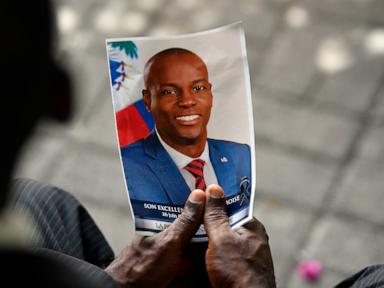
Darkness in the hills surrounding Port-au-Prince rarely brings quiet. It usually brings a heavy, suffocating heat, punctuated by the distant hum of generators and the restless barking of stray dogs. But on July 7, 2021, the darkness fractured. Gunshots ripped through the private residence of Haiti’s president, Jovenel Moïse. When the smoke cleared and the sun finally crested the horizon, a nation was left staring into a vacuum.
A president was dead in his own bedroom.
For months, the world watched a bizarre, tragic movie play out in real time. We heard fragments about Colombian mercenaries, former soldiers turned hired guns, shadowy financiers, and a conspiracy that stretched across international borders from the Caribbean to Miami. It felt messy. It felt cinematic, in the most horrifying way possible. Foreign commandos slipping through security gates. Conspiracies hatched in luxury hotels. A political assassination executed with terrifying precision in the heart of a sovereign nation.
Then came the silence. The kind of silence that settles in after a headline fades from the front page.
Justice moves slowly, especially when it is bruised, underfunded, and tangled in geopolitical red tape. But bureaucracy, for all its sluggishness, has a long memory.
Federal prosecutors in the United States recently announced an indictment of thirty individuals tied to that fateful night. Thirty people whose choices converged in a hail of gunfire.
Let us step away from the cold legal docket for a moment. Strip away the official titles, the docket numbers, the courtroom sketches. Look instead at the mechanics of how a nation breaks.
Imagine sitting in a dimly lit conference room miles away from the smell of tropical rain and burning tires. Maps are pinned to corkboards. Currency is discussed in quiet tones. Logistics are mapped out not unlike a corporate merger or a high-stakes vacation itinerary. The target is a man living in a fragile democracy, a leader whose grip on power was already precarious, besieged by protests, economic collapse, and institutional rot.
To the men recruited to pull the triggers or secure the perimeters, it was presented as an operation. A contract. A job. Many of the Colombian nationals caught in the web of indictments were former military personnel—men trained to follow orders, men whose primary asset was their capacity for disciplined violence, discarded by their own institutional systems and left vulnerable to the siren song of lucrative foreign payouts. They believed, or convinced themselves, they were executing an arrest warrant. They were told they were backed by authority. They were pawns in a chess game played by people who sat far beyond the blast radius.
That is the terrifying banality of modern political violence. It rarely looks like a righteous revolution. It looks like a logistics spreadsheet.
When thirty individuals are formally charged by American authorities, it is easy to view it as an endpoint. An answer. A closed case. But jurisdiction in international crimes is a strange, winding beast. Because parts of the plot were hatched on U.S. soil—funded through Florida accounts, organized by individuals living in suburban comfort—the American justice system stepped in. It reached across the sea to grasp the threads that led back to Miami and beyond.
Yet, for every conspirator standing before a judge in a courtroom thousands of miles away, a deeper wound remains open in Haiti.
Justice in a foreign courtroom feels cold to a population that has endured generations of instability. A federal indictment in Miami does not rebuild a shattered judiciary. It does not restore public faith in the ballot box. It does not bring back a husband, a father, or a head of state whose murder plunged an already fragile society into an unprecedented spiral of gang rule and humanitarian crisis.
Consider the ordinary citizen walking the streets of Port-au-Prince today. They wake up to a reality where the state has effectively retreated, where neighborhoods are partitioned by rival militias, and where basic survival is an daily negotiation. To them, the news of thirty indictments is distant thunder. They want accountability, yes. But they also want to walk to the market without fear. They want a government that functions. They want a tomorrow that does not look like an extension of a recurring nightmare.
The indictments reveal a sprawling network. They expose the dark underbelly of transnational crime, where localized political corruption intersects with globalized mercenary services. They show how easily money moves across borders, how swiftly alliances of convenience are forged, and how cheap human life becomes when power is the primary currency.
Every name added to that charge sheet represents a choice. The choice to accept a wire transfer. The choice to look the other way. The choice to believe that a nation's destiny can be rewritten with assault rifles in the dead of night.
The trial will unfold over months. Lawyers will argue technicalities. Prosecutors will present phone records, financial ledgers, and co-operator testimonies. The machinery of justice will grind forward, driven by statutes and precedents.
Drop a stone into a deep well, and you rarely hear it hit the bottom. You only see the ripples spreading outward, distorting the reflection of the sky above.
The assassination of Jovenel Moïse was that stone. The indictments are merely the ripples hitting the far edge of the basin. But the water is still unsettled, and the bottom is still out of sight.
In the end, accountability is not just about the thirty men chained and charged. It is about confronting the conditions that made a palace vulnerable to men with guns and money. Until those root causes are dragged into the light and dismantled, the shadow of that July night will continue to stretch across the Caribbean, a reminder of how quickly a society can slip from fragile order into the abyss.