The subways in Paris usually smell of cold rain and burnt rubber. But on a freezing December evening, the air inside the Line 1 train tasted like adrenaline and smoke.
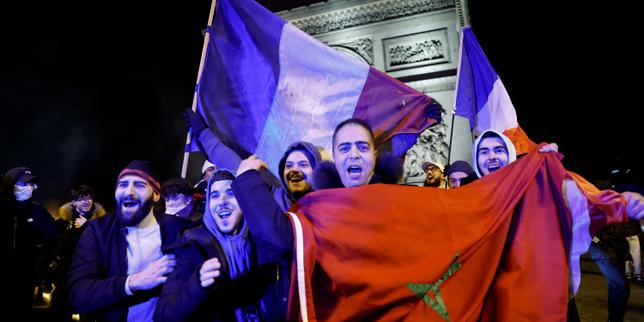
On one side of the carriage stood three teenagers draped in the red and green flag of Morocco, their voices hoarse from singing. Across from them, a man in a crisp navy wool coat wore the French tricolor pinned to his lapel. They did not fight. They did not argue. Instead, they stared at each other with a tense, vibrating respect.
This was the eve of the World Cup semifinal. A football match, on paper. A collision of history, identity, and brotherhood in reality.
When France plays Morocco on the grandest stage in sports, the tactical chalkboard matters. The kickoff times and broadcasting schedules are ironclad facts. Yet the true story of this match does not live in a statistical index. It lives in the friction between two worlds that have spent centuries overlapping, colliding, and redefining one another.
The Bond Born in Madrid
To understand the tactical warfare waiting on the pitch, you have to look at a training ground in Spain.
Achraf Hakimi and Kylian Mbappé do not just play together for Paris Saint-Germain. They are brothers in the modern sense of the word. They share video games, vacation together, and speak a hybrid language of French and Spanish that only they truly navigate. They are the two fastest players on the planet.
Now, picture the pitch at the Al Bayt Stadium.
Mbappé occupies the left wing for France, a terrifying blur of predatory instinct. Hakimi operates as Morocco’s right-back, the defensive anchor and attacking engine of the Atlas Lions. They will occupy the exact same strip of grass. Ninety minutes of direct, physical confrontation.
It is a screenwriter's dream. The immovable object meets the irresistible force, except the object and the force share a locker room and a deep affection.
During their club sessions, they used to joke about this exact scenario. Mbappé once teased in a promotional video that he would have to "destroy" his friend if they ever met in Qatar. Hakimi smiled and promised a hard tackle. What was a laughing matter in May became a dead-serious reality in December.
For Hakimi, the stakes are tribal. Born in Madrid to Moroccan parents, he chose to represent his ancestral homeland over the country of his birth. His mother cleaned houses; his father sold goods in the street. Every sprint he makes down the flank is fueled by that memory.
Mbappé carries a different weight. As the golden boy of French football, born in the Paris suburbs to a Cameroonian father and an Algerian mother, he embodies the multi-ethnic reality of modern France.
When they face off, it is not just a battle for a spot in the World Cup final. It is a chess match between two men who know every single one of each other’s secrets. Hakimi knows exactly which way Mbappé likes to lean before he cuts inside. Mbappé knows precisely how much space Hakimi leaves behind him when he ventures forward.
The Uncharted Path to Al Bayt
No African nation had ever walked this far into the winter tournament.
Morocco did not stumble into the final four by accident or luck. They dismantled the European aristocracy. They frustrated Croatia. They outworked Belgium. They broke Spain on the wheel of a penalty shootout and sent Portugal home in tears.
Their blueprint is a masterclass in suffering. Under manager Walid Regragui, they formed a defensive block so rigid it felt less like sport and more like architecture. Before facing France, no opposition player had managed to score against them in the entire tournament; their only conceded goal was an accidental own-goal against Canada.
France, the reigning champions, entered the stadium with the calm arrogance of royalty. They lost Karim Benzema, Paul Pogba, and N'Golo Kanté to injuries before the tournament even started. Any other squad would have cratered. France simply rebuilt the machine with younger, hungrier gears. Antoine Griezmann transformed into a tireless midfield maestro, while Olivier Giroud continued to defy Father Time up front.
The schedule dictated a brutal showdown. The world stopped to watch at 10:00 PM local time in Qatar. In Casablanca, cafes spilled out into the avenues. In Marseille, police vans lined the Old Port, bracing for whatever emotion the night would bring.
The Pitch as a Mirror
The whistle blew, and the tactical reality mirrored the human tension.
France struck early. Theo Hernandez found the net just five minutes in, a goal that should have broken Morocco’s defensive resolve. It didn't. The Atlas Lions did not panic; they roared back. They dominated possession, a bizarre sight for a team that had built its identity on counter-attacking from the deep.
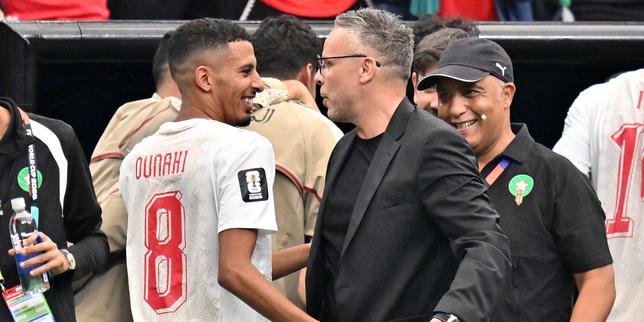
Jawad El Yamiq launched a bicycle kick that clipped the post. Azzedine Ounahi glided through the midfield like a ghost, showing the world why elite clubs were suddenly scrambling for his signature.
And on the wing, the battle raged. Hakimi tracked Mbappé with a desperate, beautiful ferocity. One tackle in the second half left Mbappé on the turf, his laces torn. Hakimi offered a hand, pulled his friend up, and slapped his back. No anger. Just the pure, unadulterated joy of two masters testing each other’s limits.
Ultimately, France’s depth proved too heavy. Randal Kolo Muani scored with his first touch of the game in the 79th minute, a tap-in birthed from a chaotic, brilliant dribble by Mbappé that deflected through a thicket of Moroccan legs.
2-0. The dream was over, but the myth had just been born.
The Jersey Exchange
When the final whistle blew, the stadium dissolved into two distinct sounds: the triumphant roar of the French fans and the rhythmic, respectful applause of the Moroccan supporters who knew they had witnessed history.
But the defining image of the night happened away from the cameras' main focus.
Mbappé did not celebrate immediately. He walked straight to Hakimi, who was sitting on the grass, exhausted and defeated. Mbappé pulled him to his feet. They embraced, a long, tight hug that lasted for what felt like an eternity in the middle of the chaotic stadium.
They swapped shirts. Mbappé put on the red Moroccan jersey; Hakimi pulled the blue French kit over his head.
Later, in the tunnel, they sat side-by-side on the concrete floor, ignoring the VIPs and the reporters shouting their names. They just sat there, two young men from the suburbs of Europe, sharing a quiet moment of peace while the rest of the world argued about who was greatest.