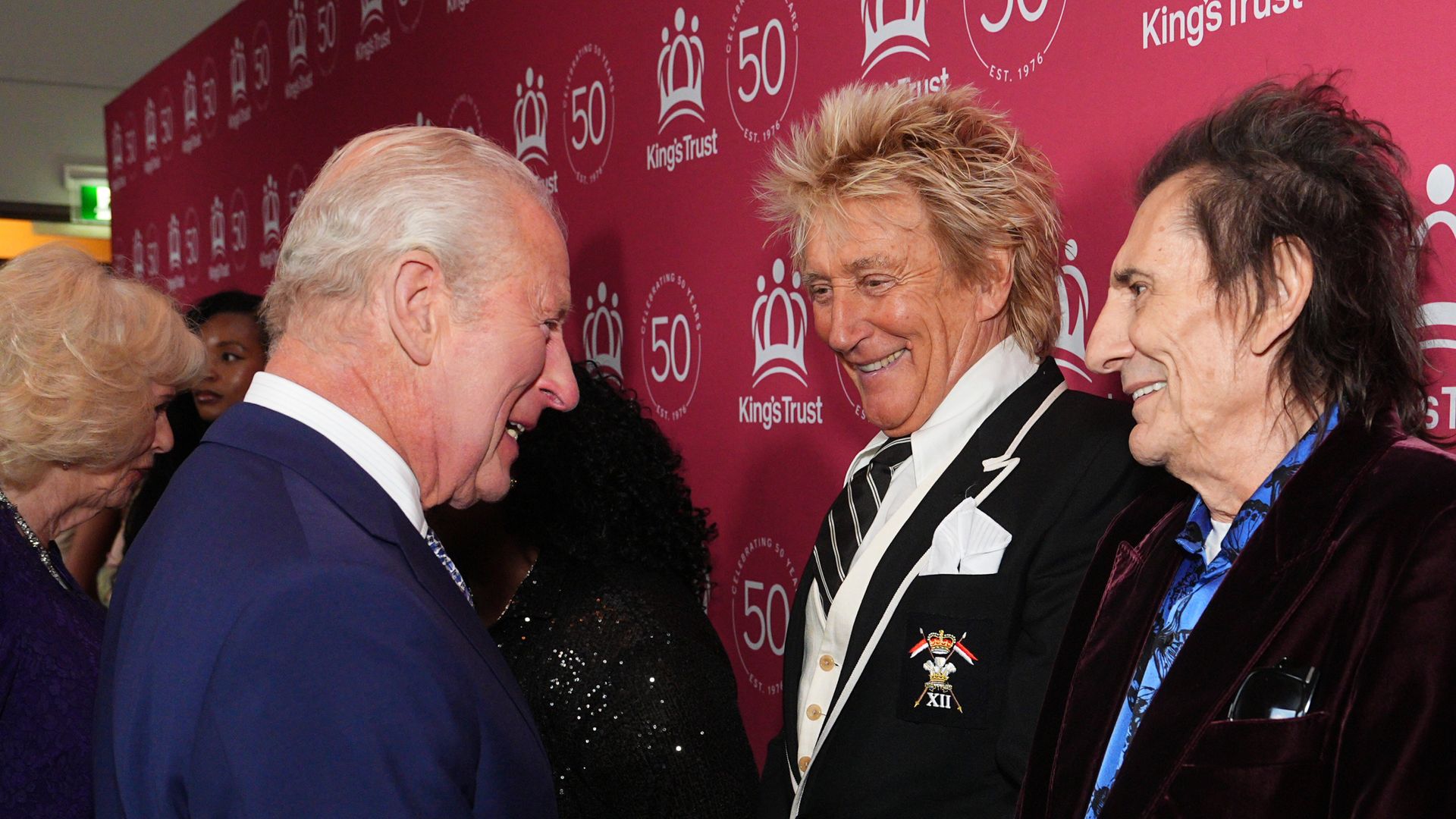
The air inside St. James’s Palace doesn't move like the air outside. It is heavy, scented with the ghosts of five hundred years of ceremony, and polished to a shine that feels almost untouchable. On a Tuesday in mid-May, that stillness was broken. Not by a royal decree or a soft-footed footman, but by the rasp of a voice that has spent sixty years screaming over Marshall stacks and drowning in expensive scotch.
Sir Rod Stewart walked toward King Charles III.
Rod is eighty. Charles is seventy-five. They are two men who have spent their entire adult lives being watched, curated, and scrutinized. One wears sequins and spikes; the other wears the Weight of the Crown. But as they met at a reception for the King’s Foundation, the velvet rope of protocol didn't just slacken. It snapped.
A Room Full of Masks
The event was designed to celebrate the King’s Foundation Awards, a gathering of the best and brightest in craft, community, and business. The room was a sea of Savile Row suits and measured whispers. In these environments, the goal is usually to disappear into the decorum. You bow. You offer a rehearsed pleasantry. You move on.
But Rod Stewart has never been particularly good at disappearing.
He stood there, a shock of defiant white hair and a grin that suggested he knew exactly where the bodies were buried. Beside him stood his wife, Penny Lancaster, tall and composed. Opposite them stood the King, a man who has recently had the mortality of his own house shoved into the global spotlight.
There is a specific kind of loneliness that comes with being a monarch or a rock god. You are surrounded by people, yet separated from them by a glass wall of expectation. When Charles and Rod locked eyes, that glass didn't just crack. It shattered.
The Ratbag in the Room
The conversation turned, as it often does between men of a certain vintage, to the people they’ve had to manage. The King had recently been dealing with the fallout of various public dramas—the kind that fill the tabloids and keep the palace communications team awake at night.
Rod didn't offer a platitude. He didn't offer "thoughts and prayers" or a diplomatic nod. He leaned in, the mischief dancing in his eyes, and spoke to the man behind the crown.
"You put that little ratbag in his place," Rod said.
The word hung in the air. Ratbag. It is a quintessentially British insult—sharp enough to sting, but wrapped in a layer of working-class grit. It’s the word a grandfather uses for a wayward nephew. It’s the word a pub regular uses for the guy who tried to dodge his round.
In that moment, Rod wasn't a knight of the realm talking to his sovereign. He was a guy from Highgate telling a friend that he’d handled a difficult situation with the necessary backbone. He was validating the human struggle of leadership.
The King didn't recoil. He didn't signal for the guards. He laughed.
It was a deep, genuine laugh that reached his eyes—the kind of laugh that only happens when someone finally speaks the truth in a room full of lies. For a brief second, the King of England wasn't a symbol. He was just a man who had been told he did a good job standing his ground.
The Invisible Stakes of Being Liked
We live in an era where everyone is terrified of being the villain. We prioritize "synergy" and "fostering" positive vibes over the messy, necessary work of conflict. We are told to be soft. We are told to be "holistic" in our approach to human error.
But Rod Stewart belongs to a generation that understands that sometimes, you have to be the "ratbag" to get things done—and sometimes, you have to put one in their place to keep the peace.
Consider the hypothetical scenario of a CEO facing a board member who is actively sabotaging the company’s culture. The modern advice is to "leverage a conversation" to "align goals." Rod Stewart’s advice would be much simpler: Tell him he’s a ratbag and show him the door.
There is a profound dignity in that bluntness.
The King has spent the last year navigating a cancer diagnosis, family estrangement, and the immense pressure of following a seventy-year reign. He has been poked, prodded, and analyzed. He has been the subject of a million "pivotal" op-eds.
Then comes Rod. Rod, who has survived the excesses of the seventies, the divorces of the eighties, and the shifting sands of the music industry. Rod knows that the only way to survive the spotlight is to keep a piece of yourself that doesn't care what the headlines say.
By calling out the "ratbag," Rod was offering Charles a gift: the permission to be humanly frustrated.
The Weight of the Handshake
Witnesses in the room noted that the interaction lasted longer than the typical royal greet-and-grin. They talked about the King’s Foundation. They talked about the work being done to help young people find their feet in traditional crafts—the woodcarvers, the stonemasons, the people who work with their hands.
It’s a cause close to the King’s heart. He believes in things that last. He believes in the tangible.
Rod Stewart, a man who builds world-class model railway sets in his spare time, understands the obsession with detail. He understands that if the foundation isn't right, the whole thing falls down. Whether it’s a kingdom or a career, you have to protect the integrity of the structure.
They stood there—the King in his double-breasted suit and the rocker in his embroidered jacket—two relics of a different time, finding common ground in the necessity of discipline.
The Silence After the Roar
As the evening wound down and the guests began to filter out into the cool London night, the echoes of that conversation remained.
People will focus on the gossip. They will try to guess who the "ratbag" was. They will comb through royal history and recent headlines to find a face to fit the label. They will miss the point entirely.
The identity of the ratbag doesn't matter.
What matters is that for one moment, the artifice of the British Class System was bypassed by the raw, jagged energy of a rock star who refused to play by the rules of the room. It was a reminder that even at the highest levels of power, we are all just people trying to figure out who to trust and who to toss out.
Rod Stewart didn't just give the King a compliment. He gave him a moment of solidarity. He reminded him that behind the ermine and the ceremony, there is a man who is allowed to be tired of the nonsense.
The King continued his rounds, moving through the crowd with the practiced grace of a man who has done this a thousand times. But there was a slight lift in his shoulders. A ghost of a smile.
Sometimes, the most "robust" thing you can do isn't to follow the script. It’s to listen to the old man with the spiked hair when he tells you that you did the right thing.
The palace fell quiet again. The ghosts returned to their corners. But the air felt a little thinner, a little cleaner, as if the word "ratbag" had acted as a much-needed vent in a room that had been sealed for too long.
Charles is the King. Rod is the Legend. And for one Tuesday in May, they were just two blokes who knew exactly how hard it is to keep the world from falling apart.
Sometimes the crown is heavy. Sometimes the guitar is loud. But the truth? The truth is always just a "ratbag" away.