The sound of a northeast Calgary night usually follows a predictable rhythm. It is the low hum of the Stoney Trail traffic, the distant whistle of a CPKC freight train, and the occasional rattle of a garage door closing as a late-shift worker returns home. It is a neighborhood of stucco and brick, where the lawns are manicured and the porch lights serve as small beacons of suburban safety.
Then came the cracks.
They weren't the wet, heavy thuds of a car crash or the sharp bang of a transformer blowing out in a storm. These were surgical. Mechanical. The unmistakable, rhythmic percussion of gunfire. In the span of a few hours, the invisible barrier between "the news" and "the neighborhood" dissolved. For the residents of Castleridge and Monterey Park, the morning didn't start with the smell of coffee. It started with the strobe-light flicker of blue and red against their bedroom curtains.
The First Echo: Castleridge
It was roughly 1:30 a.m. when the first 911 calls began to light up the dispatch boards.
Imagine a young father—let's call him Elias—lying awake in a basement suite on Castleridge Way. He is thinking about his shift at the warehouse or the rising cost of groceries. Suddenly, the air in the room feels different. The silence is punctured by four, five, maybe six sharp reports. To Elias, and to dozens of others who bolted upright in their beds, the sound didn't just represent a crime. It represented a violation.
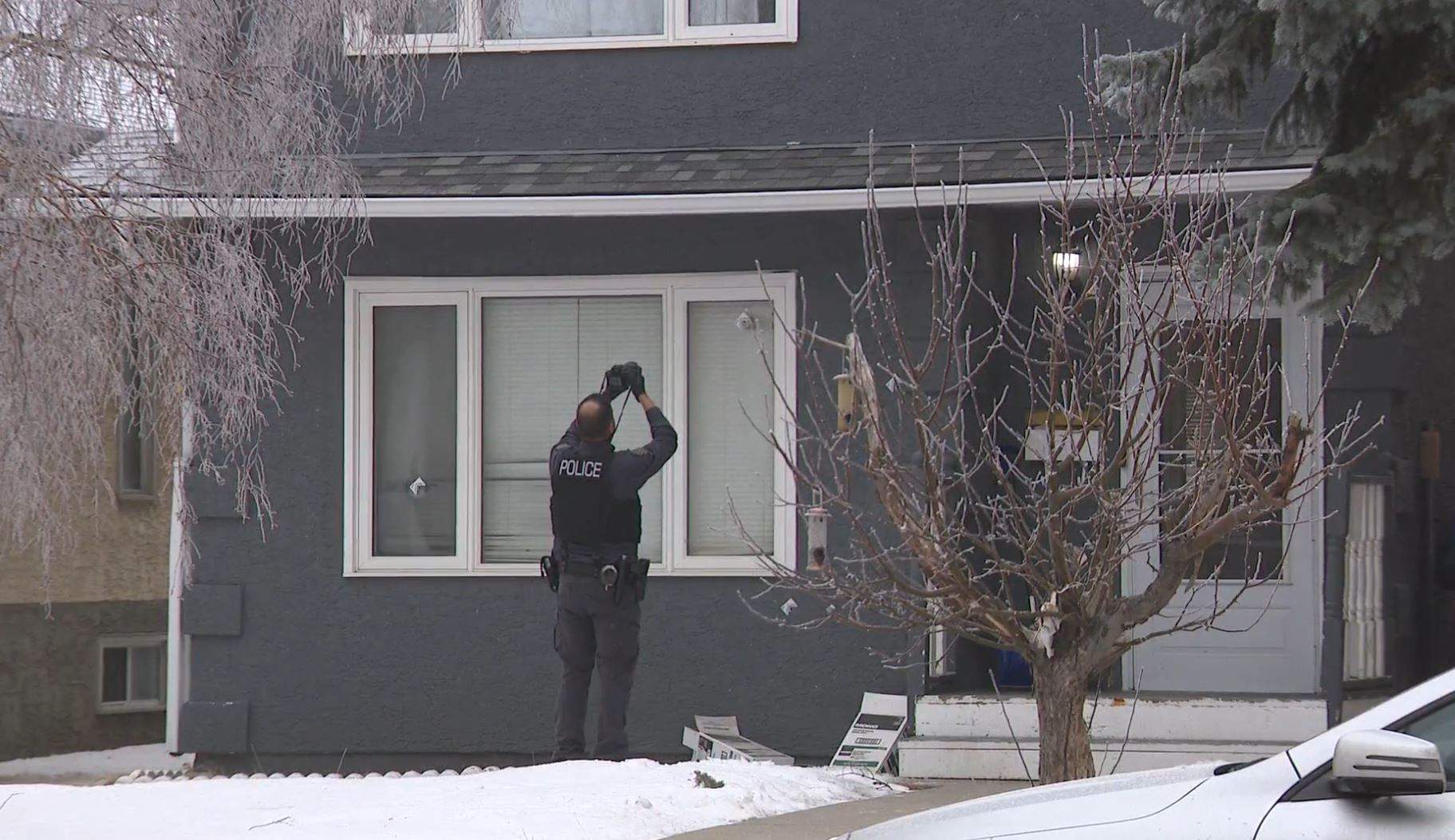
Police cruisers flooded the area, their tires kicking up the light dust of an early spring night. They found what they were looking for, though "finding" in these cases often means tracing the path of destruction left behind. A house stood scarred by lead. Spent shell casings glinted under the streetlamps like discarded jewelry.
When a house is shot at in the middle of the night, the damage isn't just structural. It’s psychological. The drywall can be patched, and the glass can be replaced, but the families living inside are left wondering if the walls they trusted are actually as thin as paper. Investigators moved door-to-door, their flashlights cutting through the dark, asking the same question: Did you see the vehicle?
The answer is often a frustrating void. A shadow. A dark sedan speeding toward the horizon.
The Second Strike: Monterey Park
If the first shooting was an isolated incident, the second was a pattern.
Less than three hours later, while the forensics team was still bagging evidence in Castleridge, the radio barked again. This time, the coordinates shifted south to Monterey Park. Around 4:10 a.m., the peace of California Boulevard was shattered.
The geography of these two neighborhoods matters. They are connected by more than just proximity; they are the heart of a diverse, hardworking community. To have two separate scenes of gun violence in such a tight window feels less like a coincidence and more like a siege.
In Monterey Park, the scene was a mirror image of the first. More casings. More damage. More terrified neighbors peering through their blinds.
Police haven't officially linked the two events, but the math is hard to ignore. Two shootings. Two northeast communities. One night. Whether these were targeted hits, a simmering dispute, or a reckless display of bravado, the result is the same: a city that feels slightly less like home than it did at sunset.
The Weight of the "Targeted" Label
We hear the word often in police briefings. Targeted.
The Calgary Police Service uses this term to de-escalate public fear. The subtext is clear: If you aren't involved in the lifestyle, you aren't in danger. It is meant to be a sedative. But for the grandmother living next door to the "targeted" house, the word offers little comfort. Bullets are famously indifferent to property lines. They do not care about the "intent" of the shooter once they leave the barrel.
A bullet intended for a specific door can easily find a neighbor's window. It can find a parked minivan. It can find a child's bedroom.
This is the hidden cost of urban gun violence. It is the erosion of the "safe" zone. When we talk about crime statistics, we talk about numbers and trends. We look at charts that show whether violent crime is up or down by a certain percentage. But statistics don't capture the way a mother grips her child’s hand a little tighter while walking to the park the next afternoon. They don't account for the sudden, urgent need for a doorbell camera or the way every backfiring muffler now sounds like a threat.
The Invisible Stakes
Why is this happening?
To understand the violence in Calgary’s northeast, you have to look past the yellow tape. The city is grappling with a shift in the nature of organized crime and street-level disputes. The old hierarchies are breaking down. In their place is a more chaotic, less predictable landscape where young men use firearms to settle grievances that once might have been handled with words or fists.
The stakes are invisible because they are systemic. We are seeing a rise in "opportunistic" violence. Access to illegal firearms has become a persistent thorn in the side of law enforcement, despite rigorous efforts to stem the flow. Every time a shooting occurs, the police aren't just looking for a shooter; they are trying to untangle a web of associations, debts, and retaliations that often span the entire city.
But the real stakes aren't the arrests. The real stakes are the kids growing up in these blocks.
Consider a teenager in Monterey Park who sees the police tape every few months. The message they receive isn't about the law; it's about the environment. It tells them that violence is a local language. It tells them that the streets they play on are also battlegrounds. The psychological footprint of a single night of shootings can last for a generation.
The First Responders’ Burden
There is another human element often left out of the headlines: the officers and paramedics who arrive while the air still smells like gunpowder.
They are the ones who have to knock on those doors. They are the ones who have to tell a sleeping family that their home is now a crime scene. In the early hours of that Tuesday morning, dozens of Calgary’s finest were combing through the grass, looking for the tiny brass clues that might lead to a suspect.
They work in the tension. They know that in these neighborhoods, trust is the most valuable currency. When a community feels under fire, that trust can go one of two ways. It can strengthen as people lean on the police for protection, or it can fracture as people feel the "system" is failing to keep the peace.
Every shell casing recovered is a tiny piece of a much larger puzzle. The Calgary Police Service's Guns and Gangs Unit is likely working overtime, connecting the dots between these two locations. They are looking at CCTV footage, checking license plate readers, and leaning on informants. They are trying to stop the third shooting before it happens.
The Morning After
By 8:00 a.m., the sun was up. The school buses were rolling through Castleridge and Monterey Park. To a casual observer, it looked like any other Wednesday.
But look closer.
You would see the yellow tape fluttering in the wind. You would see the detectives in plain clothes, looking tired, clutching paper cups of lukewarm coffee. You would see the neighbors standing on their porches, talking in hushed tones, their eyes scanning the street for cars they don't recognize.
This is the "new normal" that no one asked for.
Calgary is a city that prides itself on being a big town—a place where you know your neighbors and the parks are safe after dark. Incidents like these feel like a betrayal of that identity. They force us to confront the reality that no city is immune to the pressures of the modern world.
The investigation is ongoing. No suspects are in custody. The police are asking anyone with dashcam footage or information to come forward. It is a standard plea, a routine part of the process. But behind the routine is a desperate need for the community to reclaim its space.
Crime thrives in the shadows and in the silence. The shooters rely on the fact that people are too scared to speak or too indifferent to care. They count on the night to hide their faces and the "targeted" label to keep the public from getting too angry.
But as the residents of the northeast know, the silence isn't really silence anymore. It’s a holding of breath. It’s a waiting for the next sound.
The street cleaners will eventually come through. The holes in the stucco will be filled with mesh and mortar. The glass will be swept away. Yet, as the sun sets again over the Rockies, casting long shadows across the northeast, the air feels heavier. The neighborhood is still there, the houses are still standing, but the memory of those mechanical cracks lingers in the rafters, a reminder that peace is a fragile thing, easily broken by a few ounces of lead and a moment of calculated hate.
A house is more than just a shelter; it is the boundary of a person's world. When that boundary is pierced, the world itself feels smaller, colder, and far less certain.