The ice in a high-ball glass at a rooftop bar in Dubai Marina usually rattles to the sound of deep house music and the hum of a city that never sleeps. But on this particular Tuesday, the rhythm broke. It wasn't the music that stopped first. It was the horizon. For those watching from the 72nd floor, the sky didn't just flicker; it bruised.
War is rarely a sudden thunderclap in the Middle East. It is a slow, agonizing tightening of a cord. When the reports first filtered through encrypted messaging apps and panicked news tickers that Iranian missiles had reached the sovereign soil of Kuwait and the outskirts of Dubai, the first sensation wasn't fear. It was disbelief.
Dubai is a city built on the promise of the impossible. It is a glass-and-steel miracle rising out of the sand, a place where the world comes to trade, to hide, and to play. Kuwait is the quiet, wealthy neighbor, a veteran of past scars but a bastion of stability. When the President of Iran issued his warning to the Gulf, he wasn't just speaking to generals. He was speaking to the tourists at the Burj Khalifa, the traders in the DIFC, and the millions of expatriates who call these shimmering oases home.
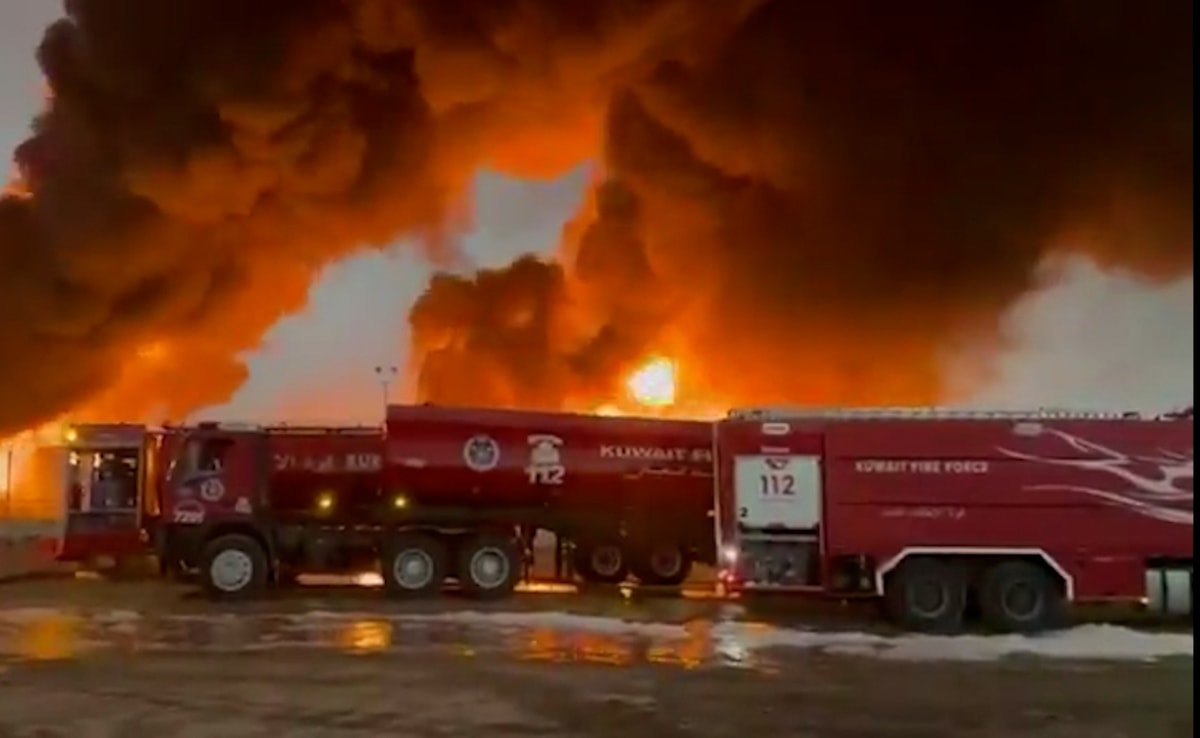
Consider the reality of a modern ballistic strike. We often see these events through the grainy lens of intercepted thermal footage or the sterile maps of a news broadcast. But for a family living in a Kuwait City apartment, the experience is sensory. It is the rattling of window frames that were never meant to shake. It is the smell of ozone and the sudden, jarring realization that the "shield" of regional diplomacy has developed a hairline fracture.
The geopolitical math is cold. Iran’s leadership justified these strikes as a response to perceived provocations, a "clear message" to those they believe are harboring Western interests. To a strategist in Tehran, this is a move on a chessboard. To a shopkeeper in Kuwait, it is the end of a long peace.
The President’s warning to his neighbors was an ultimatum wrapped in a threat. He spoke of "consequences for cooperation" and the "price of alignment." In the language of power, this is a demand for neutrality. In the language of the street, it is a ransom note.
For decades, the Gulf has been the world's petrol station and its luxury playground. The stability of the global economy rests on the calm waters of the Strait of Hormuz. When those waters churn, the ripple effect is felt in a gas station in Ohio and a boardroom in London. But the invisible stakes are higher than the price of a barrel of crude. The real cost is the psychological safety of a region that has spent thirty years trying to move past the ghosts of the 1990s.
A hypothetical trader—let’s call him Elias—sits in a glass-walled office in Dubai. He has spent ten years building a hedge fund that bets on the growth of the Middle East. He sees the city as a bridge between East and West. When the news of the strikes broke, Elias didn't look at his Bloomberg terminal. He looked at the window. He thought about his children’s school in Emirates Hills.
If Dubai is no longer the "Switzerland of the Sand," the entire economic architecture of the region begins to lean. The city thrives because it is a safe harbor. If the harbor is under fire, the ships start to look for other ports. This is the "warning" the President intended. It wasn't just about the physical damage of a missile hitting a target. It was about the destruction of the idea of safety.
The strikes on Kuwait were particularly poignant. Unlike the flashier Emirates, Kuwait carries the institutional memory of invasion. They know what it feels like for the sky to turn black with the smoke of burning wells. These new strikes reopened old wounds. The tension in the air in Kuwait City wasn't just about the immediate danger; it was about the haunting familiarity of a neighborhood turned hostile.
History shows us that these escalations follow a predictable, tragic arc. One side feels backed into a corner, either by sanctions or perceived threats. They lash out to prove they still have teeth. The other side must then decide: do we respond with force and risk a total conflagration, or do we tighten the diplomatic screws and hope the fire goes out on its own?
But the "diplomatic screws" are often just words on a page to the people on the ground. When the President spoke of the Gulf neighbors as "potential targets," he effectively ended the era of the quiet border. He turned every luxury hotel into a potential casualty and every desalination plant into a strategic vulnerability.
The response from the Gulf Cooperation Council was swift in rhetoric but weighed down by the gravity of the situation. There is no easy answer when your neighbor, who shares your sea and your history, points a weapon at your heart. The rhetoric from Tehran suggests that this is only the beginning if their demands aren't met. It is a gamble of the highest order, betting that the world's desire for oil will outweigh its desire for justice.
Think of the logistics of a city like Dubai. It is a masterpiece of engineering that requires constant, uninterrupted flows of electricity, water, and data. It is a fragile ecosystem. A single strike on a power grid doesn't just turn off the lights; it stops the pumps that bring water to the desert. It stops the servers that manage the world’s logistics. It turns a miracle into a mausoleum.
This is the shadow that now falls across the Gulf. It is not just the shadow of a missile, but the shadow of uncertainty.
The President’s warning was meant to sow discord among the neighbors. He wants them to look at each other with suspicion, to wonder who will be the next to draw his ire. It is a classic tactic of fracturing a coalition before it can even form. By striking Kuwait and Dubai, he chose symbols of wealth and legacy. He chose the places where it would hurt the most to lose what has been built.
As the sun rose over the Gulf the morning after the strikes, the skyline was still there. The Burj Khalifa still pierced the clouds. The dhows still bobbed in the Kuwaiti harbor. But something had changed. The air felt heavier. The silence between the news reports was louder.
People returned to work. They sat in their offices and they drank their coffee. They looked at the blue water of the Gulf and they wondered if the horizon would bruise again tonight. The mirage of eternal peace had evaporated, leaving behind the hard, hot reality of a desert at war with itself.
The lights of Dubai are back on, but every resident now knows where the switches are, and how easily a hand from across the water can reach out and flip them.