The charcoal pencil snapped in her hand. It was a small, inconsequential sound, yet in the heavy silence of a Tokyo midnight in March, it felt like a gunshot. Sumiko looked at the jagged wood. She was trying to sketch her sleeping younger brother, catching the way his breath whistled through a persistent winter cold. She didn't know that in less than an hour, the air itself would become their greatest enemy.
We treat history like a quiz. We memorize dates. We recite 1945. We talk about strategic bombing campaigns and industrial outputs. But we rarely talk about the smell of a city turning into a kiln. We don't talk about the physics of a "firestorm," a word that sounds like a fantasy novel but is actually a terrifying meteorological event where the heat is so intense it creates its own weather system.
Operation Meetinghouse was not a typical bombing raid. It was a calculated, mathematical shift in the philosophy of destruction. Before March 9, 1945, the United States Army Air Forces tried to hit specific targets—factories, docks, rail yards. It was called precision bombing. It failed. The clouds were too thick, the jet stream was too strong, and the B-29 Superfortresses were missing their marks.
General Curtis LeMay changed the math. He realized that Tokyo wasn't a city of steel and concrete like Berlin. It was a city of paper, wood, and bamboo. It was a city that lived in its own tinderbox. He stripped the guns off his bombers to carry more weight. He told his pilots to fly low—not at 30,000 feet, but at 5,000.
They didn't carry high explosives. They carried M69 incendiary canisters. These were 6-pound pipes filled with napalm. When they hit a roof, they would ignite a chemical reaction designed to stick to whatever it touched. It was a weapon designed to be unquenchable.
The first pathfinders arrived over the Shitamachi district shortly after midnight. They dropped their loads in a giant "X" across the city. This wasn't for destruction; it was for navigation. It was a burning signature on the earth, telling the hundreds of bombers following behind exactly where to dump their payloads.
Sumiko heard the sirens, but the sirens were a constant hum in 1945. She didn't move until she saw the sky turn a bruised, unnatural purple. The air didn't just get hot; it began to move. This is the part the textbooks skip: the suction.
When you set fire to sixteen square miles of a densely packed city, the rising hot air creates a vacuum at the surface. Fresh, cold air rushes in from the outskirts to fill the void. This creates winds of hurricane force. These winds don't blow the fire out; they feed it. They turn small, isolated house fires into a single, roaring wall of flame that moves faster than a human can run.
Imagine a street. It is narrow, lined with wooden homes. The wind picks up a burning tatami mat and flings it three blocks away. Suddenly, you aren't running from a fire behind you; you are surrounded by a fire that is birthing itself in front of you.
The heat reached 1,800 degrees Fahrenheit.
At that temperature, things don't just burn. They liquefy. The asphalt on the roads turned into a sticky, black soup. People tried to run, but their shoes melted into the street, pinning them in place as the heat approached. Others sought refuge in the Sumida River. They thought the water would save them. They didn't account for the fact that the river itself was heating up. In some areas, the water reached boiling point.
There is a specific, biological horror to a firestorm. It consumes the oxygen. Even if you aren't touched by a flame, you can die of asphyxiation because the fire is "breathing" more efficiently than you are. People huddled in air-raid shelters—holes dug into the earth—thinking they were safe. Instead, the fire passing overhead sucked the air right out of their lungs. They were found later, unmarked by burns, but dead of oxygen deprivation.
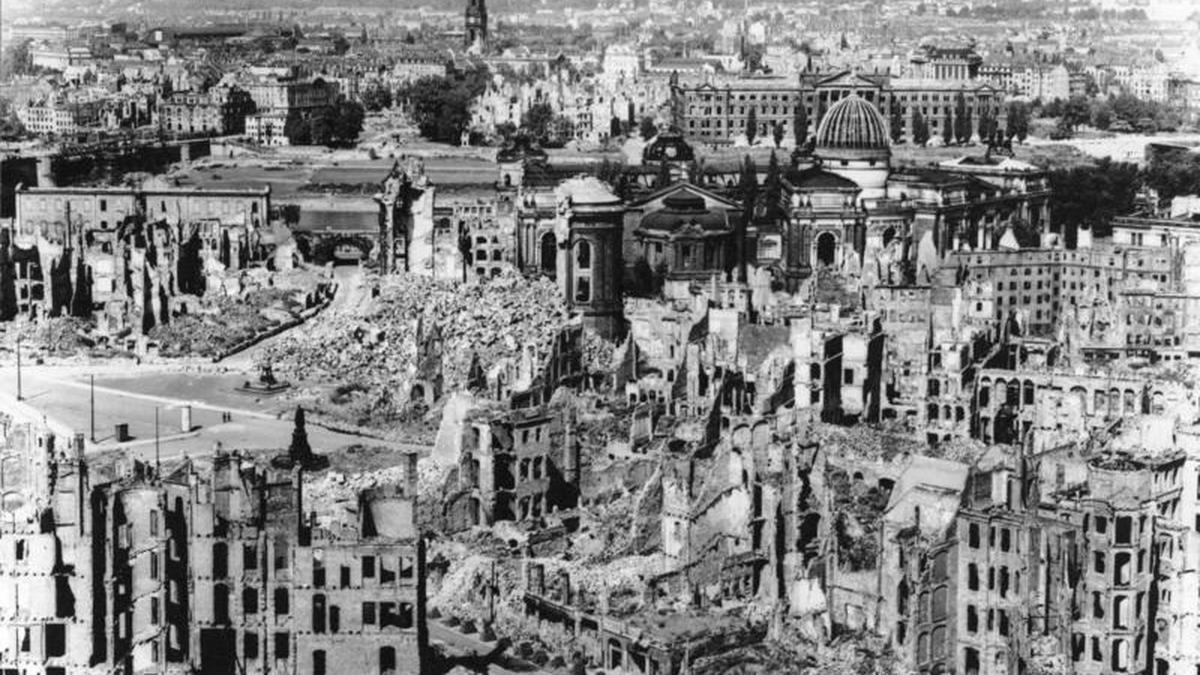
The numbers are difficult to process. We say 100,000 people died that night. That is a larger immediate death toll than the atomic bombing of Hiroshima or Nagasaki. It is the single deadliest air raid in human history. One million people were left homeless. A quarter of the city was erased from the map.
But the "Daily Quiz" version of this story asks: Which city was firebombed on March 9-10, 1945? The answer is Tokyo. But the real answer is a mother trying to shield her infant with a wet blanket that turned into steam. The real answer is the smell of scorched earth that pilots could detect from 5,000 feet in the air, seeping into their cockpits. The real answer is the silence that followed the roar—a silence where a whole culture’s records, photos, and genealogies had been turned to gray ash.
Why does this matter now? Because we often think of technology as a way to make war cleaner. We talk about "surgical strikes" and "smart bombs." We distance ourselves from the consequences with screens and data. But March 1945 reminds us that war is never surgical. It is a blunt instrument that relies on the physics of the natural world to do its worst.
LeMay knew what he was doing. He wasn't a monster in his own mind; he was a pragmatist. He believed that by burning Tokyo, he would force a surrender and save the lives of American soldiers who would otherwise have to invade the Japanese mainland. It was a cold, utilitarian trade. 100,000 civilians for a quicker end to the slaughter.
Yet, the surrender didn't come. Not then.
The firebombing of Tokyo was followed by the firebombing of Nagoya, Osaka, and Kobe. Over sixty Japanese cities were systematically dismantled by fire. By the time the Enola Gay took off for Hiroshima in August, there were very few "pristine" targets left to test an atomic weapon on. The fire had already done the work.
We look back at these events and try to find a moral high ground. It’s a messy, jagged search. We see the bravery of the B-29 crews flying into a wall of heat that tossed their 60-ton planes like leaves. We see the desperation of the families on the ground. We see a world that had become so accustomed to mass death that the destruction of a capital city was just another Tuesday headline.
Sumiko, our hypothetical girl with the charcoal pencil, didn't survive the river. Her brother didn't survive the shelter. Their story ended in the vacuum of the firestorm.
When we boil history down to facts and figures, we lose the vibration of the event. We lose the "why." We forget that every "fact" in a history book was once a terrifying, lived reality for someone exactly like us. The wind in Tokyo that night wasn't just air; it was a hungry, living thing that had been summoned by men in offices thousands of miles away who had calculated exactly how much napalm it takes to turn a neighborhood into a memory.
The next time you see a flickering candle or a bonfire, watch the way the air dances around the flame. Feel the warmth on your skin. Then, imagine that warmth magnified by a factor of a thousand, until the very air you need to live becomes the thing that destroys you.
History isn't a quiz. It’s a warning about what happens when the math of war overcomes the instinct for mercy.