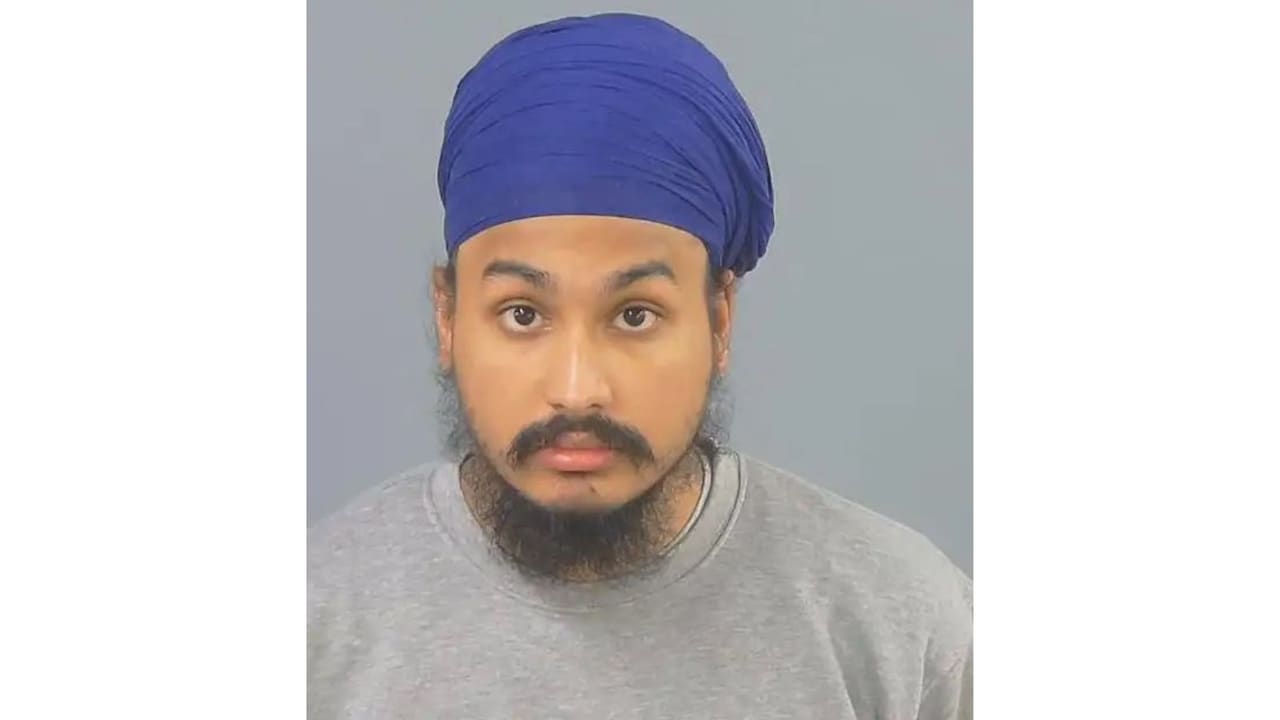
An 18-year-old finance student lies bleeding on a cold pavement, gasping that he cannot breathe, while police officers snap handcuffs onto his wrists and read him his rights. This was the horrifying reality on a Southampton street last December, where Henry Nowak spent his final conscious moments treated not as a dying victim, but as a violent criminal. The subsequent trial and life sentencing of his killer, 23-year-old Vickrum Digwa, have exposed a terrifying vulnerability in modern policing: how easily a perpetrator can weaponize identity politics to blind institutional authority. By shouting "racism" after executing a brutal knife attack, Digwa bought himself time while the real victim bled to death under the boots of the state.
The case has ignited a national firestorm over police competence, cultural weaponization, and the manipulation of community tensions. It is a tragedy defined by a wicked lie, an institutional failure, and the exploitation of faith.
The Anatomy of a Street Execution
The confrontation itself lasted only minutes. Henry Nowak, a first-year student at the University of Southampton, was walking home alone after a night out with friends. He was cheerful, slightly intoxicated but well under the drink-drive limit, and recording a casual video on his phone. He crossed paths with Digwa, who was walking down the street openly flaunting an eight-inch Persian-style shastar dagger attached to his belt, alongside a smaller ceremonial kirpan.
Nowak, noticing the massive blade, cheekily asked Digwa on video if he was a "bad man". Digwa replied, "I am a bad man."
What followed was not a mutual scuffle, but an asymmetric slaughter. Digwa drew the heavy blade and stabbed the teenager five times, piercing his jaw, his legs, and delivering a catastrophic blow directly into his heart. As Nowak collapsed, Digwa snatched the dying boy’s phone—unknowingly pocketing the very digital evidence that would later destroy his own defense.
When Hampshire Constabulary officers arrived at the scene, Digwa immediately took the offensive. He claimed he had been racially abused, beaten, and had his turban knocked off by a violent thug.
It was a total fabrication. Digwa had no injuries. Yet, the mere invocation of a hate crime was enough to short-circuit the officers’ critical thinking. They rushed to handcuff Nowak, who was actively dying on the asphalt, pleading for medical help. Valuable minutes that should have been spent stemming the arterial flow of blood were instead spent treating a dying teenager as a hostile threat.
The Failure of Instinctive Policing
The behavior of the attending officers points to a deeper crisis within British law enforcement. Fearing the administrative and public fallout of mishandling a reported race crime, the officers accepted Digwa's narrative without conducting a basic visual assessment of the scene. They ignored the physical reality of a heavily armed man standing over an unarmed, bleeding teenager.
A covert police recording later captured Digwa speaking to his brother in Punjabi, where his brother explicitly advised him to stick to the self-defense narrative. Digwa’s mother, Kiran Kaur, quickly sanitised the crime scene by taking the murder weapon back to the family home. She has since been convicted of assisting an offender.
The institutional reflex to prioritize identity-based claims over obvious physical evidence represents a profound systemic failure. Law enforcement did not just fail to protect Henry Nowak; they actively compounded his degradation in his final moments of life. The force has since issued a formal apology and referred itself to the Independent Office for Police Conduct (IOPC), but an apology cannot rewrite the horror of a teenager being read his rights as his heart stopped beating.
The Collateral Damage to Faith
In sentencing Digwa to life in prison with a minimum of 21 years, Judge William Mousley did not mince words. He noted that Digwa had brought shame upon his family and his religion, actively stirring up racial tensions across a country already balancing on a knife-edge.
The fallout for the British Sikh community has been immediate and severe. Right-wing political figures and commentators instantly seized upon the murder weapon to criticize religious exemptions that allow baptized Sikhs to carry the kirpan, a ceremonial article of faith.
British Sikh organizations have been forced onto the defensive, fighting to decouple a sacred religious duty from the actions of a violent individual. Organizations like the Sikh Federation UK pointed out that the actual murder weapon was an eight-inch weapon of Persian origin worn conspicuously outside the clothing, not a traditional, concealed kirpan.
| Concept | The Sacred Kirpan | Digwa's Weapon (Shastar) |
|---|---|---|
| Purpose | Symbolic reminder to defend the vulnerable | Offensive street weapon |
| Carriage | Generally small, sheathed, hidden from view | Large 21cm blade worn openly on a belt |
| Legal Status | Explicitly protected article of faith under UK law | Exploited loophole regarding weapon collection |
By blending his obsession with weapons into his religious identity, Digwa did more than murder an innocent student. He placed a target on the back of every law-abiding Sikh in the United Kingdom, leaving a vulnerable community to pay the social price for his calculated brutality.
The Real Crisis Underneath
The British public is left confronting a deeply broken reality. Political factions have predictably exploited the tragedy. Far-right groups held protests outside Southampton police stations, using the horrific optics of the arrest to argue that British authorities practice "two-tier policing" that favors minorities.
The truth is far more unsettling than political theater. The police did not act out of malice toward Henry Nowak; they acted out of institutional cowardice. They were paralyzed by the fear of being labeled racially insensitive, choosing to handcuff a dying man rather than question the narrative of a man in a turban. This is not two-tier policing. It is a systemic decay of basic investigative competence, where superficial identity markers are allowed to override blood on the pavement.
No amount of diversity training or community outreach can fix an institutional culture that forgets how to assess a crime scene. If a police officer cannot distinguish between a dying victim and an active threat because they are afraid of an administrative complaint, then the system is failing its most fundamental duty. The IOPC investigation must look beyond the actions of the individual officers in Southampton and address the pervasive, paralyzing fear that prevents modern police forces from seeing reality as it is.