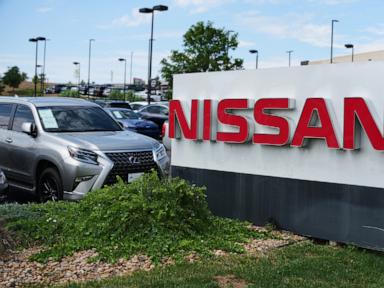
Every analyst with a Bloomberg terminal and a bias is currently writing the obituary for Nissan in Asia. The lazy consensus states that a drop in quarterly operating profit coupled with brutal margin compression in China spells the end of a legacy automaker. Headlines scream about Middle Eastern supply chain snarls and sliding showroom foot traffic in Shanghai.
It is a clean story. It is also entirely wrong. You might also find this connected coverage insightful: When a Little Hard Candy Becomes a Diplomatic Sweetener.
I have spent the last decade watching legacy automotive boardrooms panic over quarterly volume dips while completely missing the structural shifts happening beneath the sheet metal. When a legacy player like Nissan posts fluctuating earnings and points the finger at geopolitical friction or pricing wars abroad, the financial media treats it as a terminal diagnosis. They assume volume equals destiny. They assume that if you sell fewer internal combustion sedans in a localized market today, you are irrelevant tomorrow.
That is amateur hour analysis. Nissan's problem is not that China and the Middle East are rejecting its cars. Its problem is that it is still measuring itself by metrics designed for a dead industrial era. As reported in latest articles by CNBC, the implications are notable.
The Fallacy of Volume Worship
Let us look at the lazy consensus. The narrative goes like this: domestic electric vehicle brands in China have out-innovated and out-priced foreign joint ventures. Therefore, legacy global brands are being permanently squeezed out of the world's largest automotive market.
This argument relies on a fundamental misunderstanding of what a modern automotive balance sheet actually needs to survive. Volume is a vanity metric if every unit sold requires a price cut that destroys your operating margin. For years, I have watched legacy manufacturers chase market share in emerging regions by subsidizing low-margin vehicle sales just to keep factory lines humming. That is not business strategy. That is an expensive charity operation for local consumers.
When Nissan reports profit pressure linked to regional headwinds, analysts treat it as a structural failure. They ignore the deliberate defensive posture a mature manufacturer must take when a market undergoes a hyper-subsidized localized bubble. Chinese EV startups are burning through mountains of venture capital and state-adjacent backing to capture percentage points of market share through aggressive price slashing. Matching that race to the bottom is financial suicide.
Stepping back to protect cash reserves and brand equity is not losing. It is refusing to play a rigged game.
Decoding the Balance Sheet Mirage
To understand why the panic over Nissan is overblown, you have to separate operational cash flow from headline net income noise.
Let us run a mental model. Imagine a manufacturing titan operating across three distinct economic zones: one facing hyper-competitive localized discounting, one dealing with localized logistics bottlenecks, and a core home market experiencing steady currency fluctuations. When you aggregate these regions into a single quarterly earnings report, the headline number looks bruised.
Foot soldiers in equity research see the red ink or the shrinking margin and sound the alarm. They do not look at structural asset utilization, joint-venture partnership value, or the quiet accumulation of intellectual property in powertrain optimization.
Nissan is not failing in China because its product is obsolete. It is transitioning out of a commoditized volume trap. The old playbook of shipping millions of entry-level compact sedans with thin margins is dead. The capital allocation required to compete with heavily subsidized domestic competitors on price alone yields a negative return on invested capital. Smart management knows this. They are intentionally shedding unprofitable volume to preserve balance sheet integrity.
The Real Threat Is Strategic Inertia Not Geography
If the media wants to criticize Nissan, they are looking at the wrong map. The threat is not the Middle East or China. The threat is internal execution speed.
The traditional automotive development cycle takes four to five years from sketch to showroom floor. In an era where software-defined vehicles iterate features via over-the-air updates every two weeks, a four-year hardware cycle is a fossilized timeline. Nissan's true risk factor lies in whether its engineering divisions can decouple hardware longevity from software agility.
When you examine the quarterly warnings, management frequently points to external shocks because admitting internal friction is bad for stock price stability. But the brutal truth is that legacy supply chain dependencies are heavy anchors. Nissan has spent decades perfecting the art of just-in-time manufacturing for internal combustion components. Pivoting those rigid tier-one supplier networks toward flexible, modular architectures is agonizingly slow.
That is where the real battle is being fought. Not in a price war over cheap batteries in Guangzhou, but in the software architecture powering the dashboard and the autonomous driving stack.
The Counter-Intuitive Playbook
So, what should an investor or industry observer actually track? Stop reading the regional sales volume reports. They are lagging indicators of an old world.
Instead, watch structural cost-reduction metrics and partnership realignments. Look at how legacy automakers are restructuring their tier-one supplier contracts to share R&D risk. Nissan's recent discussions around strategic cooperation frameworks with domestic rivals are far more telling than any single quarter's operating profit dip. They realize that building proprietary battery and software stacks in isolation is a fool's errand when capital costs are high.
Consolidation is the only logical endgame for legacy automotive. The companies that survive the decade will not be the ones that stubbornly defend every historical market share point across every continent. They will be the ones ruthless enough to pull back from unprofitable territories, pool their engineering capital with former rivals, and treat manufacturing as a service rather than a vanity project.
Nissan's recent turbulence is not the death rattle of a fading brand. It is the messy, uncomfortable, necessary contraction of a giant shedding dead weight to survive the century.
Stop mourning their losses in foreign markets. Watch what they do with the cash they saved by walking away from a losing battle.