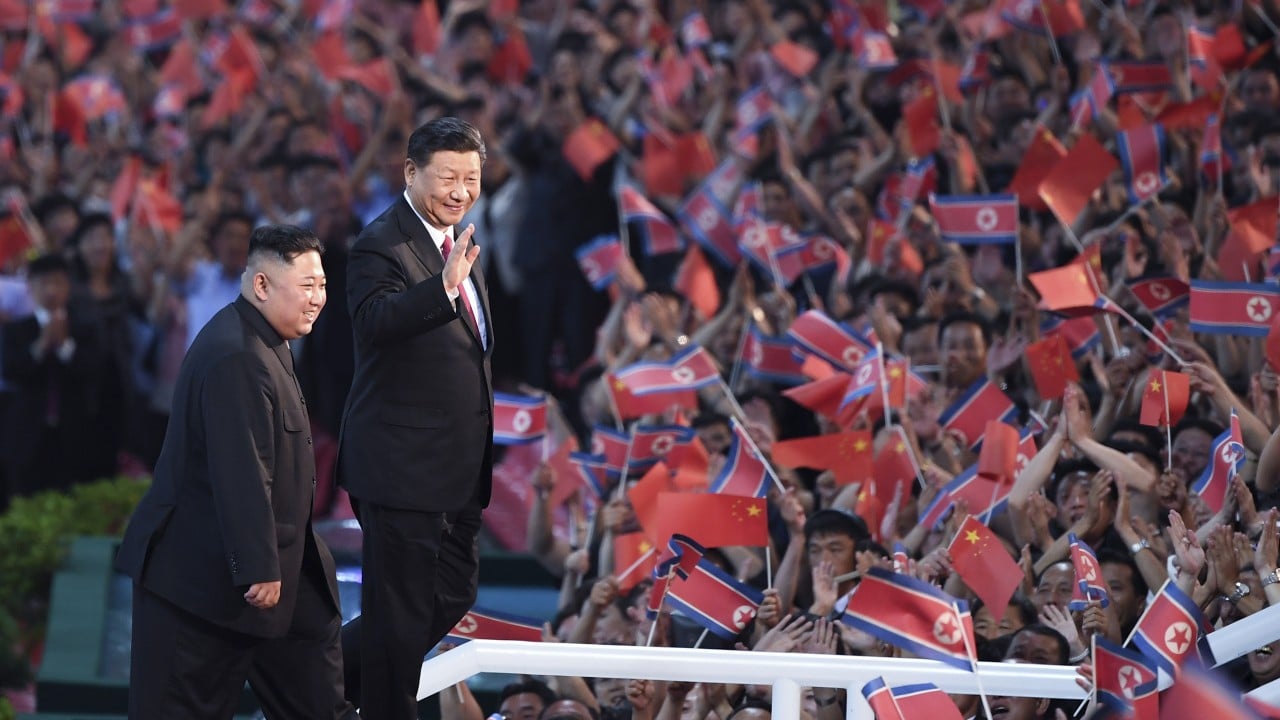
The convergence of three distinct macroeconomic and geopolitical signals—the confirmation of an official state visit by Chinese President Xi Jinping to Pyongyang, the implementation of stringent state-level controls on outbound technology transfers, and an accelerating pickup in Chinese factory-gate inflation approaching a three-year high—reveals a structural realignment across Northeast Asia. Rather than representing isolated friction points in trade and diplomacy, these developments form an interdependent matrix. Beijing is actively calibrating its peripheral security, protecting its industrial-technological moat against Western containment, and managing domestic industrial overcapacity and input-cost pressures.
To evaluate the trajectory of this regional shift, analysts must move past superficial political narratives and deconstruct the core economic, regulatory, and industrial mechanisms driving these three policy pillars.
The Strategic Bilateral Function: Rebalancing the Beijing-Pyongyang-Moscow Axis
President Xi’s state visit to North Korea marks an operational pivot designed to recalibrate China’s regional leverage. Following an extended period of pandemic-induced isolation and the subsequent structural hardening of bilateral ties between Pyongyang and Moscow, Beijing faces a shifted security environment on its immediate border. The motivation for this diplomatic re-engagement is governed by a clear strategic calculus.
                    [ Beijing ]
                    /         \
    Strategic Arbitrage        Technology Leakage Defenses
                  /             \
                 v               v
       [ Pyongyang ] <=======> [ Moscow ]
                 Deepening Ties
The Cost Function of Over-Reliance on Moscow
North Korea’s recent economic and military alignment with Russia—accelerated by industrial, conventional munitions, and labor exchanges—has created an undesirable equilibrium for Chinese policymakers. While Beijing benefits from a highly disruptive, anti-Western buffer state, an unmonitored security pact between Pyongyang and Moscow reduces China's unilateral leverage over the Korean Peninsula. By re-asserting its role as North Korea's primary economic lifeline, which traditionally accounts for up to 95% of Pyongyang's legitimate trade, Beijing regains its positioning as the indispensable arbiter of regional stability.
The Mechanics of Asymmetric Interdependence
China's economic engagement with North Korea operates on a model of asymmetric interdependence. Beijing provides critical inputs—namely crude oil, refined petroleum, cereals, and industrial machinery—in exchange for raw strategic minerals, textiles, and light manufactured goods such as synthetic hair products. This allows China to adjust its enforcement of border trade controls as a dial to regulate Pyongyang's economic stability. The current diplomatic re-engagement acts as a stabilizer, ensuring that North Korea's economic desperation does not trigger a domestic collapse or an uncoordinated military provocation that would compromise China’s northern security perimeter.
The Technology Transfer Clampdown: Securing the Domestic Industrial Moat
Simultaneously, the State Council’s introduction of sweeping rules to curb outbound technology transfers represents a defensive response to Western technology containment policies. This regulatory escalation addresses key systemic vulnerabilities.
+-------------------------------------------------------------+
|               CHINA'S OUTBOUND TECH SHIELD                  |
+-------------------------------------------------------------+
|                                                             |
|   [Dual-Use Interception]     [IP Capital Protection]       |
|   Prevents sensitive source   Cubs forced joint-venture     |
|   code and blueprints from    leakage to secondary          |
|   migrating to unvetted       trading partners facing       |
|   foreign jurisdictions.      Western tariff exposure.      |
|                                                             |
+-------------------------------------------------------------+
Dual-Use Capital Interception
The regulatory framework targets the unofficial, grey-market migration of industrial automation, advanced manufacturing specifications, and dual-use algorithms. Historically, local Chinese enterprises and municipal trading delegations, such as those operating out of logistics hubs like Dalian, maintained localized, commercial-grade technology partnerships with foreign counterparties, including infrastructure projects at North Korea's Nampo Port. The new mandate centralizes oversight, moving approval authority from regional trade offices to state-level security apparatuses. This shift directly restricts the unauthorized export of automated loading blueprints, precision crane schematics, and processing software.
Protecting Intellectual Property Against Secondary Exposure
As Western economies escalate tariff structures—exemplified by Washington's threat of a 12.5% levy across 60 trading partners under forced labor and supply-chain transparency initiatives—China must insulate its foundational technologies from external seizure or copying. If advanced domestic technologies flow freely into secondary jurisdictions that lack robust legal and regulatory protections, Chinese intellectual property becomes highly vulnerable to Western enforcement actions, forensic decoupling, and secondary sanctions. The clampdown ensures that frontier innovations—ranging from optical modules and deep-learning architectures to specialized industrial hardware—remain firmly within the domestic jurisdiction. This maintains the premium of the Chinese manufacturing base.
Factory-Gate Inflation: The Transmission of Upstream Input Pressures
Compounding these geopolitical and regulatory realignments is the sharp acceleration in China’s Producer Price Index (PPI), which is projected to near a three-year high. This upward trend in factory-gate pricing is not merely a localized statistical outlier; it is a structural mechanism transmitting upstream cost pressures throughout global supply chains.
[ Upstream Commodity Surges ] ---> [ Rising Industrial Input Costs ]
                                                |
                                                v
[ Tightened Exporter Margins ] <--- [ PPI Nears 3-Year High ]
        |
        v
[ Global Consumer Price Inflation ]
The Upstream Cost Pipeline
The pickup in factory-gate inflation is driven by a structural surge in the cost of raw materials, energy inputs, and global logistics. Rising costs for metallurgical coke, base metals, and critical chemical precursors have increased input costs for primary heavy industries. This upstream inflation is amplified by geopolitical volatility along major global maritime choke points, driving container spot rates higher and creating persistent supply-chain friction.
The Corporate Margin Squeeze and Transmission Elasticity
Industrial enterprises face a distinct structural challenge:
- The Transmission Bottleneck: Firms operating in hyper-competitive downstream consumer electronics, automotive assembly, and light industrial goods cannot instantly pass higher input costs along to end consumers without risking a significant drop in volume.
- The Margin Compression: Consequently, factories are forced to absorb these costs internally, narrowing profit margins and reducing excess capital available for domestic capacity expansion.
- The Global Export Pipeline: As producer prices near critical historical thresholds, this margin absorption reaches its mathematical limit. Chinese exporters are forced to raise their Free on Board (FOB) export quotes. This shifts domestic factory-gate inflation directly onto international import channels, sustaining elevated consumer price indices in Western economies.
Strategic Playbook for Global Industrial Allocators
The convergence of peripheral diplomatic maneuvers, strict technology controls, and rising factory-gate inflation requires corporate treasurers, supply-chain officers, and macro fund managers to re-engineer their operational risk models.
Hardening Supply Chains Against Asymmetric Trade Controls
Organizations must immediately audits their tier-2 and tier-3 component suppliers for exposure to Chinese sub-contractors located near border economic zones or special administrative corridors. The centralization of outbound technology transfers means that equipment, firmware, and industrial software previously cleared for export may face sudden, state-enforced delivery delays or outright export bans under dual-use security reviews. Buyers should structurally prioritize suppliers that use localized, open-architecture tooling and independent intellectual property stacks. This minimizes exposure to sudden shifts in Beijing’s regulatory posture.
Mitigating the Multi-Tier Impact of Factory Inflation
With the Producer Price Index approaching a three-year peak, corporate procurement teams can no longer rely on fixed-price, multi-year supply contracts without indexing mechanisms. Procurement frameworks must incorporate dynamic raw material escalation clauses linked directly to upstream index benchmarks. Simultaneously, treasury departments must hedge against a widening spread between Chinese industrial input costs and global consumer prices. This can be achieved by deploying currency overlays that account for potential adjustments in the Renminbi's valuation, as Beijing balances export competitiveness against the rising cost of imported denominated commodities.



:max_bytes(150000):strip_icc()/how-many-types-of-dwarfism-are-there-2860725-v1-8dae2c531b4b47d9ae36ae404d3308a0.png)