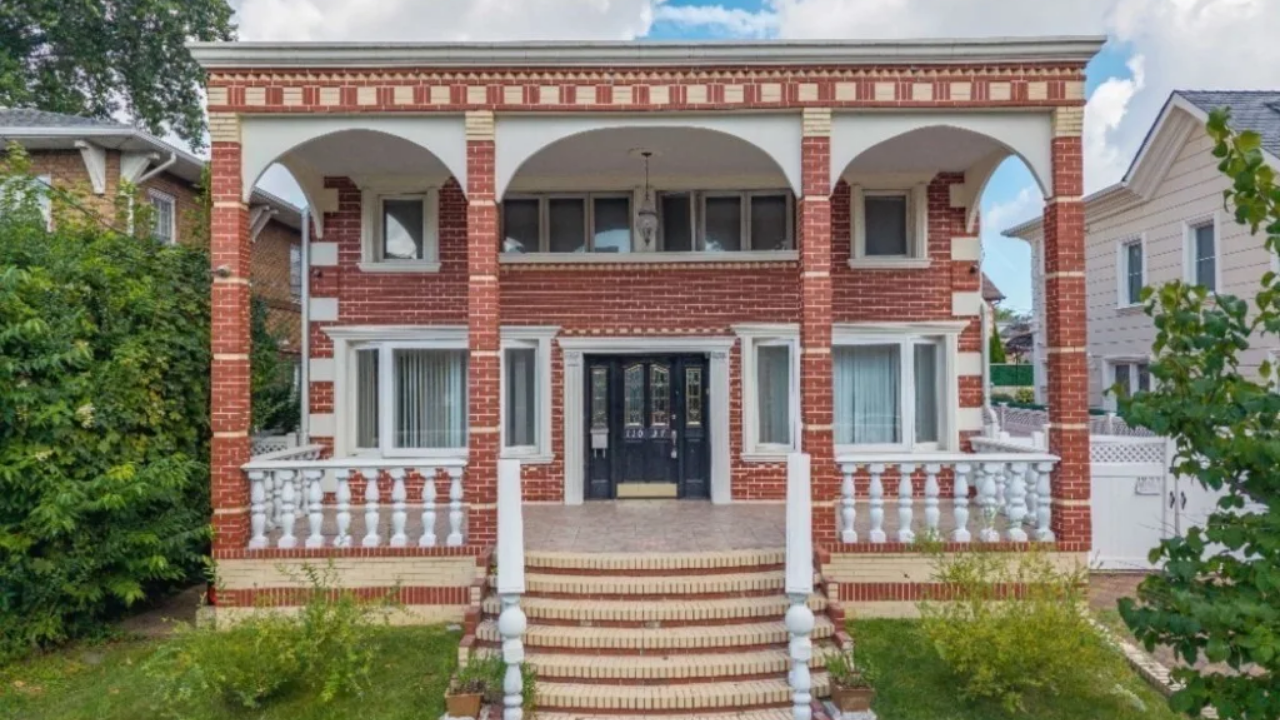
Real estate in New York City rarely follows a straight line. Beneath every foreclosure filing and public auction notice lies a tangled web of financing decisions, legal maneuvering, and market pressures that ordinary buyers never see. When a detached single-family home in Queens heads to a public foreclosure auction with a starting bid of $900,000, observers often focus solely on the numbers. But the mechanics of how a property purchased for $850,000 decades ago ends up on the auction block reveal the hidden vulnerabilities of real estate investments under legal distress.
The property in question, located in the borough's outer residential blocks, traces its ownership back to 2003. Two brothers acquired the house during a period when outer-borough home values were beginning a sharp, sustained ascent. Back then, an $850,000 price tag for a residential property in Queens signified a substantial capital commitment, far above the citywide median at the time. Financing such an acquisition typically required aggressive mortgage products or significant personal leveraging, strategies that worked brilliantly during a booming market but carried catastrophic risks when financial stability faltered.
The trajectory of the property shifted permanently following federal criminal convictions tied to the owners. Legal fallout drains capital with ruthless efficiency. Defense costs, frozen assets, and the immediate cessation of legal income streams create a toxic environment for property maintenance and debt service. Mortgages, property taxes, and municipal liens do not pause while a court case winds through the federal system. Instead, interest accumulates, penalties compound, and lenders initiate foreclosure proceedings to recover their capital.
Understanding the mechanics of a foreclosure auction requires stripping away the clinical legal terminology. When a lender accelerates a mortgage note after default, the property enters a pipeline managed by referees and court-appointed trustees. The initial auction price of $900,000 set for the Queens home is not an arbitrary figure. It represents the outstanding balance of the primary debt, accumulated legal fees, missed property taxes, and accrued interest. Lenders calculate this opening bid to make themselves whole, shielding themselves from taking a loss on the original loan issuance.
Yet, a starting bid of $900,000 on a property purchased for $850,000 over two decades ago highlights a fascinating paradox of the New York City real estate market. On paper, nominal appreciation over twenty years appears flat or underwhelming. In many neighborhoods, properties doubled or tripled in value during that timeframe. The fact that this home barely cleared its original purchase price after twenty years of broader market growth points directly to the corrosive effects of foreclosure-related costs. Legal fees, referee expenses, and years of unpaid default interest eat away at the equity that would otherwise belong to the property owners or their heirs.
Mortgage default in high-value urban markets follows a predictable, grinding schedule. First comes the missed payment notice, followed by the formal acceleration warning. Once the case enters the state Supreme Court system, foreclosure conferences drag on for months or years, particularly when defendants are incarcerated or unavailable to contest filings. During this protracted limbo, the house sits. Deferred maintenance accumulates. Roof leaks go unrepaired, lawns overgrow, and local municipal violations pile up on the city docket. By the time the hammer finally drops at a public auction, the winning bidder often inherits a property requiring substantial capital expenditure just to bring it up to habitable standards.
The broader real estate ecosystem in Queens absorbs these distressed assets through a specialized network of investors, flippers, and cash buyers. Traditional retail buyers rarely participate in public foreclosure auctions. The process demands cash or certified bank checks on the spot, zero opportunity for a structural home inspection, and the willingness to navigate occupied properties or complex title defects. Institutional cash buyers and experienced local operators run the numbers meticulously, factoring in renovation costs, eviction timelines, and potential second-lien holder claims before placing a single bid.
This dynamic creates a distinct wealth transfer mechanism within distressed neighborhoods. When individuals facing criminal prosecution or severe financial distress lose real estate holdings, the equity—or what remains of it after legal and financial overhead—evaporates into the hands of institutional creditors and specialized auction buyers. The neighborhood itself absorbs the physical blight of a neglected property during the years of litigation, impacting adjacent property values until a new owner finally steps in to renovate and resell.
Analyzing the financial anatomy of the Queens property exposes the fragile relationship between personal liquidity, legal vulnerability, and real estate ownership. Property is often viewed as a permanent store of value, a tangible asset immune to the volatility of paper markets. But real estate is only as secure as the capital stream supporting its carrying costs. When those streams dry up due to catastrophic legal events, the physical structure remains, but ownership transforms into a contested commodity traded among creditors and opportunists.
The auction of the Oakhurst-era Queens home serves as a case study in financial friction. It demonstrates that time in the market does not guarantee wealth accumulation if debt servicing collapses under the weight of legal calamity. As the auction date approaches, the final sale price will offer a definitive metric of what the market is truly willing to pay for a distressed asset carrying a heavy historical baggage.
The hammer will fall, the deed will transfer, and a new chapter will begin on a plot of land that has weathered two decades of urban transformation, legal conflict, and financial decay.