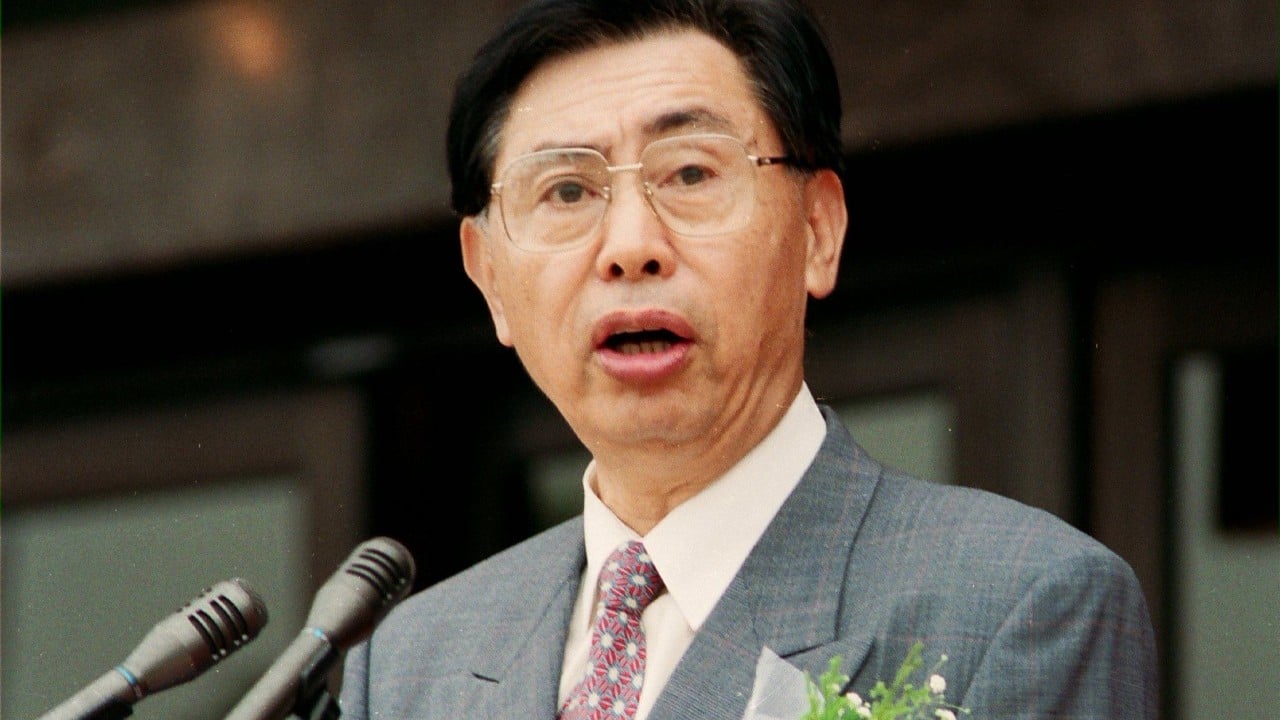
The standard media obituary for Zhu Senlin reads like a boilerplate tribute to a loyal functionary who simply executed orders from Beijing while the Pearl River Delta turned into a global factory floor. The lazy consensus is that Zhu was merely an administrative cog in a machine designed by higher powers, pushing paperwork while Deng Xiaoping provided the vision.
That narrative is dangerously wrong. It treats political economy like a top-down command broadcast when the reality of southern reform was a messy, high-stakes battle against institutional inertia where provincial enforcers like Zhu had to bend, break, and rewrite the rules before Beijing even noticed.
If you study the mechanics of how the Guangdong model actually scaled, you realize that attributing its success entirely to central edicts ignores the grit required to manage local chaos. I have watched analysts misinterpret provincial governance for decades, assuming that economic miracles happen because a memo gets signed. They do not. They happen because local operators absorb the blowback when things go sideways.
The Myth of the Obedient Bureaucrat
Standard accounts paint Zhu Senlin as a disciplined governor who smoothly transitioned from municipal leadership in Guangzhou to provincial heavy lifting during the critical acceleration phase of the early 1990s. This framing suggests a frictionless ascent through a predictable hierarchy.
It ignores the friction.
When Zhu took the reins as governor in 1991, China was still staggering from the political hangover of 1989. Foreign direct investment was sluggish, ideological paranoia was high, and local officials were terrified of being labeled capitalist roaders. To call Zhu an "enforcer" implies he was just cracking a whip for Beijing. The truth is much more uncomfortable: he had to act as a political shield, running interference between paranoid central ideologues and desperate local entrepreneurs who were breaking every existing financial statute just to keep payroll.
Let us look at how capital allocation actually worked on the ground.
Traditional economic commentary loves to talk about Special Economic Zones as if they were neatly fenced incubators where market forces were magically turned on via a switch. Imagine a scenario where you are running a province with zero modern infrastructure, a hostile fiscal tax sharing system that strips your revenues, and millions of migrant laborers showing up at the railway stations every morning with no jobs. You do not wait for a masterclass in market economics. You look the other way when local towns turn farmland into industrial parks without state approval. You issue verbal guarantees to Hong Kong industrialists that their contracts will be honored even if Beijing changes its mind next Tuesday.
Zhu did not just enforce reform; he created the gray zones where survival was possible.
Why the Fiscal System Was Broken by Design
People also ask why Guangdong managed to pull away from the rest of the country so dramatically during that decade. The standard answer points to geography and proximity to Hong Kong.
That explanation is lazy geography. Plenty of coastal regions had ports and neighbors with money. What Guangdong had—and what leaders like Zhu had to fiercely protect—was a willingness to exploit the ambiguities of the fiscal contract between center and locality.
Before the 1994 tax-sharing reform fundamentally restructured China's public finance, provinces negotiated fixed revenue remittances with Beijing. Guangdong kept a massive share of its marginal revenue. Economists love to credit this formula for the boom. But they miss the administrative violence required to defend it. Every single year, ministries in Beijing tried to claw back those privileges. Governors like Zhu spent half their time in Beijing playing bureaucratic hardball, trading compliance in political loyalty for autonomy in economic experimentation.
When you look closely at Zhu's tenure, his primary talent was not visionary economic theory. It was institutional evasion. He mastered the art of quiet disobedience, executing central directives in ways that neutralized their destructive potential while magnifying their permissive elements.
The Cost of the Pearl River Model
We need to talk about the downsides of this approach, because my contrarian take is not that southern reform was an unmitigated utopia. It was brutal.
The hyper-growth model that Zhu and his contemporaries oversaw created structural imbalances that modern China is still paying to unwind. Environmental degradation was treated as an externality of progress. Labor rights were nonexistent because the entire competitive edge relied on an endless, cheap supply of migrant labor from the interior.
When western observers praise the efficiency of the Guangdong miracle, they sanitise the human cost. Zhu’s administration presided over an era where safety standards were routinely bypassed to speed up factory construction. To ignore this is to misunderstand why the model had to evolve. By the late 1990s, the cheap land and cheap labor strategy had hit a hard ceiling. Leaders who came after had to pivot toward higher value-add manufacturing, but they could only do so because Zhu and his generation absorbed the initial shock of primitive accumulation.
The Real Lesson for Institutional Reform
If you take away anything from the life and career of Zhu Senlin, let it be this: structural change is never tidy, and it is never driven solely by policy documents.
The analysts who write hagiographies of reform leaders from a safe distance always miss the mud. They want politics to be a clean spreadsheet of inputs and outputs. True economic transformation happens in the messy margins where local actors take personal political risk to bypass dead systems.
Zhu Senlin did not die as a legendary architect of global capitalism. He died as a survivor of a much harder game: keeping the lights on while a continent reinvented itself through sheer, unmitigated improvisation. Stop looking to central planners for permission to build, and start looking at how the rules are actually being bent on the ground.
That is where the real history is written.


