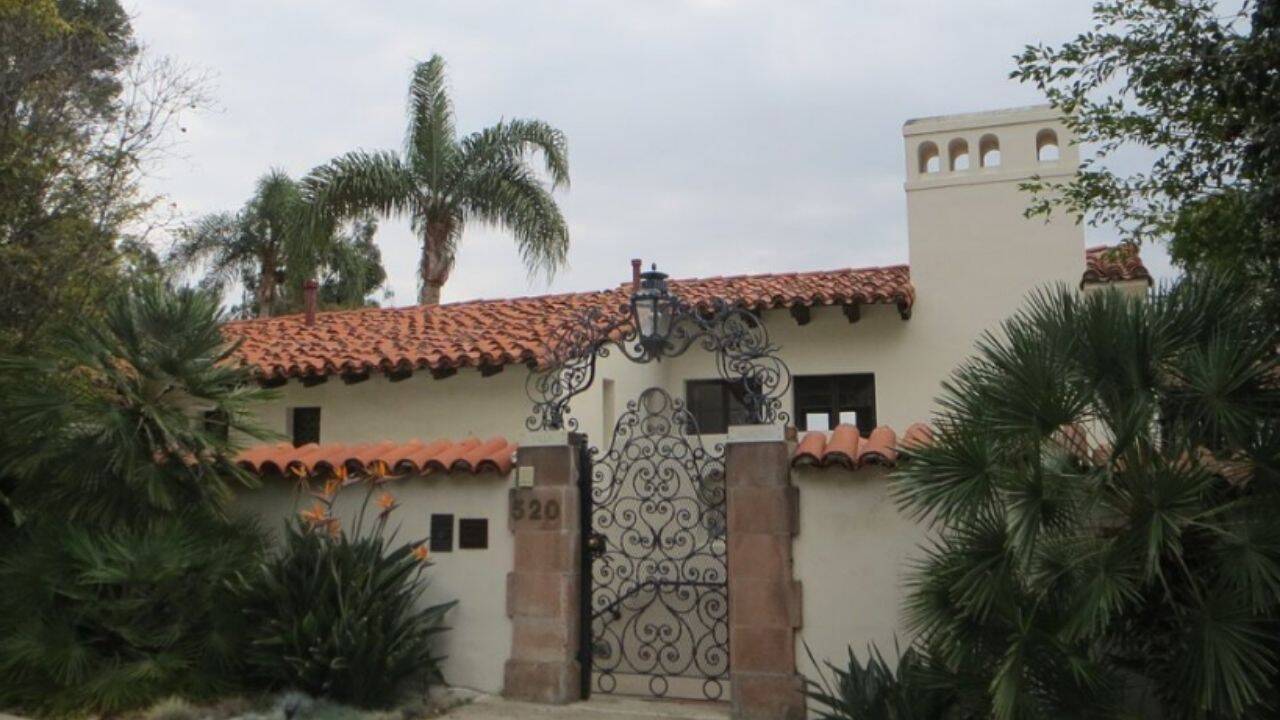
Olga Fröbe-Kapteyn did not just collect images; she built a psychological fortress on the shores of Lake Maggiore to house the collective unconscious. While history often remembers the Eranos Circle as a gentleman’s club for intellectual giants like Carl Jung and Mircea Eliade, the reality is far more transactional and gritty. Fröbe-Kapteyn was the engine, the financier, and the visual cartographer of a movement that sought to map the human soul at a time when Europe was descending into the madness of total war.
She transformed her private estate, Casa Eranos, into a laboratory for the spirit. This was not a passive hobby. It was an aggressive, lifelong attempt to provide a visual language for things that usually defy description: archetypes, shadows, and the recurring symbols that haunt the human species across every culture and era.
The Patron Who Became a Prophet
Born into a wealthy Dutch family in London, Fröbe-Kapteyn possessed the resources to be a mere socialite. Instead, she chose the grueling path of an archivist. After the death of her husband in a plane crash, she retreated to Ascona, Switzerland. This location was no accident. Monte Verità was already a magnet for anarchists, nudists, and truth-seekers. But where others sought a return to nature through raw vegetables and sunbathing, Fröbe-Kapteyn sought a return to the source through rigorous intellectual synthesis.
In 1933, she launched the Eranos Lectures. This happened exactly as the Nazi party was tightening its grip on German academia. While the world outside was burning books and purging "degenerate" ideas, Fröbe-Kapteyn was providing a sanctuary for the study of symbols that transcended national borders. She wasn't just a hostess. She set the themes. She curated the speakers. She dictated the pace of the research.
Mapping the Unseen through the Archive for Research in Archetypal Symbolism
The crown jewel of her life’s work was the creation of what would become the Archive for Research in Archetypal Symbolism (ARAS). Fröbe-Kapteyn recognized a fundamental flaw in the psychology of her time: it was too reliant on words. She understood that the psyche speaks in pictures.
She spent decades scouring the museums of Europe and the Near East, photographing artifacts, medieval manuscripts, and ancient sculptures. She wasn't looking for "art" in the aesthetic sense. She was looking for recurring motifs—the Great Mother, the Hero, the Serpent, the Mandala.
The Labor of the Image
Building this archive required an almost obsessive level of discipline. We are talking about thousands of physical photographs, hand-cataloged and cross-referenced before the existence of databases or digital search tools. Each image was a data point in a vast experiment to prove that humans, regardless of their geography, share a common internal architecture.
When Jung first encountered her collection, he was stunned. The images Fröbe-Kapteyn had gathered provided the empirical evidence he needed for his theories on the collective unconscious. Her archive turned his abstract philosophy into a visible reality. She provided the "how" to his "why."
The Shift from Collector to Creator
Midway through her life, the act of collecting was no longer enough. Fröbe-Kapteyn began to produce her own "Meditation Drawings." These were not meant for gallery walls. They were geometric, concentrated bursts of color and form designed to facilitate deep psychological shifts.
They look like blueprints for a machine that doesn't exist. Or perhaps, they are blueprints for the machine that is the human mind. Her transition from an objective researcher to a practitioner of her own findings marks a critical juncture in the Eranos story. It suggests that she realized you cannot study the depths of the mind without eventually falling into them yourself.
The Geometry of the Soul
Her drawings utilized precise symmetry. She used vibrant primary colors—reds, blues, yellows—often centered around a single focal point. This was her way of "decoding" the chaos of dreams into the order of geometry. While Jung was writing The Red Book, Fröbe-Kapteyn was creating a parallel visual record that was arguably more accessible because it bypassed the filter of language entirely.
The Hidden Power Dynamics of Ascona
It is a mistake to view Fröbe-Kapteyn as a subservient disciple of Jung. The relationship was a complex, sometimes strained partnership. Fröbe-Kapteyn provided the stage, the audience, and the visual evidence. Jung provided the fame and the theoretical framework.
There were moments of friction. Jung could be dismissive of the "feminine" influence on his work, even as he relied on women like Fröbe-Kapteyn to fund and facilitate his greatest breakthroughs. She managed the personalities of dozens of ego-driven scholars, ensuring that Eranos remained a neutral ground where disparate fields—physics, theology, psychology—could collide.
The Cold Reality of the Archive Today
After her death in 1962, the archive she spent her life building was split and moved. Parts of it landed at the Warburg Institute in London and the C.G. Jung Institute in Zurich. The core eventually became the basis for the modern ARAS, now headquartered in New York.
We often talk about the "digital archive" today as if it were a new invention. Fröbe-Kapteyn was doing it with silver gelatin prints and index cards. Her methodology was a precursor to modern big-data analysis, but applied to the irrational world of myth and dream. She didn't just want to know what a dream meant; she wanted to know where that dream lived in the long history of human thought.
Why the Eranos Legacy Still Bites
We live in an era of fragmented attention and surface-level analysis. Fröbe-Kapteyn represents the opposite: the long game. She committed forty years to a single, unfashionable goal. She understood that if you want to understand why humans act the way they do, you have to look at the images they create when they aren't trying to be "productive."
The archive is more than a historical curiosity. It is a map of the traps and treasures buried in the human mind. In a world where we are constantly told that we are blank slates or products of our immediate environment, Fröbe-Kapteyn’s work stands as a stubborn reminder that we carry the weight of thousands of years of symbolism within us.
She didn't just decode dreams. She proved that the dream is a language with its own grammar, and she was the first to write the dictionary.
To ignore her contribution is to ignore the foundation upon which modern depth psychology was built. The next time you see a symbol that feels strangely familiar, even though you’ve never seen it before, you are standing in the shadow of the work she did in a quiet villa on the edge of a Swiss lake.
You don't just look at the archive. You live inside it.