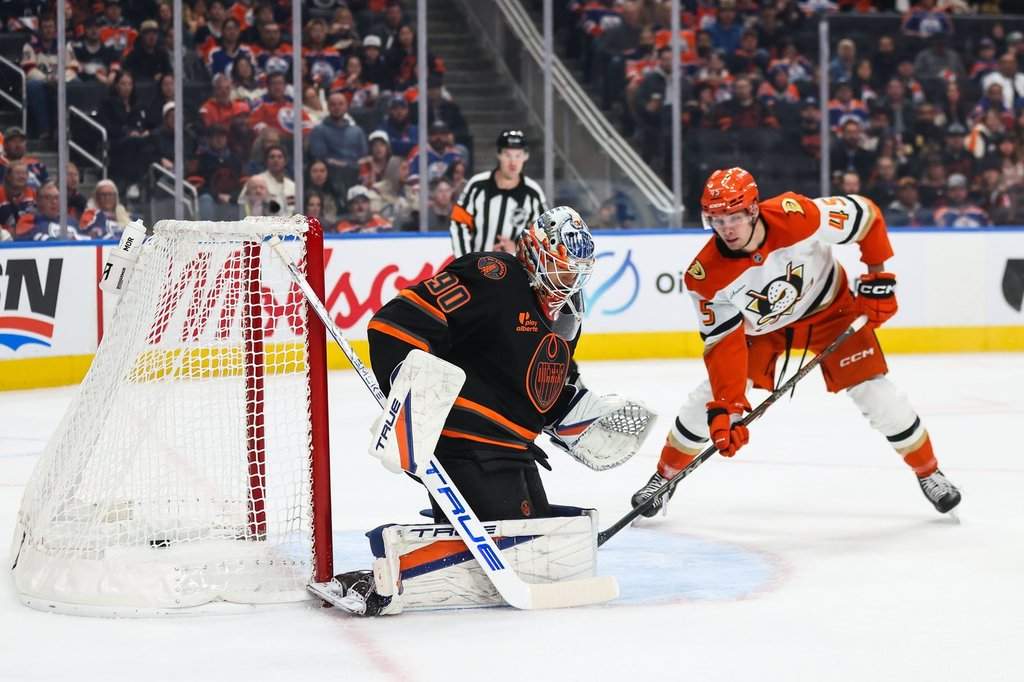
The Edmonton Oilers dropped a 5-4 decision to the Anaheim Ducks, marking their second consecutive loss and exposing structural flaws that high-end offensive talent can no longer mask. While a single regular-season defeat against a rebuilding Pacific Division opponent might look like an anomaly on paper, the mechanics of how Edmonton surrendered five goals point to recurring breakdowns in defensive zone coverage, transitional puck management, and goaltending consistency.
A 5-4 scoreline tells a deceptively simple story. Casual observers see a track meet where one team simply ran out of time, yet the underlying tape reveals a much more concerning pattern for an organization built around championship expectations. Meanwhile, you can find related developments here: Why LIV Golf's Collapse Was Inevitable From the Start.
The Anatomy of a 5-4 Collapse
Scoring four goals on the road or at home in the modern NHL should yield two points roughly eighty percent of the time. When a roster featuring elite offensive drivers puts four pucks past the opposing netminder and still leaves the ice empty-handed, the fault lines sit squarely in the defensive third.
Against Anaheim, the Oilers struggled with basic puck retrieval and outlet execution. Ducks forecheckers did not need to deploy complex traps to disrupt Edmonton's breakout; simple hard pressure along the half-wall forced rushed passes into the middle of the ice. Once Anaheim intercepted those clearing attempts, Edmonton's defensive structure fractured almost immediately. To see the full picture, we recommend the detailed report by Sky Sports.
Watch how the weak-side winger reacts during these sequences. Instead of collapsing low to support the center and take away the high-slot passing lane, Edmonton's forwards frequently cheated toward the blue line in anticipation of a counterattack. That habit works wonderfully when the defensemen win every clean puck battle. It becomes catastrophic the moment a rim-around bounces off a stanchion or a pass misses a tape by six inches.
Anaheim capitalized on that exact vulnerability. A team loaded with young, fast skaters thrives when opponents abandon the middle of the ice in search of quick-strike offense. By feeding the slot from below the goal line, the Ducks turned routine zone entries into high-danger scoring chances before Edmonton's defensemen could even set their feet.
Why Rebuild Teams Punish Top-Heavy Rosters
There is an old hockey truism that rebuilding clubs are the most dangerous opponents during the grind of an 82-game schedule. They play without the burden of expectation, take risks that veteran coaches normally bench players for attempting, and skate with the desperate energy of young professionals fighting for permanent roster spots.
Edmonton walked directly into that buzzsaw.
Top-heavy rosters built around superstar minutes face a specific psychological trap against lower-tier division rivals. When the top power-play unit clicks early or a superstar generates three glorious chances in the opening ten minutes, the rest of the bench subconsciously dials back its defensive intensity. Players begin looking for offensive stats rather than doing the unglamorous work of pinning opponents along the boards.
The Illusion of Puck Possession
Analysts often point to raw shot attempts and offensive zone time as proof that a team deserved a better fate. In a 5-4 loss, the Oilers can easily point to stretches where they hemmed the Ducks inside their own zone for over a minute at a time.
Possession without defensive posture is fool's gold.
When Edmonton cycles the puck high in the offensive zone, the defensemen frequently pinch down the walls to keep plays alive. This aggressive posture requires immediate, disciplined rotation from the high forward (often referred to as the F3 in coaching systems). During this back-to-back skid, Edmonton's F3 coverage has been late. A half-second delay in recognizing a turnover turns a promising offensive cycle into an odd-man rush going the other way.
If a hypothetical third-line winger gets caught staring at the puck behind the net while the defenseman pinches, Anaheim's outlet pass skips past two Oilers simultaneously. Suddenly, a 2-on-1 develops against a lone defender who is skating backward at half the speed of the oncoming attackers. You cannot out-skill a 2-on-1 breakaway fifty times a season and expect to survive.
Goaltending Metrics Versus Eye-Test Reality
Any conversation surrounding an Edmonton loss inevitably gravitates toward the crease. Giving up five goals naturally invites scrutiny of the goaltender, and in a results-oriented business, a sub-.880 save percentage on a given night is never going to draw praise from the coaching staff.
Blaming the netminder alone, however, is lazy analysis.
To evaluate goaltending fairly in a high-event game, you have to separate low-danger leaks from uncontested slot shots. If a goaltender gets beaten clean from above the faceoff circles without a screen, that falls squarely on the man wearing the pads. Conversely, when an opponent receives a cross-ice pass through the royal road—the imaginary line connecting the two faceoff dots—the probability of a save drops precipitously regardless of who is in net.
During this two-game losing streak, Edmonton has surrendered far too many east-west passes inside their own zone. Goaltenders are forced to push laterally across the crease while shooters fire against the grain. Even elite Vezina Trophy winners struggle to maintain respectable numbers when their defensemen fail to tie up sticks at the back door.
At the same time, championship contenders need their goaltender to steal a momentum-shifting save when the skaters in front of him lose their minds for five minutes. In a 5-4 game, the difference between a second straight loss and a gritty comeback victory is often one single stop on a breakaway or a backdoor tap-in during the second period. Edmonton did not get that bailout save against Anaheim.
The Structural Burden of Heavy Top-Six Minutes
Another factor hiding beneath the surface of consecutive losses is workload distribution. When an Oilers game tightens up in the third period, the coaching staff instinctively shortens the bench. The heavy hitters double-shift, taking on extra defensive zone draws and playing nearly every second shift down the stretch.
This approach yields short-term miracles and long-term fatigue.
Diminishing Returns in the Third Period
Ice hockey is an anaerobic sprint sport disguised as an endurance contest. A shift lasting forty-five seconds at maximum exertion floods the muscles with lactic acid. When elite forwards are asked to push past twenty-two or twenty-four minutes of ice time in non-overtime games, their decision-making speed degrades before their skating stride does.
You see it in the small details late in the third period:
- A forward attempts a low-percentage drop pass at the offensive blue line instead of dumping the puck deep to allow a line change.
- A center glides back into the defensive zone a stride behind his check because his legs lack the explosive burst required to close the gap.
- Stick checks replace body positioning, leading to hooking or tripping penalties at the worst possible moments.
When the bottom-six forward group plays fewer than ten minutes a night, two negative consequences follow. First, the fourth line never develops enough rhythm to contribute offensively or wear down opposing defensemen with a heavy forecheck. Second, the top lines enter the final ten minutes of regulation running on fumes against a Ducks squad rolling four lines evenly.
Special Teams Variance and Discipline
Special teams often act as the ultimate equalizer in the NHL, and for years, Edmonton's power play has served as a get-out-of-jail-free card for sloppy even-strength play. When your man-advantage operates at a historic clip, taking minor penalties or trading chances five-on-five feels like an acceptable bargain.
The problem arises when the whistle goes away or the penalty kill springs a leak.
In tight, high-scoring affairs like a 5-4 loss, penalty-kill geometry becomes critical. Modern power plays—even on young, developing rosters like Anaheim's—use dynamic movement to pull penalty killers out of their diamond or box formations. When Edmonton's penalty killers chase the puck carrier toward the half-wall, the weak-side forward must sink toward the net front to protect the bumper and backdoor options.
Failure to communicate those switches results in effortless power-play goals. Worse still, taking offensive-zone penalties out of frustration after a missed call or a turnover hands momentum directly back to an opponent that should have been buried early.
What History Tells Us About Early-Season Slumps
Panic in Canadian hockey markets is practically a civic duty, yet veteran observers know that two-game losing streaks in the regular season rarely dictate spring outcomes on their own. The 2018-19 St. Louis Blues sat dead last in the entire league in January before winning the Stanley Cup. Even previous iterations of the Oilers have endured miserable stretches of defensive incompetence before tightening their systems down the stretch.
However, historical precedent offers a warning alongside the reassurance. Teams that eventually fix their defensive metrics do so because the coaching staff makes painful personnel or tactical adjustments, not because the players simply decide to try harder.
Trying harder is not a system.
If Edmonton continues to rely on outscoring its mistakes, it will remain vulnerable to any team with decent goaltending and a willingness to counterattack. True defensive improvement requires sacrificing offensive zone time for structural integrity. It means wingers stopping on the defensive side of the puck rather than looping toward the neutral zone. It means defensemen taking a hit to make a clean five-foot pass instead of ringing the puck blindly up the boards into pressure.
The Coaching Dilemma Behind Closed Doors
Behind closed doors, the Oilers coaching staff faces a classic tactical dilemma. Do you tighten the leash on your most creative players, risking a drop in offensive production to stabilize the goals-against average? Or do you accept the chaos, bet on your high-end talent to figure it out, and focus strictly on cleaning up neutral-zone turnovers?
Every bench boss in the league struggles with this balance. Over-coaching a dynamic offensive roster can strip away the instincts that make superstars unstoppable. If an elite playmaker has to pause for half a second to worry about defensive positioning before attempting a cross-ice pass, the window closes and the offense dries up entirely.
Conversely, allowing total freedom without accountability breeds bad habits that become impossible to break once the postseason arrives and space disappears.
The video sessions following a 5-4 loss to Anaheim will not focus on how the four goals were scored. Those clips take thirty seconds to review and offer little instructional value. The real work happens in the uncomfortable fifteen-minute breakdown of the five goals against—freezing the frame three seconds before each shot is released to show exactly where the coverage broke down, which stick was left untied, and why a second straight loss slipped through their fingers.