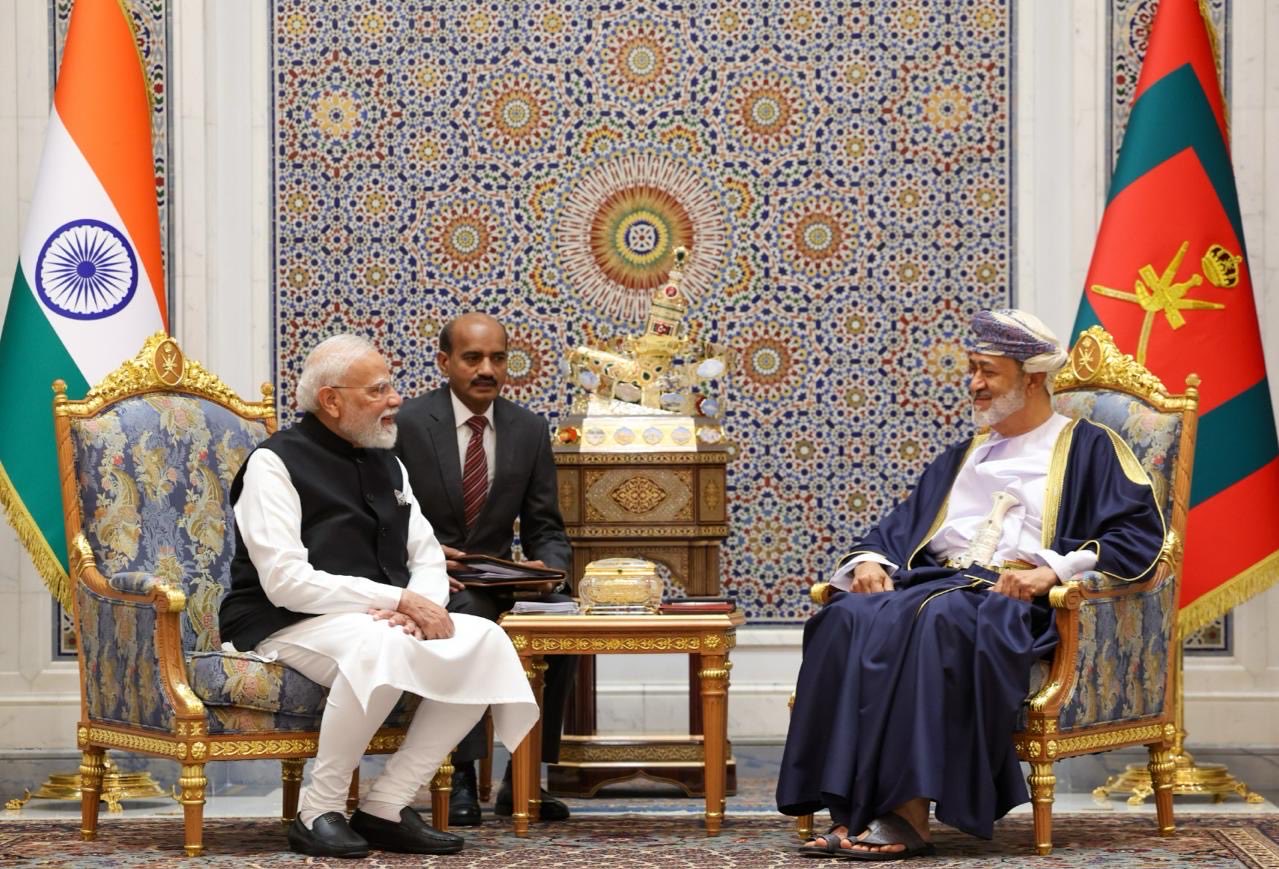
When the Sultanate of Oman formally endorsed India’s diplomatic philosophy at the BRICS Summit, the diplomatic community treated it as standard procedural pageantry. Official communiques praised mutual trust, while state-affiliated wires highlighted the resonant slogan of a shared global family. Veterans of Middle Eastern trade desks understood the reality immediately. This alignment signaled a fundamental restructuring of energy corridors and maritime security networks across the Western Indian Ocean.
Oman does not issue diplomatic blank checks. Muscat maintains a fiercely guarded doctrine of strategic neutrality, historically serving as the quiet intermediary for regional disputes where other Gulf states prefer megaphone diplomacy. When Muscat steps outside that traditional perimeter to throw diplomatic weight behind New Delhi's vision of multilateral dialogue, capital allocators and defense analysts must look past the press releases. The underlying mechanics involve deepwater ports, sovereign wealth deployment, and a quiet retreat from Western-dominated financial clearinghouses.
For decades, the economic relationship between New Delhi and Muscat boiled down to a predictable transaction. India bought crude oil; Oman banked the petrodollars. That bilateral dependency faced an expiration date as New Delhi diversified energy suppliers toward West Africa, Russia, and the Americas, while Oman accelerated domestic industrialization to prepare for a post-hydrocarbon economy. The BRICS Summit served as the public venue to formalize a different type of partnership. Both nations face a volatile maritime theater where security dependencies on traditional Western naval umbrellas are giving way to localized, bilateral self-reliance.
Port infrastructure forms the bedrock of this diplomatic pivot. The Port of Duqm stands as the physical manifestation of this strategy. Positioned on the southeastern seaboard of Oman, far outside the geopolitical flashpoint of the Strait of Hormuz, Duqm offers deepwater berths, extensive drydock facilities, and a sprawling special economic zone. A 2018 logistics memorandum granted the Indian Navy access to Duqm’s facilities for port calls and maintenance. Since then, the infrastructure has evolved from a contingency harbor into a vital logistics hub for regional supply chains. Indian commercial vessels and naval patrols now utilize Duqm to project presence without triggering regional anxieties or stepping on the toes of neighboring Gulf powers.
Trade settlement mechanisms tell an equally revealing story. Financial integration between New Delhi and Gulf economies is shedding legacy reliance on the U.S. dollar for bilateral exchange. The implementation of local currency settlement frameworks allows trade transactions to clear directly in rupees and rials, bypassing international clearinghouses vulnerable to third-party sanctions or transactional friction. While global financial analysts fixated on the broader BRICS debates regarding a unified digital currency, bilateral agreements between India and individual Gulf partners moved past rhetoric into practical execution.
Oman's leadership recognizes that India represents the most reliable, scale-driven economic engine capable of absorbing Omani downstream petrochemical products, green hydrogen, and specialized manufactured goods over the next thirty years. Conversely, New Delhi views Muscat as a trusted anchor in a maritime corridor through which a vast share of India's imported energy and critical trade passes. The convergence at the summit was not born of sudden ideological warmth. It represents cold, calculated geopolitical pragmatism.
Critics within Western foreign policy establishments often dismiss BRICS alignments as hollow talk shops incapable of challenging existing institutional dominance. That critique misses the granular reality on the ground. While multilateral summits generate sprawling joint statements, the actual work happens through bilateral infrastructure agreements, intelligence sharing, and currency swap arrangements that slowly erode unipolar economic leverage. Oman’s public endorsement of India’s diplomatic framework provides New Delhi with vital diplomatic cover in the Gulf Cooperation Council, where external powers often struggle to navigate intra-regional rivalries.
The geopolitical architecture of the Indian Ocean region is shifting away from monolithic security guarantees toward fragmented, interest-driven minilateralism. Oman and India understand that maritime choke points cannot be secured by distant capitals alone. By binding their economic futures closer together through resilient port networks, localized financial plumbing, and synchronized diplomatic messaging, Muscat and New Delhi are constructing a blueprint for middle-power autonomy in an increasingly fractured global order. The speeches at the summit fade into the background, but the deepwater berths at Duqm remain open, ready for the next phase of a quiet commercial and strategic revolution.


