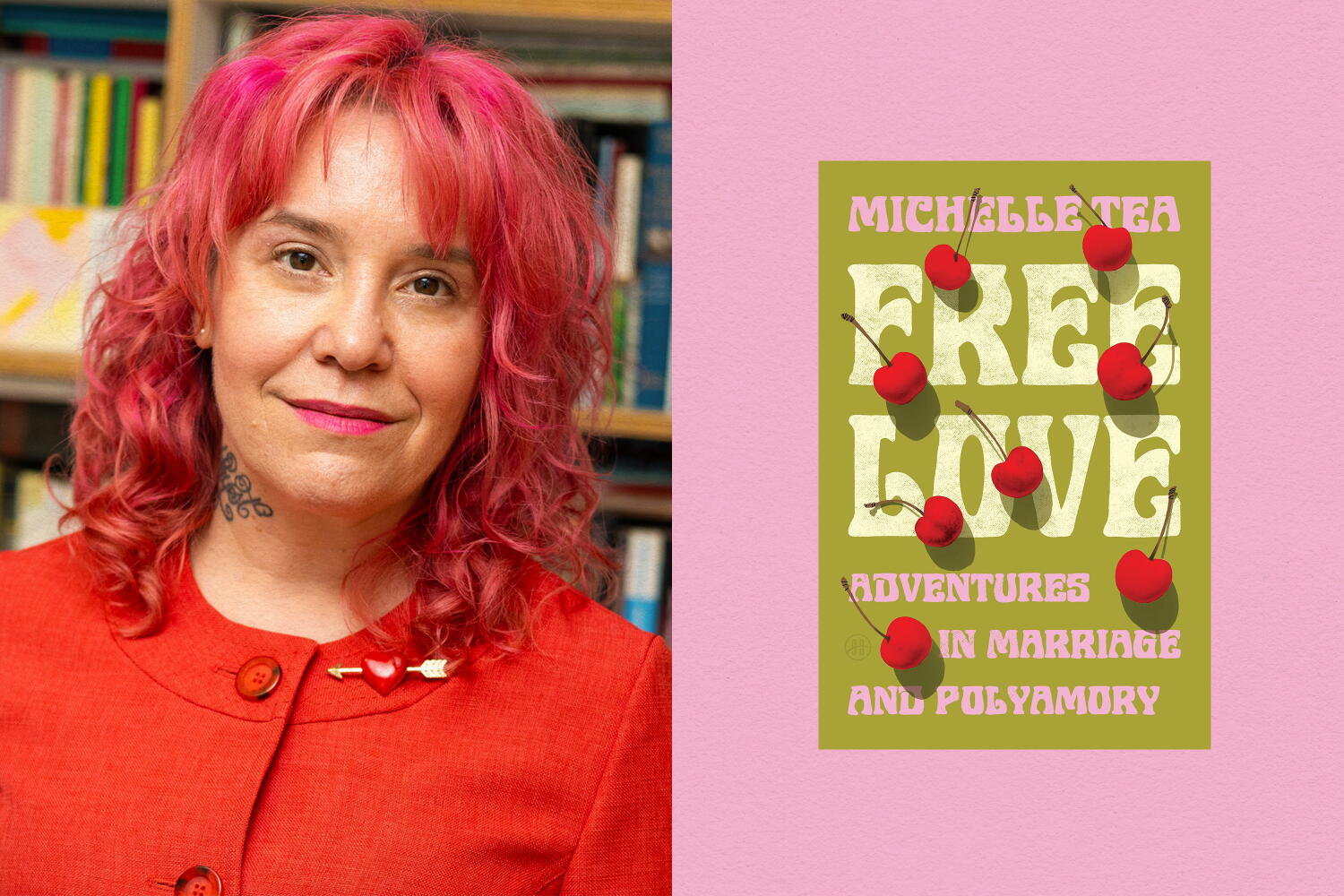
When an open marriage turns messy, the collapse rarely comes from the outside lovers. It comes from unexamined assumptions, asymmetrical power dynamics, and the quiet exhaustion of negotiating every boundary in real time. At 55, writer and longtime queer cultural chronicler Michelle Tea has stripped away the sanitized marketing that often surrounds consensual non-monogamy, exposing what actually happens when radical relationship ideals collide with midlife grief, parenting, and human jealousy.
Most mainstream coverage of open marriage falls into one of two traps. Either it treats non-monogamy as a progressive utopia where jealousy is simply an unhealed ego wound, or it treats it as a cautionary tale destined for inevitable ruin. Both framings miss the operational reality. Open relationships do not fail because people want too much; they fail because couples underestimate the emotional labor required to sustain multiple intimate ecosystems simultaneously.
The Myth of the Frictionless Open Marriage
For the past decade, a booming self-help economy has sold ethical non-monogamy as a sleek upgrade to traditional matrimony. Podcasts, bestsellers, and therapy directories routinely frame opening up as an exercise in communication hygiene. Establish your boundaries. Schedule your calendar check-ins. Process your triggers.
The pitch sounds clean on paper. In practice, human desire refuses to obey Google Calendar.
Michelle Tea built a literary career on radical honesty about sex, addiction, queer community, and domestic life—from her early memoir Valencia to later reflections on motherhood, aging, and partnership. What makes her perspective at 55 so disruptive to the current non-monogamy discourse is her refusal to pretend that emotional maturity eliminates pain. Decades of queer community organizing and personal therapy do not make a person immune to the gut punch of watching a primary partner fall into the intoxicating rush of new relationship energy.
That phrase gets tossed around casually in polyamorous spaces, usually abbreviated to NRE, as if naming a chemical storm neutralizes its destructive force. It does not. When one partner is swept up in the dopamine surge of a fresh connection while the other is home managing household logistics, aging parents, or perimenopause, the structural imbalance becomes acute. No amount of progressive vocabulary erases the asymmetry.
Where the Infrastructure Actually Cracks
Spend enough time interviewing couples therapists, divorce attorneys, and longtime practitioners of consensual non-monogamy, and a clear pattern emerges. When an open marriage unravels, the fracture almost always traces back to four specific stress points.
1. The Illusion of Equal Desirability
Couples frequently enter non-monogamy assuming they will experience roughly parallel opportunities. Reality rarely cooperates. One partner may find themselves inundated with attention within forty-eight hours of downloading an app, while the other faces months of silence, rejection, or lukewarm matches.
This disparity breeds a quiet, corrosive resentment that few people want to admit out loud. The partner struggling to find connections feels undesirable and sidelined; the partner with abundant options feels guilty for enjoying what they both supposedly agreed to pursue. Trying to force artificial parity—such as instituting a rule that neither partner can date unless both have a prospect—almost always backfires, turning intimacy into a hostage negotiation.
2. Rule Creep and Bureaucratic Burnout
In an effort to prevent hurt feelings, anxious couples often construct elaborate rulebooks. No sleepovers. No emotional attachment. Only out-of-town encounters. No mutual acquaintances.
Rules feel protective at the start. Over time, they become tripwires. Attraction does not respect arbitrary geographic or emotional borders, and enforcing strict containment protocols forces partners into constant policing. Instead of fostering safety, hyper-detailed agreements create technicalities—situations where someone follows the letter of the law while violating its spirit, or accidentally crosses a line because the line itself was blurry. Eventually, the marriage starts feeling less like a romance and more like a compliance department.
3. Using Third Parties as Shock Absorbers
A common, rarely acknowledged failure mode happens when a couple opens their marriage not from a place of surplus stability, but to avoid confronting an existing dead zone between them. A hypothetical example illustrates how quickly this curdles: imagine a pair who have stopped talking about their diverging life goals, so they bring in outside partners to supply the validation, sex, or excitement missing at home.
In that scenario, the secondary partners become unpaid emotional subcontractors. They prop up a failing primary marriage until the moment one of those outside connections grows serious enough to threaten the original arrangement. When the primary couple panics and pulls the plug to "save the marriage," the collateral damage lands squarely on the people treated as disposable cushions.
4. Midlife Shifts and Changing Baselines
The terms a couple agrees to at 32 rarely fit the people they become at 55. Aging alters libido, energy reserves, health, and tolerance for drama. What felt exhilarating in your thirties can feel like an unbearable administrative burden two decades later.
Michelle Tea’s candor around aging and relationship messiness hits a nerve precisely because midlife strips away performative cool. When you are navigating grief, shifting hormones, financial pressures, or raising a child, spending three hours on a Tuesday night processing why a text message triggered an attachment wound is no longer an intriguing philosophical exercise. It is exhausting.
The Queer Critique of Mainstream Non-Monogamy
Long before tech executives and suburban couples began debating polyamory in mainstream magazines, queer communities were experimenting with non-traditional kinship structures out of necessity and resistance. Yet there is a sharp divide between older queer traditions of chosen family and the contemporary corporate-friendly version of open marriage.
Traditional queer non-monogamy tended to blur the rigid hierarchy between romantic partners, friends, and community. Contemporary straight-coded ethical non-monogamy, by contrast, often tries to preserve every privilege of nuclear marriage—financial consolidation, legal primacy, social status, veto power—while simply adding recreational dating on the side.
Tea’s work exposes the friction inside that hybrid model. You cannot easily graft radical sexual autonomy onto a bourgeois institution built for property protection and exclusivity without experiencing severe structural torque. When the marriage is threatened, the hierarchy snaps shut. Veto power gets invoked. Suddenly, all the rhetoric about autonomy and abundance evaporates, revealing a traditional marriage with extra steps.
What Radical Honesty Actually Costs
We love stories about reinvention, especially when they end with neat lessons learned. Readers want to know the protocol. Tell us the exact communication framework that guarantees nobody gets hurt. Give us the five-step repair ritual.
There isn't one.
The most valuable contribution of an unflinching account like Michelle Tea’s at 55 is the admission that maturity does not look like serene detachment. Sometimes maturity looks like admitting you miscalculated. Sometimes it looks like recognizing that you wanted two incompatible things at the same time—total security and total freedom—and that the bill has finally come due.
For couples currently weighing whether to open their marriage, or trying to survive the fallout of one that has already gotten complicated, the path forward requires dropping the ideological script. Stop asking whether non-monogamy is inherently more evolved than monogamy. Neither structure confers moral superiority, and neither protects you from loss.
Instead, ask harder, less glamorous questions before changing the terms of your partnership:
- Who absorbs the operational cost? Look honestly at domestic labor, childcare, and emotional bandwidth. If one partner is already carrying 70 percent of the household load, adding external dating will accelerate resentment rather than relieve boredom.
- What happens when feelings violate the contract? If your current agreement relies on the assumption that nobody will ever fall in love with someone else, your agreement is built on fantasy. Plan for emotional attachment rather than pretending rules can prevent it.
- Can you tolerate your partner thriving without you? Compersion—feeling genuine joy at a partner’s outside romantic pleasure—is widely celebrated in non-monogamous literature, yet rarely experienced consistently in real life. You do not need to feel ecstatic about your partner’s other relationships, but you do need to know whether you can survive neutral discomfort without punishing them for it.
- Are you willing to let the original marriage end? True autonomy means accepting that opening a relationship might reveal that the two of you have grown into incompatible people. If the preservation of the legal marriage at all costs is the non-negotiable baseline, every outside encounter will be shadowed by fear.
Beyond the Binary of Success and Failure
Our culture still grades relationships like pass-fail exams. If a marriage lasts until death, it was a triumph; if it dissolves, restructures, or goes through a chaotic stretch, it was a mistake. That binary is useless for understanding adult intimacy, and it is doubly useless for evaluating open relationships.
A messy open marriage is not proof that non-monogamy is broken, any more than a bitter divorce proves that monogamy is a scam. Both outcomes are evidence of the same underlying truth: intimacy is inherently risky, and no structural arrangement can insulate two people from grief, envy, or change.
At 55, Michelle Tea refuses to tidy up the wreckage for the sake of a clean narrative arc, and that refusal is the sharpest corrective the relationship industry has seen in years. Stop treating your marriage like an optimization problem to be solved with better terminology, look directly at the real human cost of your desires, and decide what you are actually willing to pay.