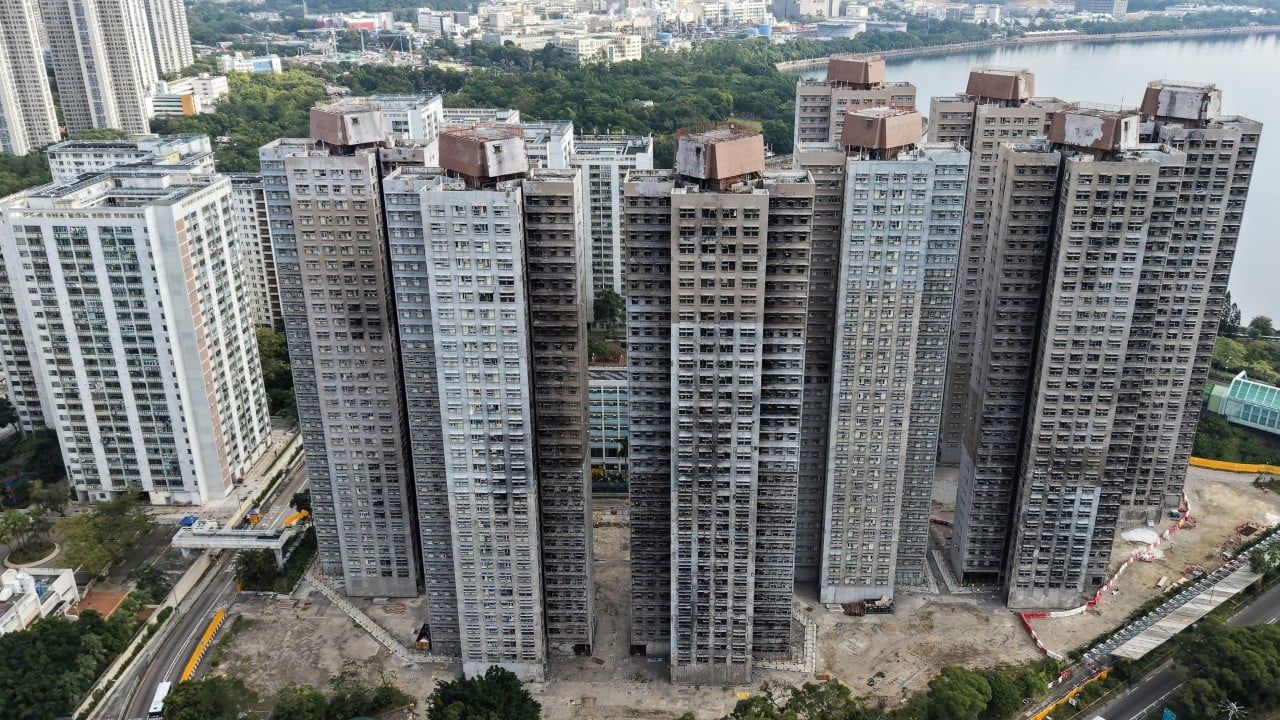
Public infrastructure fails not from a lack of capital allocation, but from principal-agent misalignment and fragmented accountability. Chief Executive John Lee’s push for continued reform alongside the launch of a dedicated public housing maintenance unit addresses a structural defect in Hong Kong’s Housing Authority: the gap between centralized policy mandates and decentralized contractor execution. Standard news coverage treats this launch as a routine administrative update. In operational reality, establishing a specialized maintenance unit represents a shift from reactive outsourcing to internalized quality control across an aging building stock exceeding 800,000 public rental flats.
The Structural Economics of Public Housing Decay
To understand why a dedicated unit is necessary, one must examine the life-cycle cost curve of high-density vertical infrastructure. Hong Kong’s public rental housing (PRH) estates operate under extreme utilization rates. Elevators, pressurized water supply systems, concrete facades, and drainage stacks experience continuous mechanical and environmental stress.
Historically, maintenance execution relied heavily on multi-tiered subcontracting. Under standard procurement models, the Housing Department awards term contracts to primary vendors, who subsequently sub-contract specialized trades—spalling concrete repair, waterproofing, plumbing, and electrical diagnostics—to smaller operators. This creates a classic economic distortion known as adverse selection. Contractors bid aggressively low to secure volume, then recover margins by minimizing material quality, rushing inspection protocols, or deferring preventative interventions until components fail catastrophically.
The resulting cost function is non-linear. Deferring a minor waterproof membrane repair on a flat roof costs minimal capital in year one. By year four, water ingress compromises steel reinforcement bars inside the concrete slab, triggering spalling and structural degradation that requires exponentially higher capital expenditure and resident relocation. A specialized maintenance unit alters this equation by intercepting defects early in the decay curve, shifting expenditure from emergency capital replacement to routine operational maintenance.
Deconstructing the New Maintenance Unit Mandate
Launching an internal maintenance unit within a bureaucracy requires clear jurisdictional boundaries; otherwise, it becomes another layer of administrative friction. The operational design of this reform rests on three distinct functional shifts:
Direct Technical Auditing
Instead of relying on contractor self-certification—a primary failure point in past public works scandals—the new unit deploys dedicated technical personnel to audit physical assets directly. By separating the entity performing the repair from the entity verifying compliance, the Housing Authority eliminates the conflict of interest inherent in self-policing vendor networks.Standardized Diagnostic Protocols
Older estates suffer from inconsistent maintenance records. Different contractors use varying reporting formats, making longitudinal asset tracking nearly impossible. A centralized unit enforces uniform diagnostic metrics, utilizing non-destructive testing technologies such as infrared thermography for water seepage and ultrasonic pulse velocity for concrete integrity. Data standardization turns isolated repair tickets into predictive maintenance schedules.Rapid-Response Escalation Pathways
Bureaucratic latency turns minor tenant complaints into public relations crises. Traditional workflows require a tenant report to pass through estate management offices, administrative clerks, housing officers, and finally external contractors before a wrench is turned. The specialized unit compresses this chain of command by granting technical teams direct authority to triage high-risk defects—such as external wall spalling or critical plumbing failures—and dispatch remediation crews immediately.
The Principal-Agent Problem in Estate Management
John Lee’s emphasis on "continued reform" signals that institutional inertia remains the primary threat to service delivery. In public administration, the principal-agent problem occurs when civil servants and contracted vendors (the agents) prioritize procedural compliance—checking boxes, filing paperwork, and avoiding audit flags—over actual outcomes (the principal’s goal of safe, habitable housing).
When a government agency measures success by the number of tenders processed or the speed of budget disbursement, maintenance quality deteriorates. Contractors optimize for passing paper audits rather than solving root-cause engineering issues. For example, patching interior ceiling plaster hides a leak long enough for a contractor to clear a warranty period, even though the exterior pipe joint remains fractured.
Reform in this sector requires inverting performance metrics. Instead of measuring inputs (contracts signed, inspections logged), the new unit must be evaluated on asset reliability metrics:
- Mean Time Between Failures (MTBF) for critical building systems like lifts and booster pumps.
- First-time fix rates for recurring water seepage complaints.
- Reduction in emergency corrective maintenance spending relative to planned preventative budgets.
Without tying management appraisals and contractor renewal eligibility directly to these physical performance indicators, administrative restructuring merely reorganizes existing inefficiencies.
Technical Bottlenecks in Aging Estate Portfolios
Even with optimized governance, the physical reality of Hong Kong’s housing stock imposes severe operational constraints. Roughly one-third of the Housing Authority’s rental stock is over 30 years old. Retrofitting and maintaining high-rise structures while tens of thousands of residents remain in situ introduces complex logistical friction.
Vertical Access and Staging Constraints
Conducting exterior facade repairs on 40-story buildings requires extensive bamboo or metal scaffolding, suspended working platforms, and strict ground-level safety perimeters. In densely populated estates, staging areas compete directly with pedestrian walkways, emergency vehicle access lanes, and commercial loading zones. Maintenance schedules cannot be optimized purely on engineering logic; they must accommodate pedestrian flow dynamics and noise ordinance windows, severely restricting productive work hours per day.
Legacy Infrastructure Interdependencies
In older slab-block and H-block designs, plumbing, electrical conduits, and structural elements are tightly integrated. Replacing a corroded cast-iron drainage stack often requires breaking through resident-installed bathroom tiles and cabinetry. Tenants frequently resist invasive preventative work because of the immediate disruption to their living space, forcing maintenance teams to wait until an active leak forces entry. The new maintenance unit must execute tenant liaison protocols with the same precision as engineering tasks, framing preventative disruption as protection against catastrophic failure.
Skilled Labor Scarcity
Hong Kong’s construction and maintenance sectors face a structural demographic deficit. The average age of registered skilled tradespeople—plumbers, licensed electricians, concrete repair specialists—continues to climb, while younger entrants gravitate toward less physically demanding service sectors. A newly formed maintenance unit cannot conjure skilled labor out of thin air. If the unit competes directly with private sector contractors for the same shrinking pool of certified technicians, it will drive up wage inflation across the territory without increasing total maintenance capacity.
Assessing Execution Risks and Operational Limitations
Treating the launch of a specialized unit as a complete solution ignores fundamental systemic vulnerabilities. Several failure modes could neutralize the intended gains of this reform:
- Jurisdictional Overlap and Turf Wars: The Housing Department already possesses estate management divisions, architectural teams, and contracted property management agencies (PMAs). If the new maintenance unit lacks clear supremacy over repair prioritization, estate managers and unit engineers will stall projects through inter-departmental disputes over budget attribution and liability.
- The Audit Paralysis Trap: Heightened political scrutiny often forces public units into defensive compliance. If engineers spend 60 percent of their hours documenting their decisions to shield themselves from future Ombudsman investigations or Legislative Council inquiries, actual field supervision drops. Over-auditing slows down execution just as effectively as under-auditing degrades quality.
- Vendor Market Concentration: If strict quality enforcement drives smaller, marginal contractors out of the public housing market, the Housing Authority faces an oligopoly of large engineering firms. Reduced competition leads to higher tender prices and diminished bargaining power for the government during contract renewals.
Strategic Imperatives for Sustained Reform
To prevent the new public housing maintenance unit from ossifying into a standard bureaucratic department, leadership must execute three structural adjustments over the next four quarters.
First, decouple maintenance procurement from lowest-bid selection criteria. Shift tender scoring models to weight past physical performance, defect recurrence rates, and technician retention metrics at 60 percent or higher, relegating initial price bids to secondary status. Cheap maintenance is an accounting illusion that transfers costs into future capital budgets.
Second, mandate open-data asset tracking across all estates. Every building component—from rooftop water tanks to basement switchgear—must carry a digital maintenance ledger accessible to both the specialized unit and estate management teams. When defect histories are transparent and immutable, contractors cannot obscure recurring systemic failures behind fragmented paperwork.
Third, establish an internal technical apprenticeship pipeline within the unit. Rather than poaching scarce certified tradespeople from the private sector, pair senior Housing Authority inspectors with vocational trainees to build proprietary diagnostic capacity. By controlling both the inspection standards and the training pipeline, the administration secures long-term operational resilience against labor market volatility.