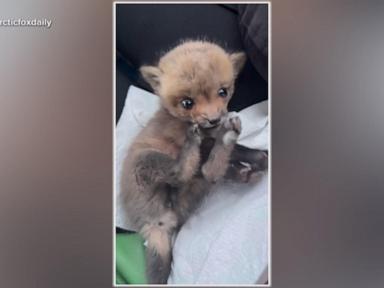
Running an exotic wildlife sanctuary is frequently romanticized in viral media as an idyllic pursuit of passion, yet the underlying reality is governed by strict biological constraints, high fixed operating costs, and irreversible captivity dynamics. When a human caretaker dedicates a facility to rescuing Arctic foxes (Vulpes lagopus) from fur farms, illegal pet trades, or backyard breeding operations, the endeavor functions less like a hobby and more like a specialized, zero-margin veterinary and behavioral containment operation. Understanding what it actually takes to sustain these animals requires stripping away sentimental narratives and examining the physiological, legal, and financial mechanisms that dictate whether a sanctuary survives or collapses under the weight of its own intake.
The Origin Bottleneck and Genetic Divergence
The foundational problem driving the need for Arctic fox sanctuaries is not wild habitat loss, as global wild populations of Vulpes lagopus remain relatively stable across the circumpolar tundra, with regional exceptions like Fennoscandia. Instead, captive rescues stem almost entirely from human-engineered supply chains: commercial fur farming and the exotic pet market.
Captive-bred Arctic foxes differ fundamentally from their wild counterparts through decades of selective breeding. Fur farms and exotic breeders select for specific phenotypic traits—such as leucistic, platinum, or marble coat morphs—alongside docility toward human handlers. This artificial selection produces animals with altered endocrinology, modified cranial morphology, and compromised survival instincts.
Because of these genetic and behavioral shifts, captive-bred Arctic foxes cannot be rehabilitated for release into the wild. Releasing a captive-bred fox into a sub-Arctic ecosystem introduces malformed genetics into wild populations while guaranteeing the animal's rapid starvation or predation. Every intake into a sanctuary represents a permanent, multi-year capital commitment. The average lifespan of Vulpes lagopus in the wild is three to four years due to predation, starvation, and harsh winters; in a managed sanctuary environment with consistent caloric intake and veterinary intervention, that lifespan extends to ten or fourteen years. A single rescue decision therefore locks the operator into over a decade of continuous resource allocation.
Physiological Demands and Thermoregulatory Engineering
An Arctic fox is an evolutionary specialist engineered for extreme energy conservation in sub-zero environments. Transferring these animals to temperate latitudes—where most private rescues and sanctuaries operate—creates a severe thermoregulatory mismatch.
- Lower Critical Temperature: The Arctic fox possesses the most insulative pelt of any mammal, allowing it to maintain its core body temperature without increasing its metabolic rate down to minus 40 degrees Celsius. When housed in climates where summer ambient temperatures routinely exceed 25 degrees Celsius, the animal faces chronic heat stress.
- Biannual Molting Cycles: Twice a year, the fox undergoes a complete coat transition triggered by photoperiod changes rather than temperature alone. During the spring molt, dense winter underfur sheds in thick mats. Without manual intervention or specialized grooming protocols, captive foxes develop severe dermatitis, fungal infections, and flystrike beneath trapped, moisture-retaining fur.
- Metabolic Fluctuations: In the wild, Arctic foxes experience dramatic seasonal weight swings, accumulating up to 50 percent of their body weight in adipose tissue during autumn to survive winter scarcity. Captive caretakers must manually replicate this caloric curve. Feeding a static, year-round maintenance diet leads to morbid obesity, hepatic lipidosis, and joint degeneration, whereas abrupt calorie restriction triggers destructive stress behaviors.
To counter these biological realities, sanctuary infrastructure cannot rely on standard canine kennels. Enclosures require subterranean dig barriers extending at least four feet underground to accommodate natural burrowing behaviors, overhead containment netting to prevent vertical escapes, and climate-controlled dens or shaded, ventilated microclimates during warm months.
The Behavioral Economics of Captive Canids
Popular media often frames sanctuary work through moments of physical affection between caretakers and animals, creating a false equivalence between tamed wild canids and domesticated dogs (Canis lupus familiaris). Domestication is a multi-generational evolutionary process that alters an animal's baseline stress response; taming is merely the conditioned habituation of an individual wild animal to human presence.
Even when raised from infancy by human hands, an Arctic fox retains high-amplitude territorial, caching, and nocturnal instincts. When these animals are acquired by private owners expecting dog-like compliance, the resulting behavioral friction drives surrender rates:
- Scent Marking and Olfactory Communication: Arctic foxes possess active supracaudal and anal glands used to mark territory with pungent, musk-heavy secretions. This behavior intensifies during the late-winter breeding season and cannot be eliminated through behavioral training.
- Resource Guarding and Caching: Driven by evolutionary adaptations to tundra scarcity, foxes compulsively bury excess food and non-food objects. In indoor environments, this manifests as destructive digging into drywall, flooring, and furniture.
- Hyper-Vocalization: Foxes communicate via high-pitched screams, barks, and chattering that carry across long distances, frequently triggering municipal noise violations and neighbor disputes in suburban zones.
- Social Hierarchy Instability: Unlike pack-hunting wolves, Arctic foxes are largely solitary outside of pair-bonded breeding seasons. Housing multiple rescued foxes together requires careful temperament matching and vast square footage; improper grouping results in severe bite wounds and chronic cortisol elevation.
A successful sanctuary operator acts as an environmental architect rather than a pet owner. The daily workflow centers on environmental enrichment—hiding scent trails, varying feeding schedules, and providing complex substrates—to redirect high-energy foraging drives away from self-mutilation or stereotypic pacing.
The Sanctuary Cost Function and Regulatory Friction
Operating a legitimate wildlife sanctuary requires navigating a dense matrix of municipal, state, and federal regulations while absorbing escalating fixed costs. The financial viability of an exotic canid facility is dictated by four primary variables:
- Regulatory Compliance and Licensing: Depending on jurisdiction, housing Vulpes lagopus requires state-level exotic wildlife exhibitor or rehabilitator permits, alongside United States Department of Agriculture (USDA) Class C licensing if the facility displays animals to the public or uses them for educational outreach. Maintaining compliance demands unannounced inspection readiness, strict perimeter fencing standards, and documented veterinary care plans.
- Specialized Veterinary Overhead: Standard companion-animal veterinarians frequently lack the diagnostic training or legal clearance to treat exotic canids. Sanctuaries must retain exotic-animal specialists capable of managing species-specific risks, including rabies vector protocols (as off-label rabies vaccines do not carry guaranteed legal recognition for wild canids in many jurisdictions, exposing animals to mandatory euthanasia if a bite occurs).
- Nutritional Formulation: Captive foxes require whole-prey diets, high-taurine formulations, and balanced calcium-to-phosphorus ratios. Feeding commercial dog kibble induces bladder stones, neurological deficits, and coat degradation. Sourcing frozen rodents, chicks, and specialized carnivore meats introduces cold-chain storage costs and supply chain vulnerability.
- The Publicity Paradox: Many independent sanctuaries rely on social media monetization and crowdfunding to survive. Generating viral video content showcasing cute, approachable foxes increases donation velocity, yet it simultaneously stimulates consumer demand for exotic pets. When viewers see a fox behaving playfully indoors, a subset inevitably attempts to purchase a pup from commercial breeders, directly expanding the future surrender pipeline that the sanctuary exists to mitigate.
Risk Mitigation and Operational Limitations
No sanctuary model eliminates the inherent friction of keeping wild-type canids in captivity. Even the highest-funded facilities face hard operational ceilings:
- Capacity Saturation: Because intake is permanent and lifespan is long, every sanctuary eventually hits maximum physical and financial capacity. Accepting one additional animal beyond optimal caretaker-to-animal ratios degrades hygiene protocols, increases disease transmission risk (such as canine distemper and parvovirus), and accelerates caretaker burnout.
- Geographic Vulnerability: Facilities located in regions prone to extreme heatwaves, hurricanes, or wildfires face acute evacuation bottlenecks. Transporting dozens of flight-risk, territorial animals requires specialized transport crates, climate-controlled vehicles, and pre-arranged receiving facilities—assets few small rescues possess.
- Key-Person Dependency: Most grassroots wildlife rescues are built around a single founder who manages animal husbandry, fundraising, maintenance, and administration. If the founder suffers an injury, illness, or financial collapse, the animals face immediate displacement, often leading to euthanasia when no other licensed facility has open capacity.
The Strategic Blueprint for Sustainable Sanctuary Operations
To transition from a fragile, personality-driven rescue into a durable conservation and care institution, sanctuary operators must enforce strict structural boundaries across intake, public messaging, and capital allocation.
First, decouple intake from emotional urgency. Establish a hard mathematical cap on animal capacity tied directly to liquid cash reserves—specifically, maintaining a dedicated escrow fund covering a minimum of twelve months of feed, veterinary, and facility overhead per resident animal before approving any new intake.
Second, eliminate ambiguous public framing. Shift all external communications and video documentation away from domestic-style indoor interactions and toward transparent demonstrations of behavioral challenges, enclosure engineering, and biological requirements. Explicitly pairing every visual of an Arctic fox with data on its destructive habits, odor profile, and specialized dietary cost suppresses impulse pet purchases while attracting higher-intent institutional donors.
Third, institutionalize succession and veterinary redundancy. Formalize cross-training protocols with local zoological institutions or veterinary schools to eliminate single-point-of-failure reliance on one caretaker, ensuring that the long-term biological commitment made to each animal survives beyond the daily stamina of its founder.