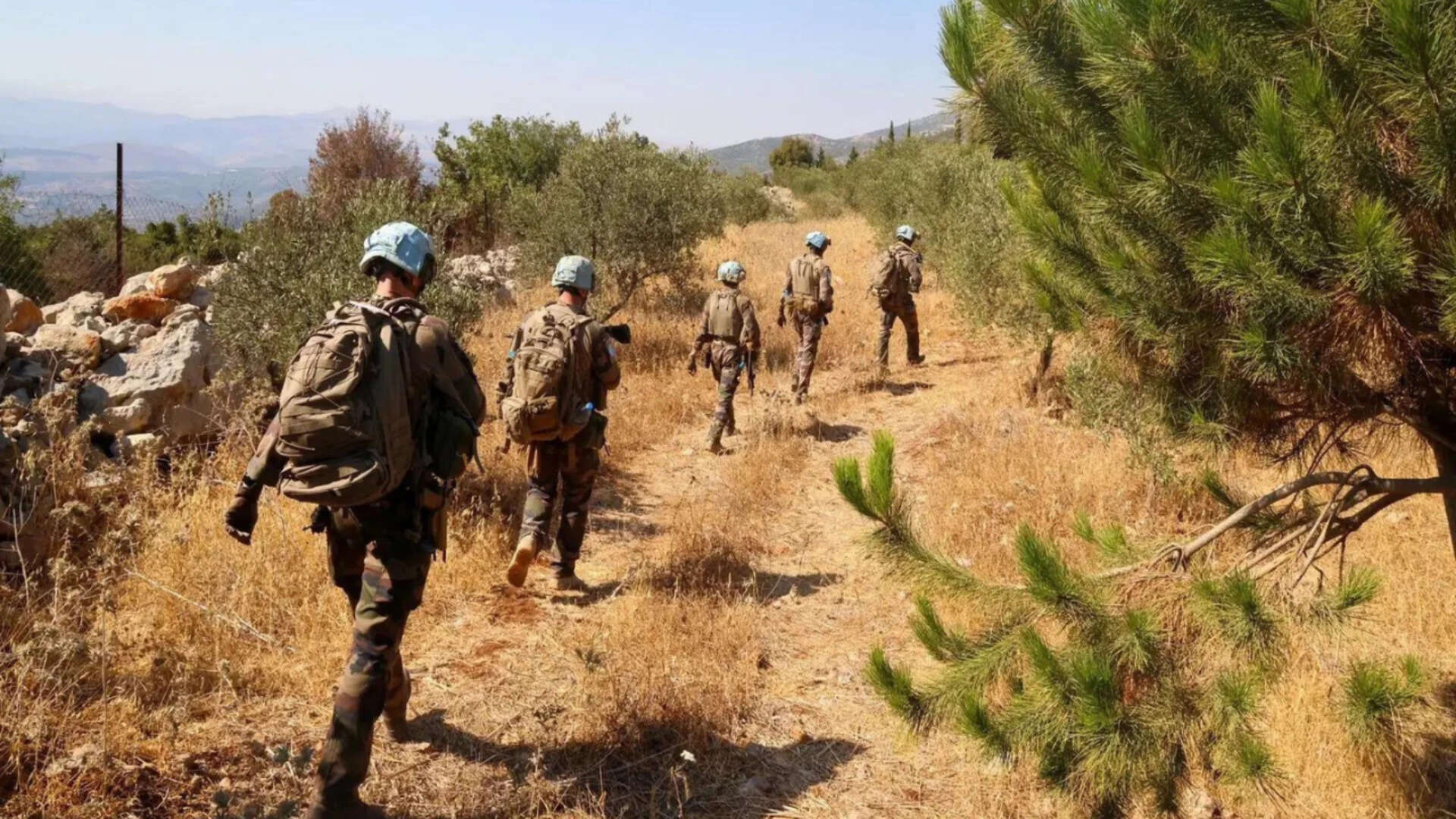
The repatriation of fallen Indonesian peacekeepers from Lebanon marks a critical failure point in the risk-mitigation strategies governing United Nations Interim Force in Lebanon (UNIFIL) operations. When a peacekeeping contingent transitions from a deterrent force to a set of active casualties, the geopolitical cost function shifts from stabilized borders to internal political volatility and strained bilateral defense pacts. The death of personnel is not merely a human tragedy; it is a breakdown of the Operational Security (OPSEC) Equilibrium required to maintain a presence in high-friction zones.
Analyzing this event requires moving beyond the surface-level reportage of funeral rites. We must instead deconstruct the structural vulnerabilities inherent in the UNIFIL mandate, the specific tactical exposures of the Indonesian battalion (INDOBATT), and the broader implications for Southeast Asian defense diplomacy in the Middle East.
The Triad of Tactical Vulnerability
The casualties sustained in Lebanon can be categorized through three distinct failure vectors. These vectors determine whether a mission remains viable or becomes a liability for the contributing nation.
- Kinetic Asymmetry: Peacekeepers often operate with Rules of Engagement (ROE) that are fundamentally reactive. In the Lebanese theater, UNIFIL forces are positioned between non-state actors with high-mobility guerilla tactics and a state military (the IDF) utilizing high-altitude precision munitions and heavy armor. The "Blue Helmet" serves as a visual marker that provides no ballistic advantage but creates a high-signature target for both sides seeking to signal intent or exert pressure.
- Environmental Friction: The South Lebanon terrain, characterized by dense urban clusters and rugged limestone hills, limits the effectiveness of armored personnel carriers. When Indonesian units move between Sector West positions, they are forced into predictable "Choke Point" corridors. This predictability is the primary precursor to ambush or collateral involvement in cross-border exchanges.
- Mandate Overreach: UNIFIL’s current mandate focuses on monitoring the Blue Line. However, when the intensity of the conflict exceeds the "monitorable" threshold, the peacekeepers become static observers of a dynamic war. This creates a Strategic Dead Zone where the force is too large to be invisible but too restricted to defend itself or enforce its presence.
Quantifying the Cost of Participation
For Indonesia, the world’s largest contributor to UNIFIL, the loss of life necessitates a recalculation of the National Interest ROI. Indonesia’s involvement is driven by constitutional mandates to maintain world peace and a desire to project soft power within the Islamic world. However, the cost of this projection is measured in two specific currencies:
Political Capital Erosion
Domestically, the Indonesian government faces a tightening constraint. While the public generally supports the Palestinian and Lebanese causes, the tolerance for "unproductive casualties"—deaths that occur without a clear defensive victory—is low. The repatriation of bodies triggers a feedback loop where the military must justify the continued deployment to a civilian legislature that may view the risk as disproportionate to the diplomatic gain.
Operational Readiness Degradation
The loss of experienced personnel, particularly in specialized roles such as engineering or intelligence within the INDOBATT, creates a specialized vacancy that cannot be filled by immediate rotation. The recruitment, training, and deployment cycle for a peacekeeper involves months of UN-specific certification. A single casualty event ripples through the entire brigade's operational readiness, forcing a temporary retreat into "Crouched Posture" operations where patrols are minimized to prevent further losses.
The Mechanism of Escalation in the Blue Line Corridor
The death of peacekeepers is rarely an isolated tactical error. It is almost always a byproduct of Proximity Saturation. In the current conflict, the density of fire from both Hezbollah and the IDF has reached a level where the statistical probability of a UN position being struck approaches 1.0 over a 30-day window.
The logic of the combatants follows a predictable path:
- Hezbollah utilizes UN positions as "Human Shields" or "Shielding Infrastructure" to complicate IDF targeting logic.
- The IDF views UN positions as "Intelligence Blindspots" that must be neutralized or bypassed to achieve kinetic objectives.
The Indonesian contingent finds itself trapped in the Neutrality Paradox. By maintaining a strictly neutral stance, they provide no tactical utility to either side, making their safety a secondary concern for the primary belligerents. When Indonesian bodies return to Jakarta, it is a signal that the Neutrality Paradox has collapsed into a "Zone of Irrelevance," where the Blue Helmet no longer functions as a psychological deterrent.
Reforming the Deployment Framework
To mitigate these risks, the Indonesian Ministry of Defense must transition from a volume-based contribution model to a Hardened Deployment Architecture. This involves three structural shifts:
- Autonomous Intelligence Assets: Relying on UN-provided intelligence is insufficient. Indonesian contingents require sovereign SIGINT (Signals Intelligence) and UAV surveillance capabilities to monitor the movements of both the IDF and Hezbollah in real-time, independent of the UN chain of command. This allows for preemptive "Tactical Withdrawal" before an area becomes a kinetic focal point.
- Dynamic ROE Renegotiation: The current ROE are too rigid. Indonesia must demand "Active Defense" protocols that allow peacekeepers to engage any party that threatens their immediate perimeter, regardless of the broader diplomatic implications. If the cost of firing on a peacekeeper is not immediate and lethal, the peacekeeper remains a target.
- Bilateral Deconfliction Channels: While UNIFIL coordinates through the UN, Indonesia should establish direct, back-channel deconfliction lines with both the Lebanese Armed Forces and the Israeli Defense Ministry. Relying on a centralized UN mediator creates a 15-to-30-minute delay in communication—a window in which most casualty-producing events occur.
The Geopolitical Fallout in Southeast Asia
The return of these fallen soldiers also affects the ASEAN defense landscape. Indonesia’s role as a "Leading Nation" in peacekeeping is a point of regional pride. However, if Indonesia begins to scale back its UNIFIL presence due to unsustainable risk, it creates a vacuum that other regional powers, such as Malaysia or Singapore, may be hesitant to fill. This leads to a Regional Isolationism in defense policy, where Southeast Asian nations become increasingly wary of contributing to missions outside their immediate geographic sphere (the South China Sea).
The Second Limitation of the current strategy is the reliance on "Soft Power through Presence." Indonesia has proven it can send thousands of troops. It has not yet proven it can protect them when the regional architecture fails. The transition from "Observer" to "Target" is instantaneous; the transition from "Target" back to "Observer" is impossible without a significant shift in the ground-level power balance.
Strategic Recommendation for the Indonesian Defense Command
The immediate priority must be a Site-Specific Risk Audit for every Indonesian outpost in Lebanon. Any position that shares a fence line with active militant infrastructure or is within 500 meters of a confirmed IDF target priority must be evacuated or fortified with Level 4 ballistic protection immediately.
Furthermore, the government should move toward a "Contractual Safety Clause" with the UN. If the UN cannot guarantee a minimum safety corridor via its diplomatic channels, Indonesia must reserve the right to unilaterally withdraw personnel to "Safe Zones" in the north of Lebanon. The era of the static, vulnerable peacekeeper is over; the future of the mission depends on Mobile, Intelligence-Led Survivability.
The state must stop viewing these casualties as the "Price of Peace" and start viewing them as "Systemic Failures of Architecture." Each body returned to Jakarta is a data point proving that the current UNIFIL model is no longer compatible with the reality of modern, high-intensity hybrid warfare. If the model is not rebuilt to prioritize the survival of the contributor, the contributor must prioritize the survival of its force by reducing its exposure to zero.



