When a diplomatic mission orders non-emergency personnel to leave a country following strikes near a major aviation hub, the immediate headline reads like an emergency exit. In reality, an ordered departure is a structured risk-transfer mechanism triggered when threat probability, infrastructure exposure, and operational fragility cross an institutional threshold.
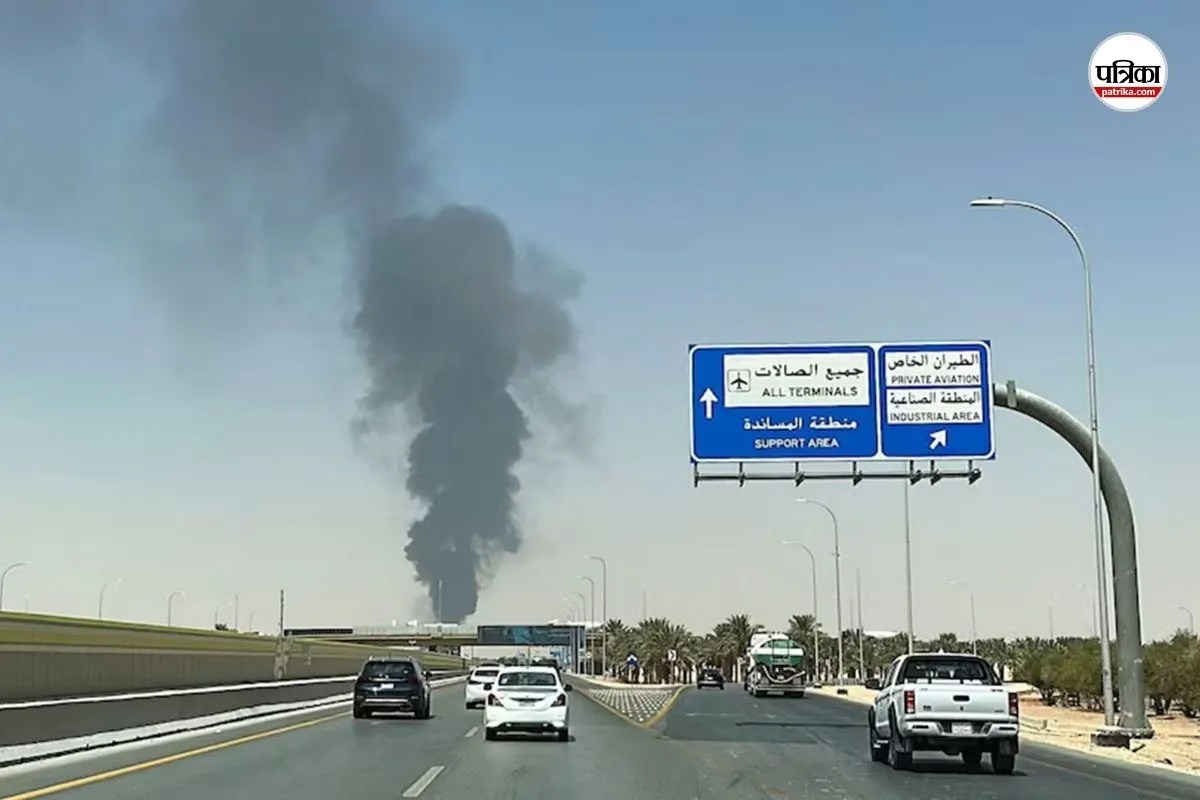
A competitor headline about an attack at King Fahd International Airport and a subsequent United States ordered departure captures two visible events—a strike near a major transport node and a diplomatic drawdown—without mapping the causal chain that links them. Headline coverage tends to compress complex security shifts into dramatic snapshots: fear returning to Saudi Arabia, Washington pulling staff back, and travelers wondering what happens next. That framing leaves out the operational mechanics that actually govern aviation security, diplomatic risk management, and commercial flight continuity.
Because the full text and underlying incident details of the referenced report are not available here, any specific operational claims about the strike itself must be treated as unverified outside what the headline states. What can be analyzed with precision is the structural logic connecting strikes on major airports, diplomatic ordered departures, airspace risk assessment, and commercial aviation resilience. Separating confirmed facts from analytical hypotheses—and examining the mechanisms rather than guessing at unreported numbers—provides a clearer way to evaluate how such crises unfold.
Known Facts Versus Educated Hypotheses
Rigorous security and risk analysis begins by sorting observable events from inferred causes. In fast-moving regional security stories, rumor and speculation travel faster than verified intelligence, particularly around aviation incidents where flight tracking data, air defense claims, and diplomatic advisories often diverge in the first hours.
- Observable headline facts: A security incident or attack is reported involving King Fahd International Airport in Saudi Arabia's Eastern Province, and the United States issues an ordered departure directive affecting certain government personnel or dependents.
- Institutional meaning of an ordered departure: Under U.S. diplomatic practice, an ordered departure is mandatory for covered personnel and family members specified in the directive, unlike an authorized departure, which is optional. It signals elevated threat assessment without necessarily closing the embassy or consulate entirely.
- Educated hypothesis on timing: Diplomatic drawdowns following strikes near major transport hubs frequently reflect a reassessment of escalation risk, follow-on strike potential, or localized strain on medical, security, and evacuation infrastructure rather than a single isolated event.
- Educated hypothesis on aviation impact: Strikes targeting or occurring near an international airport rarely need to destroy every runway to disrupt operations. Even brief airspace closures, air defense activity, insurance repricing, or crew-rest bottlenecks can ripple across regional schedules.
Confusing a diplomatic ordered departure with a full embassy evacuation or a permanent airspace shutdown is a common analytical error. A mission can shrink its footprint to reduce exposure and logistics load while remaining open for core diplomatic and consular functions. Conversely, commercial airlines can suspend or reroute flights based on risk models that operate independently of diplomatic travel advisories.
The Three Pillars of Airport Strike Escalation
To understand why an attack near a major hub like King Fahd International Airport carries outsized strategic weight, it helps to break the situation into three structural pillars: Node Centrality, Escalation Signaling, and Response Asymmetry.
Node Centrality
Large international airports are high-throughput nodes where physical infrastructure, fuel supply, radar and air traffic control, ground transport, and multinational personnel converge. In the Eastern Province of Saudi Arabia, major aviation infrastructure sits adjacent to critical energy, industrial, and logistics corridors. Disrupting or threatening a major hub tests both physical defense and economic confidence simultaneously.
Even when physical damage is contained, an airport functions as a psychological and logistical barometer. Business travelers, contractors, and foreign missions treat hub security as a proxy for broader regional stability. If the gateway looks vulnerable, confidence in surrounding operations erodes quickly.
Escalation Signaling
State and non-state actors rarely strike transport or energy-adjacent infrastructure in a vacuum. Attacks near high-profile facilities often serve as signaling instruments—demonstrating reach, probing air defense saturation thresholds, imposing economic friction, or raising the perceived cost of regional alignment.
From an analyst's perspective, the critical question after any strike is whether the incident represents a one-off probe or the opening move of a multi-wave campaign. Diplomatic planners must model the tail risk of follow-on strikes against secondary targets, including diplomatic compounds, transit routes, or other airports.
Response Asymmetry
Defending wide airspace and sprawling airport perimeters is structurally harder and costlier than launching a drone, missile, or standoff attack. Even high interception rates leave a residual leak rate—the statistical probability that one system penetrates defense layers.
This asymmetry shapes diplomatic and corporate decisions. Decision-makers do not wait for catastrophic damage to adjust posture; they react to shifts in probability and consequence. When the expected cost of keeping non-essential personnel in place exceeds the operational benefit of their presence, an ordered departure becomes the rational move.
The Cost Function of an Ordered Departure
An ordered departure is not free. Every risk-reduction measure imposes operational, financial, and diplomatic costs across the organization that issues it and the host environment that receives it.
The cost function of an ordered departure can be understood through four interacting variables:
- Mission Continuity Cost: Fewer personnel on the ground means slower consular processing, reduced on-site oversight, and heavier reliance on remote coordination or regional surge teams.
- Logistics and Relocation Cost: Moving staff, dependents, and sensitive equipment under heightened alert strains commercial seat availability, charter options, security escorts, and housing allowances.
- Signal and Perception Cost: Publicly ordering a departure sends an unmistakable warning to allied governments, multinational corporations, and private citizens, which can accelerate commercial pullbacks and dampen investment sentiment.
- Return Friction: Reversing an ordered departure usually takes longer than issuing it. Restoring normal staffing requires verified threat de-escalation, updated security protocols, and rebuilt confidence among personnel.
Why do governments accept these costs? Because diplomatic risk management operates under strict duty-of-care obligations and asymmetric downside exposure. Missing an escalation signal carries severe political and human consequences, whereas a precautionary drawdown can be reversed once conditions stabilize.
Hidden Cause-and-Effect Chains Travelers and Analysts Miss
Standard news coverage tends to treat the airport attack and the diplomatic order as parallel headlines. In operational reality, they trigger cascading cause-and-effect loops across aviation, supply chains, and corporate risk teams.
Airspace Risk and Rerouting Cascades
When a strike occurs near a major airport, aviation authorities and airlines immediately reassess flight information regions and approach corridors. Even if an airport reopens within hours, carriers may adjust routing to avoid sensitive airspace, add fuel reserves, or cancel rotations. Those adjustments cascade into missed connections across Gulf and international hubs, stranded aircraft, and out-of-position flight crews.
War-Risk Insurance and Commercial Hesitation
Commercial aviation depends heavily on hull and liability war-risk coverage. A sharp spike in perceived threat can prompt insurers to review terms, raise premiums, or tighten operating conditions for affected routes. Smaller or more risk-averse carriers often pull back first, while larger network carriers weigh schedule integrity against brand and safety exposure.
Corporate Duty-of-Care Triggers
Multinational companies operating in Saudi Arabia monitor U.S. and allied government advisories closely—not because corporate policy is identical to diplomatic policy, but because government drawdowns serve as an external benchmark of risk. An ordered departure frequently prompts corporate security directors to convene crisis committees, freeze non-essential travel, account for staff location, and prepare contingency exits even if commercial flights are still operating.
Information Lag and Mispricing of Risk
In the first 24 to 72 hours after a strike, verified facts lag behind social media claims and conflicting official statements. Markets and travelers often misprice risk during this window—either underreacting because flights still appear on booking boards, or overreacting because dramatic footage circulates without context. Structured analysts track official NOTAMs (Notices to Air Missions), verified diplomatic directives, and sustained operational disruptions rather than initial shock alone.
Practical Decision Logic During a Regional Aviation Scare
For travelers, corporate mobility leads, and analysts trying to navigate a situation marked by airport strikes and diplomatic drawdowns, ad-hoc reactions create poor outcomes. A disciplined decision sequence separates noise from actionable risk.
- Verify official status first: Check authoritative aviation advisories, airline operational notices, and official embassy communications rather than unverified social posts claiming airport closures or full evacuations.
- Distinguish personnel categories: Recognize that an ordered departure typically applies to specific categories of government personnel and dependents, not automatically to every foreign national or every commercial flight out of the country.
- Audit single points of failure: Map out whether travel or supply plans rely on a single hub, a single carrier, or tight layover windows with no buffer for rerouting or cancellations.
- Separate immediate transit from medium-term exposure: Getting out of an affected area on a confirmed commercial flight is a different problem from maintaining multi-month operations in a region experiencing active security friction.
- Re-evaluate on observable triggers: Set clear criteria for changing plans—such as repeated strikes, sustained airspace restrictions, expanded diplomatic drawdowns, or carrier suspensions—rather than reacting to every rumor cycle.
Analytical Limitations and Blind Spots
No analytical framework eliminates uncertainty during an active security event. External observers face structural blind spots that must be stated plainly rather than glossed over.
First, classified and real-time operational intelligence is not public. Observers outside government and defense channels do not see exact air defense engagement data, intelligence assessments behind an ordered departure, or private diplomatic communications with host authorities. Second, situations evolve nonlinearly. A localized incident can end as a contained event, or it can widen rapidly if regional actors retaliate or miscalculate. Third, no single metric captures safety. An open runway does not guarantee zero disruption, and a diplomatic ordered departure does not mean commercial travel is impossible. Treating any single indicator as a complete picture invites bad calls.
Strategic Play for Decision-Makers
Treat a strike near a major hub paired with a diplomatic ordered departure as an early warning of heightened volatility, not a static condition, and build optionality before bottlenecks form. For organizations with staff, contractors, or travelers in the region, the highest-value move is to lock in verified contact trees, pre-clear flexible routing and backup hubs, and separate essential on-the-ground work from discretionary travel until threat trends and airspace stability show consistent improvement over multiple days rather than a single calm afternoon.