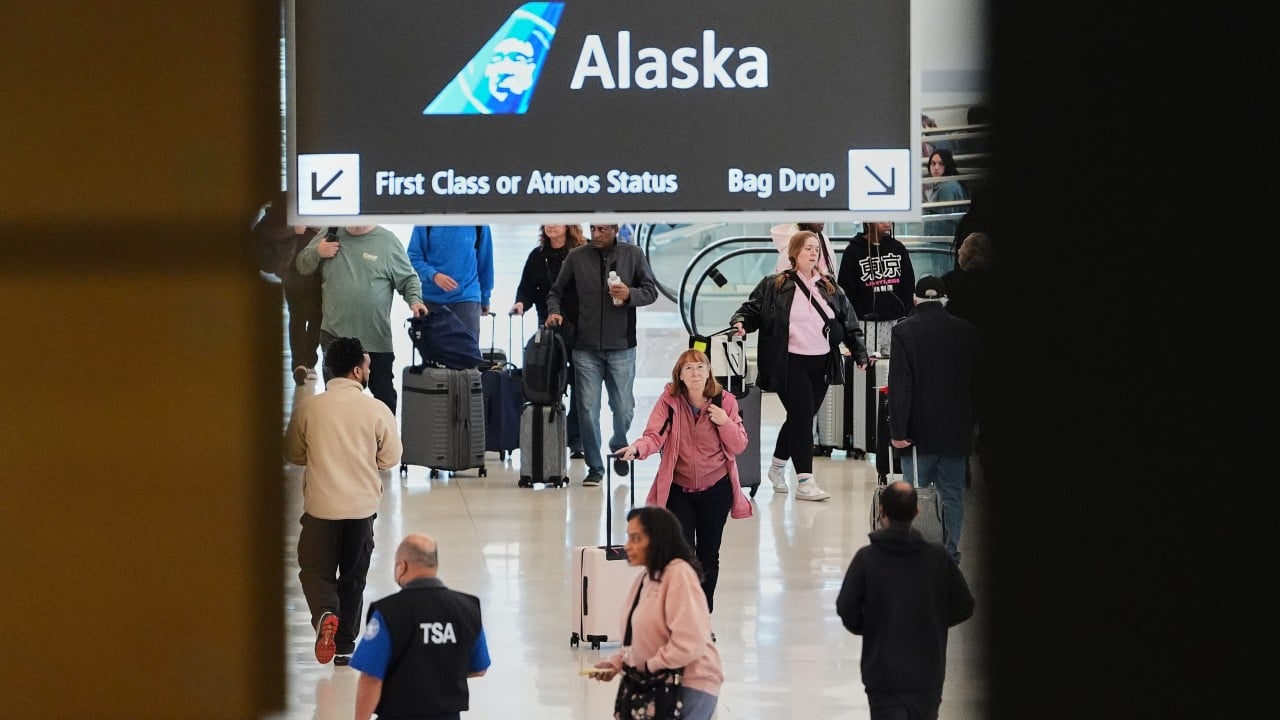
Everyone is losing their minds over a viral video from Seattle-Tacoma International Airport. Passengers deplaning on a narrow jet bridge watched federal agents intercept and detain individuals right at the cabin door. The internet immediately did what it always does. Outrage erupted. Commentators called the scene "horrific." Civil liberties groups decried the optics. Frequent flyers demanded to know how federal enforcement could invade the sterile bubble of commercial aviation.
Stop clutching your pearls. The outrage is aimed at the entirely wrong target.
If you spend enough time analyzing aviation security protocols and federal jurisdiction, you realize the outrage over jet bridge arrests is a textbook display of public ignorance. People treat airports like luxury shopping malls with wings. They are not. An international airport is a hardened federal border zone where constitutional expectations of privacy and domestic policing rules bend sharply under federal statute.
The lazy consensus says federal agents caused unnecessary panic by conducting arrests in a confined passenger corridor. The reality is much colder. A jet bridge is the single safest, most controlled tactical choke point in an entire airport terminal. If you actually care about passenger safety, you should want federal arrests happening right there—not in the baggage claim, not at the TSA checkpoint, and certainly not in the terminal concourse.
The Myth of the Neutral Airport Corridor
Most travelers operate under a dangerous illusion. They buy a ticket, clear TSA, grab a six-dollar coffee, and assume they are in a standard municipal space governed by local city police.
They are dead wrong.
Under federal law, specifically 8 U.S.C. § 1357 and 19 C.F.R. § 162.6, U.S. Customs and Border Protection (CBP) and U.S. Immigration and Customs Enforcement (ICE) hold sweeping statutory authority at ports of entry and within the functional equivalent of the border. Even on domestic legs—which frequently carry international transit passengers or individuals flagged on federal watchlists—federal agencies retain primary jurisdiction over aviation security and immigration enforcement.
When I worked alongside aviation security directors in the years following the creation of the Department of Homeland Security, the biggest friction point was always local municipal politics colliding with federal mandates. Port authorities, like the Port of Seattle, manage the real estate. They care about passenger satisfaction scores, retail revenue, and keeping the local city council happy. Federal agents care about statutory enforcement and threat containment.
Those two missions are fundamentally incompatible.
When reporters frame an ICE arrest at Sea-Tac as an "intrusion" into a public space, they are projecting municipal norms onto a federal facility. You do not have a right to an uninterrupted walk to baggage claim if federal databases flag a passenger on your manifest for an active administrative warrant, a criminal removal order, or a customs violation. The airline already handed your Advance Passenger Information System (APIS) data to DHS before the wheels even left the tarmac. By the time the aircraft reaches the gate, the interception is already choreographed.
Why the Jet Bridge Is a Tactical Masterclass
Let’s dismantle the emotional argument about "rattling passengers." Yes, seeing armed federal officers in tactical vests inside a cramped aluminum tube is jarring. Nobody likes their Tuesday morning commute interrupted by handcuffs.
Now ask yourself the alternative. Where else should they do it?
Imagine a scenario where federal agents wait until a target exits the secure sterile area into the main terminal or baggage claim at Sea-Tac.
- Uncontrolled Sightlines and Exits: Baggage claim at Sea-Tac is an open-air chaos zone with immediate access to parking garages, light rail stations, and curb-side rideshares. A suspect who bolts in baggage claim triggers a terminal-wide foot chase.
- Weaponized Environment: Inside the terminal concourse, suspects have access to glass bottles, heavy luggage, metal stanchions, and crowds of unscreened individuals.
- Crossfire Hazards: If an arrest turns violent in a crowded atrium, stray gunfire or physical altercations endanger hundreds of bystanders—including children and elderly travelers—who have nowhere to hide.
- The TSA Bottleneck: Attempting an arrest near a security checkpoint creates a massive crowd crush, potentially forcing a terminal evacuation that strands ten thousand travelers and costs airlines millions in missed connections.
Compare that nightmare to the jet bridge.
On a jet bridge, the target has just stepped off an aircraft where every single person and bag was screened by TSA or foreign equivalents. Nobody has a firearm. Nobody has a knife. There are only two exits: back onto the plane (blocked by crew) or forward into the terminal (blocked by agents). There are no side corridors, no escalators, and no crowds to use as human shields.
From a pure tactical standpoint, the jet bridge reduces the risk of collateral injury to near zero. It isolates the target in a sterile tube, neutralizes flight risk, and keeps the incident contained within a ten-foot radius. The passengers behind the target might be delayed by four minutes and feel uncomfortable watching the state exercise its monopoly on force. That discomfort is the price of containment.
What People Get Wrong About Airport Arrests
Whenever a video like the Sea-Tac incident goes viral, the same flawed questions dominate search engines and social media feeds. Let’s clear the air with brutal honesty.
Can ICE legally arrest passengers on domestic flights?
Yes. Jurisdiction does not evaporate because a flight originated in Denver instead of Frankfurt. Under the Immigration and Nationality Act, ICE officers have statutory authority to arrest without a warrant any individual they have reason to believe is in the United States in violation of immigration law and is likely to escape before a warrant can be obtained. Furthermore, TSA’s Secure Flight program cross-references every domestic passenger manifest against federal watchlists, including the FBI's National Crime Information Center (NCIC) and DHS databases. If your name hits a federal warrant, the badge waiting at the gate doesn't care where your flight took off.
Does the Port of Seattle have the power to ban ICE from the airport?
No. Local "sanctuary" policies—like those championed by King County and the City of Seattle—bind local police and county jails, not federal agencies. Local officials routinely posture for cameras, claiming they will "investigate" or "review protocols" when federal agents operate on port property. It is pure political theater. Under the Supremacy Clause of the U.S. Constitution, a municipal port authority cannot bar federal law enforcement from executing federal statutory duties inside an international port of entry. They can complain about notice; they cannot revoke jurisdiction.
Why didn't agents board the plane to make the arrest quietly?
Because boarding a commercial airliner is a logistical and legal minefield. Once inside the cabin, federal agents enter the direct operational domain of the pilot-in-command under Federal Aviation Regulations (14 CFR § 91.3). Extracting a resistant individual down a 17-inch airplane aisle over seated passengers is a recipe for broken bones, damaged cabin equipment, and lawsuits against the carrier. Waiting at the threshold of the jet bridge keeps the airline out of the physical takedown while maintaining total tactical control.
The Real Threat Nobody Is Talking About
While journalists and activists obsess over the optics of federal agents on a jet bridge, they are completely ignoring the actual systemic failure exposed by these incidents.
Why are individuals with active removal orders, prior deportations, or federal warrants clearing airport security in the first place?
The dirty secret of modern aviation security is that TSA does not check immigration status, nor does it run deep criminal background checks at the podium. TSA’s Credential Authentication Technology (CAT) verifies one thing: that your ID is real and matches the name on a valid boarding pass, and that you aren't on the No-Fly or Selectee lists.
Until recently, DHS allowed individuals without standard compliant identification to fly using alternative identity verification processes—including presenting CBP paperwork issued at the southern border. Think about the absurdity of that workflow. One branch of the Department of Homeland Security issues release documents to individuals entering the country without inspection, TSA accepts those documents to let them board commercial airliners, and then ICE—another branch of the exact same department—has to stage tactical interceptions on jet bridges at Sea-Tac to pick them up.
That isn't a civil rights crisis. That is bureaucratic incoherence.
The Downside of Aggressive Jet Bridge Enforcement
Let’s be intellectually honest. Even though the jet bridge is tactically superior to the terminal concourse, heavy-handed execution carries real operational costs.
When federal agencies deploy visibly armed teams into narrow passenger corridors without clear communication to flight crews, they trigger secondary chaos. Panicked passengers don't know if they are witnessing a routine warrant arrest or an active hijacking. People film vertically, scream, and occasionally try to intervene—turning a standard administrative detention into a volatile crowd-control problem.
Moreover, frequent public spectacles erode trust between airlines and federal authorities. Flight attendants are already stretched thin dealing with unruly passengers. Turning the boarding door into a weekly theater of federal enforcement forces cabin crew to act as crowd-control buffers they were never trained or paid to be. If DHS wants to maintain operational dominance at airports, it needs to coordinate quietly with gate agents and flight crews to hold non-target passengers on the aircraft for sixty seconds while the extraction occurs. Making an audience out of a hundred tired travelers is sloppy tradecraft.
How to Navigate Airport Enforcement Like a Pro
If you are a traveler, stop expecting airports to function like polite society. They are high-surveillance federal chokepoints. If you find yourself standing five feet behind a federal arrest on a jet bridge, drop the amateur journalism routine and follow basic survival mechanics:
- Step back into the cabin threshold. Do not crowd the agents. Federal officers in a narrow corridor have zero peripheral vision and will treat anyone stepping into their workspace as a potential accomplice.
- Keep your hands visible and out of your pockets. Tactical teams scanning a deplaning crowd are looking at hands, not faces. Reaching into a carry-on for your phone to record a TikTok is the fastest way to get a muzzle pointed at your chest.
- Ignore the social media noise. Airlines, port authorities, and politicians will issue carefully worded statements expressing "concern" to appease local voters. Nothing will change. Federal jurisdiction at ports of entry is absolute, and jet bridge interceptions are standard operating procedure across every major hub from Miami to Seattle.
The next time a video of an airport arrest hits your feed, look past the outrage. You aren't watching a breakdown of the system. You are watching the system work exactly as federal law designed it to—stripped of the polite fiction that your boarding pass buys you immunity from the state.