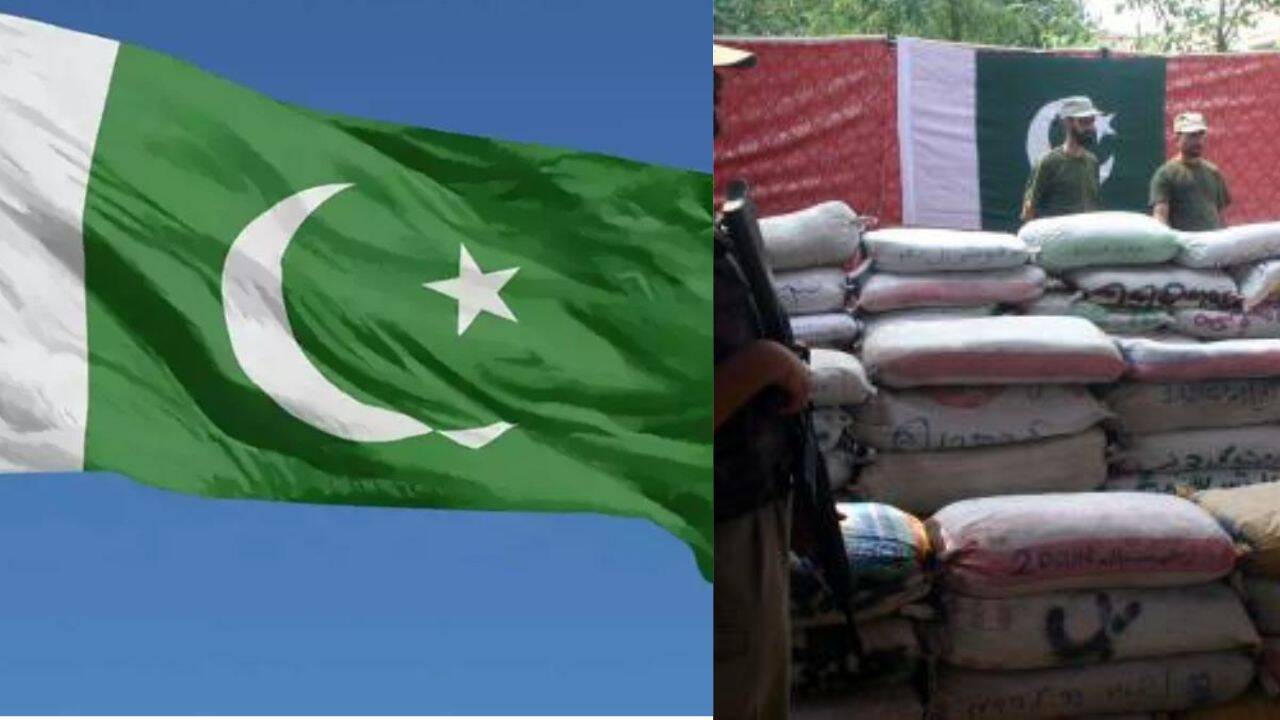
Reopening a disrupted border crossing between Pakistan and Iran does not instantaneously restore energy supply equilibrium; it merely restarts a fragile logistical queueing system constrained by customs clearance throughput, security screening protocols, and informal payment networks. When an armed attack forces the closure of a primary transit node—such as the Taftan-Mirjaveh corridor or the Gabd-Rimdan crossing—the immediate consequence is a physical inventory freeze on the Iranian side and a rapid depletion of buffer stocks across Pakistani distribution hubs in Balochistan and Sindh. The anticipated relief in Liquefied Petroleum Gas (LPG) prices relies entirely on how quickly clearing agents can process the accumulated backlog of specialized cryogenic and pressurized tankers before domestic distributors exploit the scarcity window to lock in higher retail margins.
Standard news coverage treats border closures and reopenings as binary switches—off means shortage, on means relief. Supply chain operations prove the opposite. A multi-day kinetic disruption creates a classic Bullwhip Effect across regional energy markets, where minor upstream physical delays amplify into severe downstream price volatility. Understanding the actual trajectory of Pakistan-Iran trade requires deconstructing the physical infrastructure of the crossings, the regulatory friction of bilateral commerce, and the structural vulnerabilities of Pakistan’s domestic LPG deficit. For a more detailed analysis into similar topics, we suggest: this related article.
The Anatomy of a Border Chokepoint
Bilateral trade between Pakistan and Iran operates under extreme infrastructure asymmetry. Unlike high-volume commercial borders equipped with automated manifest systems, multi-lane weighbridges, and unified customs software, the 909-kilometer Balochistan-Sistan boundary relies on a handful of concentrated nodes. When security incidents occur, the entire bilateral freight volume funnels through limited physical gates.
Primary Transit Nodes and Functional Roles
- Taftan-Mirjaveh: The historical anchor of bilateral commerce and rail-road connectivity. It handles heavy bulk commodities, construction materials, and general merchandise, alongside significant passenger transit. Its throughput is dictated by manual inspection bays and single-track rail limitations.
- Gabd-Rimdan: Located along the southern coastal belt near Gwadar, this node serves as a critical pressure valve for southwestern Balochistan and Karachi-bound freight. Its proximity to port infrastructure makes it vital for rapid commodity transfers, though road connectivity inland remains vulnerable to weather and security interruptions.
- Mand-Pishin: A localized crossing heavily utilized for regional sustenance trade, agricultural produce, and small-scale energy transfers serving the Makran division.
When an attack targets security posts or transit convoys near any of these gates, authorities impose an immediate force majeure shutdown. The operational protocol prioritizes perimeter defense over commercial clearance. Drivers are ordered to withdraw to staging yards miles from the zero-point, breaking the continuous flow of vehicles required to maintain steady inventory replenishment in Pakistani terminals. For further background on this topic, detailed reporting is available on Forbes.
Deconstructing the LPG Supply Transmission Mechanism
Liquefied Petroleum Gas is not a standard dry-bulk commodity that can be offloaded onto flatbed trucks and warehoused indefinitely in open yards. It is a pressurized hydrocarbon mixture—primarily propane and butane—requiring specialized bowser tankers engineered to maintain internal pressures between 7 and 15 bar depending on ambient temperatures. This physical constraint dictates the entire recovery timeline following a border reopening.
The Four Stages of Post-Closure Normalization
- Security Sweep and Infrastructure Verification: Before a single commercial axle crosses the zero-point, paramilitary forces (such as Pakistan’s Frontier Corps) and Iranian border guards must clear access roads of improvised explosive devices, verify communication links, and re-establish joint coordination protocols. This phase consumes hours or days after the official announcement of a reopening.
- Customs and Quarantine Queueing: Stranded tankers sit in unorganized queues stretching kilometers back from the terminal. Upon reopening, customs officials must manually verify certificates of origin, weight manifests, and safety compliance documents. Because banking channels between the two nations remain severed by international sanctions, customs valuation and duty collection rely on complex barter reconciliation or cash-equivalent settlement mechanisms, adding administrative drag per vehicle.
- Transit and Decanting Bottlenecks: Once cleared into Pakistan, LPG bowsers travel along single-carriageway highways (such as the N-40 or N-10) toward storage and bottling plants in Quetta, Hub, and Karachi. A simultaneous surge of delayed tankers arriving at bottling plants creates a secondary bottleneck at the decanting bays, where pressurized gas transfers from mobile bowsers into static storage spheres.
- Wholesale Re-pricing and Retail Transmission: Only after bottling plants replenish their static spheres and distribute filled domestic cylinders (typically 11.8 kg for households and 45.4 kg for commercial users) to regional distributors does retail price pressure subside.
The lag between the physical lifting of a border barrier and an observable drop in consumer cylinder prices routinely spans 7 to 14 days, assuming zero subsequent security interruptions.
The Structural Drivers of Pakistan’s Reliance on Iranian LPG
To understand why a localized border incident triggers immediate energy anxiety in Pakistan, one must examine the country's structural natural gas deficit. Pakistan’s indigenous natural gas reserves—historically anchored by fields like Sui—have entered irreversible terminal decline. Domestic production falls short of winter and peak industrial demand by billions of cubic feet per day.
Because piped natural gas (Sui Northern and Sui Southern networks) faces severe load-shedding and moratoriums on new domestic connections, millions of Pakistani households and commercial enterprises rely on LPG as their primary cooking and heating fuel. Domestic refineries and gas processing plants produce roughly half of Pakistan’s annual LPG requirement. The remaining deficit must be imported.
Cost-Competitiveness of Overland Iranian Supply
Pakistan accesses imported LPG through two distinct channels: maritime shipments arriving at Port Qasim (Karachi) and overland tanker imports from Iran.
- Maritime Imports: Subject to international Saudi Aramco Contract Prices (CP), ocean freight rates, marine insurance premiums, port demurrage charges, and letter-of-credit (LC) financing constraints caused by Pakistan’s foreign exchange reserve pressures.
- Overland Iranian Imports: Bypass maritime freight and international banking hurdles. Iran possesses massive associated petroleum gas reserves from its South Pars field and faces severe export restrictions due to U.S. sanctions. It prices overland LPG at a steep discount relative to international benchmarks to clear domestic surpluses and secure regional currency or barter goods.
This price differential makes Iranian LPG the marginal price-setter in Pakistan’s domestic market. When the border closes, Pakistani importers cannot instantaneously pivot to maritime cargoes; booking an international LPG vessel requires weeks of lead time and scarce dollar liquidity. The sudden removal of overland supply forces domestic distributors to ration existing stocks, triggering immediate spot-price spikes across wholesale markets.
Information Asymmetry and Speculative Hoarding
A recurring flaw in superficial market commentary is attributing price spikes solely to physical scarcity. In fragmented commodity markets like Pakistan’s LPG sector, information asymmetry acts as a powerful price accelerator.
When news of a border attack breaks, market participants lack real-time visibility into the exact duration of the closure or the volume of tankers trapped in the queue. Wholesale distributors and cylinder filling plant operators react to this uncertainty by pricing in worst-case disruption scenarios. They immediately mark up existing inventory to reflect anticipated replacement costs rather than historical acquisition costs.
The Asymmetric Price Elasticity Trap
Energy retail markets exhibit pronounced asymmetric price transmission—colloquially known as "rockets and feathers" pricing:
- Upward Velocity (Rockets): Within hours of a border closure announcement, wholesale LPG prices per metric ton surge, and retailers pass those increases directly to consumers.
- Downward Stickiness (Feathers): When the border reopens, wholesale prices decline sluggishly. Distributors claim they are still liquidating high-cost inventory acquired during the disruption window, delaying retail relief until competitive pressure from newly arrived tankers forces price cuts.
Unregulated middlemen frequently compound this friction by temporarily withholding cylinder releases during the initial days of a reopening, betting that sporadic security flare-ups might re-close the border before the backlog clears.
Geopolitical and Sanctions Constraints on Trade Stabilization
Any operational assessment of Pakistan-Iran trade must account for the macro-regulatory ceiling imposed by international sanctions. Because Iranian financial institutions are disconnected from the SWIFT messaging network and subject to secondary U.S. sanctions, formal bilateral trade cannot utilize standard letters of credit, trade finance insurance, or commercial bank wire transfers.
Workarounds and Their Inherent Fragilities
To sustain commodity flows without triggering secondary sanctions against Pakistani banks, the two countries rely on non-standard settlement architectures:
- Barter Trade Mechanisms: Pakistan exchanges agricultural staples (rice, kinnow, mangoes, meat) and textiles for Iranian hydrocarbons, petrochemicals, and electricity. Barter requires exact value matching between export and import consignments, creating severe administrative delays when perishable agricultural goods must align with pressurized gas deliveries.
- Authorized Border Markets: Jointly designated sustenance markets allow localized traders to conduct cash-based transactions in Pakistani Rupees (PKR) or Iranian Rials (IRR) within strict volume caps. While effective for basic foodstuffs, these zones lack the technical safety infrastructure required to handle bulk hazardous materials like LPG at scale.
- Informal Currency Clearing (Hawala/Saraf): Large-scale informal traders settle balances through third-party currency exchanges in regional hubs like Dubai or Kabul. This introduces significant exchange-rate volatility and compliance risk, inflating the hidden transaction cost embedded in every ton of imported gas.
Because these mechanisms lack institutional redundancy, any localized kinetic event—an insurgent attack on a convoy, a border guard skirmish, or a customs dispute—can halt trade entirely, as no automated insurance or trade-finance buffer exists to absorb the shock.
Strategic Risk Mitigation for Energy Operators and Policy Planners
Relying on ad-hoc border reopenings to stabilize domestic energy prices is an untenable operating model. Both private sector distributors and state regulatory bodies (such as Pakistan’s Oil and Gas Regulatory Authority, OGRA) must treat cross-border overland supply as inherently intermittent rather than continuous.
Operational Adjustments Required Across the Value Chain
- Decouple Buffer Storage from Transit Nodes: Pakistani LPG marketing companies must expand static pressurized storage capacity inland—specifically in Balochistan hubs like Quetta and Khuzdar—rather than keeping inventory concentrated in mobile bowsers. Maintaining a mandatory 15-day strategic buffer stock insulated from border delays eliminates the immediate panic-buying cycle when a crossing shuts down.
- Digitize Manifest Pre-Clearance: Customs authorities at Taftan and Gabd-Rimdan must implement asynchronous electronic data interchange (EDI) protocols. Allowing Iranian exporters and Pakistani clearing agents to submit manifests, safety certificates, and barter reconciliation records digitally before tankers reach the physical gate reduces zero-point dwell time from days to hours once security sweeps conclude.
- Enforce Transparent Inventory Auditing: Regulatory bodies cannot control retail prices through arbitrary price caps, which merely drive supply into black markets. Instead, regulators must mandate real-time digital reporting of decanting volumes at bottling plants. Publishing daily incoming tanker counts removes the information asymmetry that allows wholesalers to fabricate scarcity narratives after a border reopens.
- Establish Multi-Node Routing Protocols: Logistics operators must standardize safety certifications across both Taftan-Mirjaveh and Gabd-Rimdan so pressurized fleets can dynamically reroute within 24 hours of a localized security incident, preventing single-node closures from paralyzing the entire bilateral corridor.
Until Pakistan expands inland pressurized storage capacity and automates customs pre-clearance at its western crossings, every border reopening will remain a temporary reprieve rather than a structural solution to regional LPG volatility.