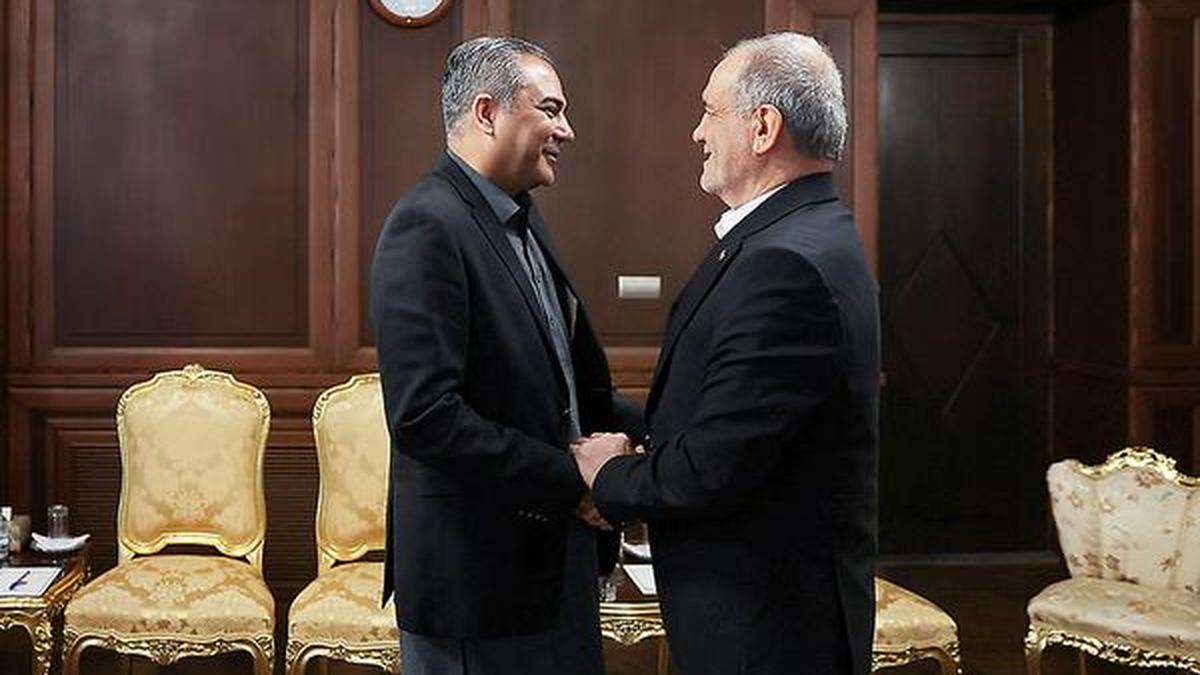
Shuttle diplomacy is rarely this frantic. When Pakistani Interior Minister Mohsin Naqvi landed in Tehran on May 20, 2026, it wasn't a routine diplomatic check-in. It was his second trip to the Iranian capital in less than seven days.
Let that sink in. A nation’s security chief doesn't burn jet fuel flying back and forth to an active conflict zone just to exchange pleasantries. He is carrying something heavy.
Sources within the Pakistani government confirm that Naqvi brought a fresh, sweetened proposal from the United States straight to Iranian President Masoud Pezeshkian and the top brass of the Islamic Revolutionary Guard Corps (IRGC). The stakes are incredibly high. The regional war that kicked off with devastating air strikes on February 28 has crippled shipping, upended energy markets, and cost the lives of high-profile leaders, including Iran's former Supreme Leader Ali Khamenei.
Right now, Pakistan is trying to thread an impossible needle. They are acting as the primary buffer between a volatile Trump administration in Washington and a deeply aggrieved, heavily armed regime in Tehran.
The Secret U.S. Carrot on the Table
Don't believe the public posturing. While U.S. President Donald Trump warned that Washington could resume military strikes within days if negotiations collapse, behind closed doors, the White House is offering real concessions.
According to sources close to the mediation tracking the Islamabad-Tehran channel, this new American proposal contains significantly better incentives than previous iterations. The core of the deal hinges on two major friction points.
- Frozen Assets: Washington is offering a phased release of billions of dollars in frozen Iranian oil revenues currently locked up in foreign bank accounts due to international sanctions.
- Sanction Relief: The proposal outlines a framework to roll back specific punitive economic measures if Iran commits to a long-term stabilization plan and reopens the strategic trade routes.
It explains why U.S. Vice President JD Vance unexpectedly told a White House press briefing that negotiators are "in a pretty good spot here." The Trump administration wants a win, but they want it on their terms. They are using a classic good-cop, bad-cop routine—threatening total destruction one day, and dangling billions of dollars the next.
Inside Naqvi's High-Stakes Tehran Itinerary
You have to look at who Naqvi is meeting to understand how critical these hours are. He didn't just sit down with his direct counterpart, Iranian Interior Minister Eskandar Momeni. He went straight to the people who hold the actual veto power over peace.
Naqvi held urgent consultations with General Ahmad Vahidi, the commander-in-chief of the Revolutionary Guards. This is where the real decisions are made. The IRGC has publicly warned that any renewed Western attacks will trigger a total regional conflagration, explicitly stating they haven't even used their full military arsenal yet. Iranian Foreign Minister Abbas Araghchi echoed this sentiment, promising "many more surprises" if the April 8 ceasefire completely falls apart.
By putting Naqvi in the room with the IRGC leadership, Pakistan is trying to convince the hardliners that the American offer is genuine. Naqvi isn't operating in a vacuum either. He is exceptionally close to Pakistan's Army Chief, Field Marshal Asim Munir. When Naqvi speaks, the Iranian leadership knows he is backing the message with the full weight of the Pakistani military establishment.
Why Islamabad is Desperate for Peace
People often wonder why Pakistan is inserting itself into a dangerous feud between a superpower and a nuclear-threshold state. The answer is simple survival.
When the conflict shut down the Strait of Hormuz, it choked off a massive chunk of global energy shipments. United Nations Secretary-General Antonio Guterres recently highlighted the fallout during a press conference in Tokyo, warning that the continuous maritime blockade is driving a massive global cost-of-living crisis.
For a struggling economy like Pakistan's, skyrocketing fuel, fertilizer, and raw material costs are catastrophic. Islamabad simply cannot afford a protracted war on its western border. If Iran destabilizes further, the economic shockwaves will tear through Pakistan's fragile financial system.
What Happens Next
The immediate priority for the Pakistani delegation is extending the fragile, indefinite truce Trump agreed to maintain while ships are blocked from Iranian ports.
The next forty-eight hours will reveal whether Naqvi’s shuttle diplomacy worked. If Iran accepts the baseline of the fresh American proposal, look for an immediate announcement of a formal second round of direct peace talks, most likely hosted on neutral ground in Islamabad. If the IRGC rejects the terms, the temporary truce will dissolve, and the region will face an even more destructive round of kinetic strikes.