Seventy-four militants dead in a single sweep. When Pakistan's military announces numbers that high from targeted hideout raids, the headlines usually stop at the body count. That's a mistake.
If you've followed counterinsurgency operations in South Asia over the last decade, you know press releases from Inter-Services Public Relations (ISPR) tell only half the story. The other half sits in the geography, the timing, and the quiet escalation happening along Pakistan's western borderlands. Let's look past the raw statistics and unpack what these intelligence-based operations really mean on the ground.
Why Pakistan's Army Is Pushing Aggressive Hideout Raids Right Now
Security forces don't just stumble onto 74 armed fighters by accident. Operations of this scale require weeks of signals intelligence, human informants on the ground, and tight coordination between paramilitary Frontier Corps units and regular army battalions.
For years, Islamabad relied heavily on large-scale clearance campaigns—think Operation Zarb-e-Azb back in 2014 or Operation Radd-ul-Fasaad in 2017. Those massive deployments moved entire divisions into the former Federally Administered Tribal Areas (FATA), displacing hundreds of thousands of civilians while bulldozing militant infrastructure. They worked temporarily. Then the fighters slipped across the Durand Line into Afghanistan, waited out the storm, and filtered back in smaller cells.
Today, the playbook looks completely different. Instead of telegraphed offensives that give insurgents days to pack up and vanish into mountain caves, the military leans on rapid, intelligence-driven raids.
Here's why that shift happened:
- Economic reality. Pakistan simply can't afford another multi-billion-dollar conventional deployment while managing tight International Monetary Fund (IMF) fiscal targets.
- Urban blending. Militant groups like Tehrik-i-Taliban Pakistan (TTP) and Baloch separatist outfits stopped holding fixed territory. They hide in compounds near civilian towns, forcing troops to use smaller, surgical strike teams.
- Political pressure. Rising casualties among police and soldiers in Khyber Pakhtunkhwa and Balochistan have left army leadership desperate to show decisive deterrence.
Honestly, high casualty figures in official statements serve a dual purpose. They disrupt active militant networks on the ground, sure, but they also reassure an anxious domestic public—and foreign investors like Beijing—that the state still holds the upper hand.
The Geography Behind the Operations
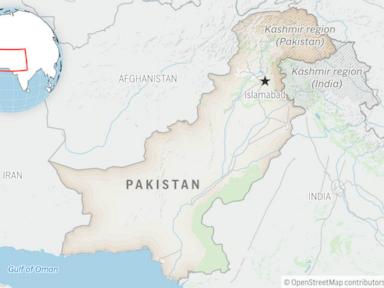
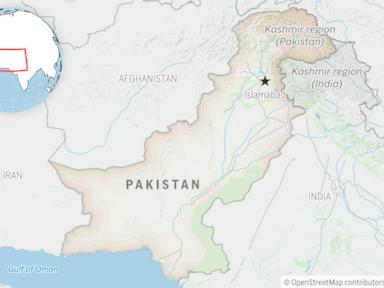
You can't understand these raids without looking at a map. Almost every major anti-militant sweep in Pakistan clusters around two distinct theaters, and they operate under totally different dynamics.
Khyber Pakhtunkhwa and the Afghan Border
In districts like North Waziristan, South Waziristan, Bannu, and Dera Ismail Khan, the primary adversary is the TTP—often referred to as the Pakistani Taliban. Despite sharing ideological roots with the Afghan Taliban in Kabul, the TTP focuses its attacks squarely on Pakistani state institutions, police checkpoints, and military convoys.
The terrain here is brutal. Jagged ridges, narrow valleys, and porous mountain passes make border fencing only partially effective. Even after Pakistan spent hundreds of millions of dollars erecting a dual-layer fence along the 2,600-kilometer border with Afghanistan, small raiding parties still find blind spots during bad weather or night movements. When the army hits hideouts in these districts, they're usually targeting staging areas used to launch cross-border ambushes.
Balochistan's Vast Insurgency Belt
Down south in Balochistan, the picture changes completely. This province covers roughly 44% of Pakistan's landmass, yet holds a tiny fraction of its population. That vast emptiness gives separatist groups—most notably the Balochistan Liberation Army (BLA) and the Balochistan Liberation Front (BLF)—plenty of room to disappear after striking highways, railway tracks, or security outposts.
Unlike the religiously motivated TTP, Baloch insurgents fight an ethno-nationalist battle over provincial autonomy and natural resources. When security forces conduct sweeping raids across districts like Kech, Panjgur, or Kalat, they're often reacting to attacks on infrastructure tied to the China-Pakistan Economic Corridor (CPEC), particularly around the deep-water port of Gwadar.
What Official Casualty Numbers Don't Show
Let's be candid about military reporting in conflict zones. Independent journalists rarely get immediate access to active counterterrorism sites in Waziristan or interior Balochistan. That means the public relies almost entirely on statements issued by the military's media wing.
Does that mean the raids didn't happen? Not at all. Local hospital records, funeral announcements in tribal districts, and militant propaganda channels frequently confirm heavy losses following major army operations.
Still, experienced conflict analysts watch for three blind spots in official summaries:
- Identification gaps. Calling 74 dead fighters "militants" lumps together hardened commanders, low-level teenage recruits, and local facilitators who simply provided food or shelter. Killing foot soldiers hurts a group's short-term capacity, while eliminating bomb-makers and mid-tier commanders actually stalls operations for months.
- Collateral friction. Night raids in densely populated compounds inevitably create tension with local communities. Even when troops avoid civilian deaths, property damage and mass detentions during cordon-and-search sweeps can breed resentment that militant recruiters eagerly exploit.
- Displacement ripple effects. Every time the army clears a cluster of hideouts in one valley, surviving fighters scatter into neighboring districts. You see a temporary drop in attacks in Tirah or Miranshah, followed three weeks later by a spike in roadside bombings near Tank or Lakki Marwat.
How Militant Tactics Have Evolved
If you think these groups are still fighting like it's 2009, you're missing the real danger. Both the TTP and Baloch separatists have upgraded their gear and methods dramatically over the past few years.
Walk through the seized weapons caches displayed by the Pakistani military after recent raids, and you'll spot a troubling pattern. Alongside standard Kalashnikov rifles and rocket-propelled grenades, troops regularly recover American-made M4 carbines, thermal imaging scopes, and night-vision goggles left behind during the 2021 withdrawal from Afghanistan.
Night-vision gear changes everything in mountain warfare. Historically, Pakistan's army owned the night, using superior optics and air support to hunt insurgents after dark. Now, militant sniper teams use thermal scopes to pick off soldiers guarding remote hilltop pickets at 2:00 AM.
They've also gotten smarter about communications. Instead of chattering over unencrypted radios that military signals units can easily triangulate, cell leaders use encrypted messaging apps over local cellular networks—or rely on physical couriers moving on motorbikes through rural markets. Catching 74 militants in coordinated raids suggests Pakistani intelligence managed to crack one of those communication loops or flip a high-level insider.
The Diplomatic Tightrope With Kabul and Beijing
Every bullet fired in these raids carries diplomatic weight far beyond the immediate valley.
First, there's the simmering friction with Kabul. Islamabad has repeatedly accused the Taliban administration in Afghanistan of allowing TTP leaders to operate safe havens on Afghan soil. Kabul denies it, insisting Pakistan's security crisis is an internal failure. When Pakistan's army launches massive raids inside its own borders—and occasionally conducts retaliatory strikes across the frontier—it sends a blunt message to Kabul that Islamabad won't sit idle while its troops get ambushed.
Second, Beijing is watching every single security update. Thousands of Chinese engineers and technicians work on power plants, dams, and road networks across Pakistan. Following deadly attacks on Chinese nationals in recent years, Beijing has pushed Islamabad relentlessly to sanitize militant sanctuaries. High-profile raids resulting in dozens of militant deaths demonstrate to Chinese leadership that Pakistan's military establishment is actively hunting down threats to CPEC projects.
How to Follow This Story Without Falling for Spin
When breaking news drops about major military sweeps in Pakistan, headlines tend to reduce complex counterinsurgency campaigns into simple scorecards. If you want a clearer read on whether security is actually improving, track these indicators over the next few weeks instead of just staring at a single day's casualty count:
- Watch the geographic spread of subsequent attacks. If militant bombings suddenly pop up in quieter districts bordering Khyber Pakhtunkhwa or Punjab, the raids forced surviving cells to relocate rather than wiping them out.
- Look for named commanders in follow-up reports. Anonymous casualty totals fade quickly; the confirmed death of a named operational chief or suicide-bomber trainer usually triggers a noticeable pause in regional attacks.
- Monitor border crossing closures. Sudden shutdowns at Torkham or Chaman right after major raids often signal heightened cross-border intelligence alerts or diplomatic pushback between Islamabad and Kabul.
- Check independent local reporting from Peshawar and Quetta. Regional journalists and human rights monitors often surface details about tribal jirgas, curfews, and local reactions that national wire summaries leave out.
Killing 74 militants deals an undeniable tactical blow to insurgent networks operating in Pakistan's border regions, buying breathing room for overstretched security forces. Yet history in this rugged frontier proves that tactical wins only hold when paired with political stability, tight border management, and genuine local trust.