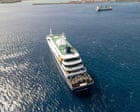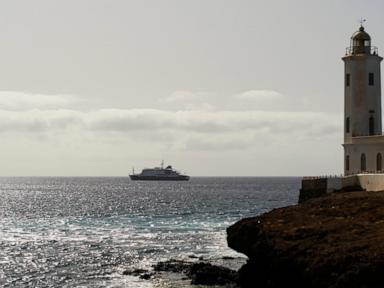
The headlines are predictably hysterical. "Death at Sea." "Floating Quarantine." "Hantavirus Outbreak Kills Three." If you believe the mainstream travel desk, a luxury cruise liner has transformed into a biohazard coffin. They want you to picture a viral cloud wafting through the HVAC system, jumping from passenger to passenger while the captain pleads for a port.
It is a gripping narrative. It is also biological nonsense.
If three people died on a ship and the culprit is actually Hantavirus, the "outbreak" isn't happening on the ship. It already happened on land. By the time the news cycle catches up, the danger has evaporated, and the remaining 3,000 passengers are more likely to die from a buffet-induced choking hazard than a rodent-borne pathogen. We are witnessing a masterclass in risk-assessment failure.
The Myth of the Floating Petrie Dish
The "lazy consensus" among travel journalists is that cruise ships are uniquely vulnerable to every passing germ. They cite the Norovirus outbreaks of the mid-2000s as if they are a permanent blueprint for maritime disaster. But Hantavirus is not Norovirus. It isn't even COVID-19.
Hantavirus Pulmonary Syndrome (HPS) is a "dead-end" infection in humans. Outside of one extremely specific, genetically distinct strain in South America (the Andes virus), there is zero evidence of human-to-human transmission. You cannot catch Hantavirus by sitting next to an infected person at the blackjack table. You cannot catch it by using the same elevator button.
To contract Hantavirus, you must inhale aerosolized droppings, urine, or saliva from infected rodents—specifically deer mice, cotton rats, or rice rats. Unless the cruise line has replaced its nightly turndown service with a program that involves vigorously sweeping up dusty mouse nests in the cabins, the ship is the safest place you could possibly be.
The deaths we are seeing are a "lagging indicator." Given the incubation period of one to eight weeks, these victims likely inhaled the pathogen while hiking, cleaning a garage, or staying in a rustic cabin long before they ever stepped onto the gangway. The ship isn't the source; it's just the place where the timer ran out.
Why the Authorities are Posturing
When a ship sits off the coast "waiting for help," you aren't seeing a medical necessity. You are seeing a political theater performance designed to satisfy a public that demands "action" regardless of its efficacy.
I have spent years navigating the intersection of maritime law and public health policy. I’ve seen port authorities deny docking rights to ships because of a single case of the flu, simply because the local mayor didn't want the optics of a "plague ship" on the evening news. This isn't about biology; it’s about liability.
By keeping the ship at anchor, the CDC and local health officials achieve two things:
- They look proactive to a panicked public.
- They shift the financial burden of care and housing entirely onto the cruise line.
The irony? Keeping 3,000 stressed, potentially immune-compromised people trapped in a confined space while they worry about a "mystery virus" does more damage to their health than the virus itself. Stress-induced cortisol spikes suppress the immune system. If there were a communicable disease on board—like a standard seasonal flu—the quarantine actually guarantees it spreads faster.
Dismantling the Panic
Let’s look at the "People Also Ask" fodder that’s currently clogging up search engines.
"Is it safe to go on a cruise during a Hantavirus outbreak?"
The question itself is flawed. There is no such thing as a Hantavirus "outbreak" in the way we understand it. It’s an environmental exposure event. If you didn't spend your pre-vacation time huffing dust in a rodent-infested shed in the Southwest United States or rural South America, you are fine. The ship’s steel hull and rigorous pest control protocols make it an inhospitable environment for the specific rodents that carry HPS.
"Can the virus spread through the ship’s air conditioning?"
No. Hantavirus is fragile. It loses its potency rapidly when exposed to UV light or standard disinfectants. The complex filtration systems in modern vessels are more than enough to scrub the air, even if—against all odds—a mouse managed to die in the ductwork.
"Should I cancel my cruise?"
If you’re looking for an excuse to get your deposit back, sure. But if you're doing it for "safety," you're making a data-free decision. You face a higher statistical risk of dying in the car ride to the terminal than you do of contracting a rare rodent virus on a billion-dollar vessel.
The Real Threat Nobody is Talking About
While the media obsessively tracks the ship’s GPS coordinates, they are ignoring the genuine failure: the lack of rapid diagnostic infrastructure in port cities.
The "wait" isn't for a cure; it’s for a lab result. Most local hospitals aren't equipped to run sophisticated Hantavirus panels on a moment's notice. They have to ship samples to state labs or the CDC. This delay creates a vacuum of information. And in a vacuum, fear grows.
The real scandal isn't that three people died. People die every day on cruise ships; the average age of a cruiser is high, and the sheer volume of passengers makes it a statistical certainty. The scandal is that our global health response is so rigid that we treat a non-communicable environmental disease with the same sledgehammer approach we use for a respiratory pandemic.
We are treating the victims like biological pariahs and the survivors like prisoners. This sets a dangerous precedent. If we shut down commerce every time a passenger brings a pre-existing, non-transferable infection on board, the travel industry is effectively dead.
How to Actually Protect Yourself
Forget the masks. Forget the hand sanitizer—at least in the context of Hantavirus. If you want to be an "insider" who actually understands risk, change your behavior where it matters.
- Audit your pre-travel environment: If you are cleaning out a storage unit or a summer home before your trip, wear a respirator. Wet down surfaces with bleach to prevent dust from kicking up. This is where the battle is won or lost.
- Stop reading the "Live Updates": These feeds are designed to keep your adrenaline high. They rarely provide context on the transmission vectors or the low statistical probability of infection.
- Demand better from the cruise lines: Don't ask them if the ship is "safe." Ask them why their onboard medical facilities don't have better diagnostic partnerships to clear these scares in hours instead of days.
The "outbreak" is a ghost story told by people who don't understand the difference between a zoonotic spillover and a contagious epidemic. It's a distraction from the fact that we have become a society that prefers the safety of a cage to the slight discomfort of a nuanced truth.
The three people who died are a tragedy. The way we are reacting to their deaths is a farce.
Stop looking at the ship. Look at the mouse in your own garage. That's the only thing that can actually hurt you.