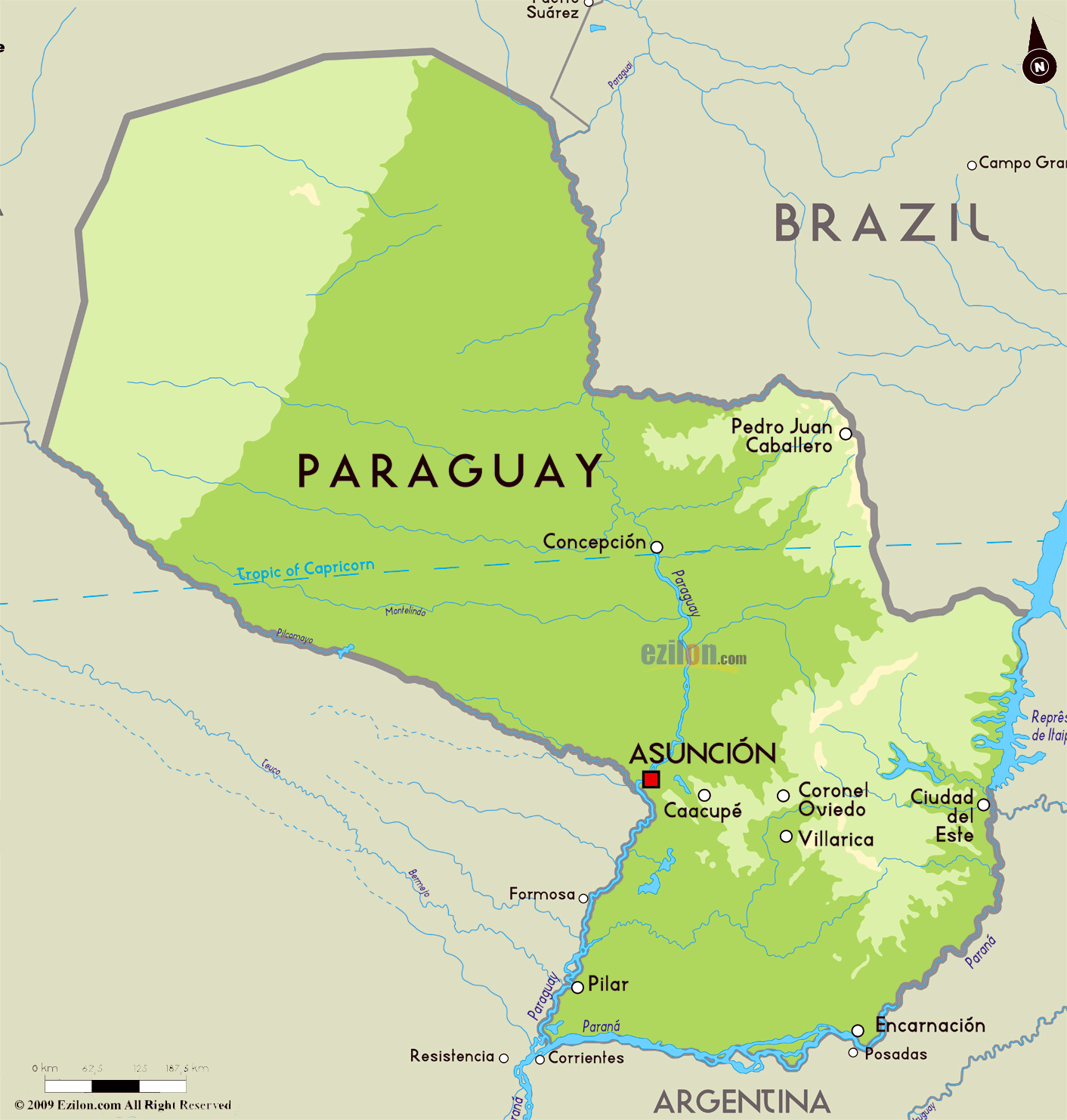
Paraguay’s political establishment shattered early this morning following the impeachment of President Santiago Peña and his immediate placement under house arrest over a catastrophic domestic bank collapse. Lawmakers in Asunción voted overwhelmingly in an emergency session to strip the president of his immunity, citing alleged regulatory negligence, suppressed central bank audits, and illicit liquidity transfers tied to the sudden insolvency of one of the nation's largest commercial lenders. The dramatic fall from grace marks the most severe constitutional crisis in Paraguay since the 2012 ouster of Fernando Lugo, sending shockwaves through South American financial markets and triggering an immediate freeze on sovereign debt negotiations.
For months, whispers of severe capital shortfalls circulated among financial insiders in Asunción, yet official channels maintained an illusion of absolute macroeconomic stability. That facade crumbled entirely when emergency auditors uncovered a massive, multi-million-dollar liquidity hole concealed behind complex off-balance-sheet maneuvers. Rather than enforcing mandatory statutory interventions, executive branch officials allegedly pressured banking superintendents to delay public disclosures while favored institutional depositors quietly withdrew their capital. Discover more on a related topic: this related article.
The Anatomy of a Systemic Failure
Banking collapses rarely happen overnight. They are almost always the result of slow-motion regulatory capture, unchecked credit expansion, and political hubris colliding with basic accounting reality. In Paraguay, a country long praised by international credit agencies for fiscal discipline and low public debt, the financial sector operated under an informal gentleman's agreement where political loyalty frequently superseded strict compliance.
To understand how an institution of systemic importance implodes without triggering standard circuit breakers, one must examine the mechanics of regulatory forbearance. When a commercial bank faces acute non-performing loan ratios, standard central bank doctrine demands immediate recapitalization or receivership. Instead, leaked internal communications reviewed by congressional investigators suggest a coordinated effort to artificially prop up the lender's balance sheet using state pension reserves and short-term public treasury deposits. Further journalism by The Washington Post delves into similar perspectives on this issue.
Consider a hypothetical example of how this mechanism operates in emerging markets. Imagine a mid-sized commercial lender heavily exposed to volatile agricultural commodities—specifically soy and cattle exports—suffering consecutive seasons of drought. Rather than writing down billions in defaulted loans, which would wipe out shareholder equity, bank executives issue new credit lines to the exact same insolvent borrowers so they can pay the interest on their original debt. On paper, the loans look healthy. In reality, the bank is bleeding cash, surviving purely on incoming retail deposits and quiet liquidity injections from state-owned enterprises until a sudden drop in depositor confidence exposes the empty vault.
That exact dynamic appears to have played out in Asunción, amplified by the executive branch's deep historical ties to the domestic banking sector. Before assuming the presidency in August 2023, Peña served as Paraguay's Minister of Finance and held a prominent executive board seat at Banco Basa, a major financial institution linked to former President Horacio Cartes. Critics had warned for years that the revolving door between Paraguay's private banking elite and the Palacio de los López created an untenable conflict of interest. Today, those warnings read like a blueprint of the disaster.
How the Impeachment Unfolded
The speed of the political collapse caught even veteran regional analysts off guard. In Paraguay, the Colorado Party has maintained a near-unbroken grip on power for over seven decades, a political machine famed for surviving internal fractures and external scandals alike. Yet the sheer scale of the retail depositor panic forced rank-and-file lawmakers to abandon the president to save their own political skins.
The legislative coup de grâce occurred over a tense, fourteen-hour marathon session in the National Congress:
- The Auditor Leak: Late Tuesday evening, whistleblowers within the Superintendency of Banks leaked unredacted stress-test reports to opposition deputies, revealing that the targeted bank had been technically insolvent for nearly three quarters.
- The Treasury Paper Trail: Subsequent forensic reviews showed that emergency liquidity decrees signed by the executive office bypassed standard legislative oversight, funneling public funds into the failing institution just forty-eight hours before withdrawals were frozen.
- The Chamber of Deputies Vote: Facing furious crowds gathering outside the legislative palace in downtown Asunción, dozens of ruling-party legislators broke ranks, voting 64 to 12 to approve formal articles of impeachment.
- The Senate Conviction: Acting immediately as a tribunal, the Senate ratified the removal from office before dawn, paving the way for an investigative judge to issue a preventive house arrest order citing flight risk and potential tampering with financial evidence.
Peña’s legal team has vehemently denied all allegations of personal enrichment or criminal obstruction, characterizing the impeachment as a hasty, politically motivated ambush designed to scapegoat the administration for broader global interest-rate pressures. Defense attorneys argue that every liquidity measure authorized by the presidency was strictly intended to prevent a contagion effect across the broader Paraguayan banking system—a standard crisis-management playbook employed by central banks worldwide.
The Cartes Factor and Colorado Party Fractures
You cannot analyze power in Paraguay without accounting for Horacio Cartes. As the president of the Colorado Party and Peña’s longtime political patron, Cartes has been the undisputed kingmaker of Paraguayan politics for over a decade, despite facing severe financial sanctions from the United States Treasury Department over alleged corruption and ties to transnational criminal networks.
For the first two years of his term, Peña walked a tightrope. He presented a polished, technocratic, English-speaking face to foreign investors in New York and Washington, while shielding Cartes' domestic business empire from regulatory scrutiny at home. That dual-track strategy worked only as long as the macroeconomy hummed along smoothly.
The bank collapse shattered that equilibrium. When ordinary Paraguayan families discovered their savings trapped behind locked ATM screens and frozen mobile banking apps, the abstract geopolitical friction between Washington and Asunción suddenly became intensely personal. Rival factions within the Colorado Party—particularly those aligned with former President Mario Abdo Benítez—seized the opportunity to dismantle the Cartes-Peña alliance from within. By voting to impeach Peña, dissident Colorado lawmakers effectively amputated the executive branch to prevent a broader popular uprising that could threaten the party's structural dominance ahead of future municipal and general elections.
Contagion Risks Across the Southern Cone
Financial panic rarely respects national borders, especially within Mercosur. Paraguay’s economy is deeply intertwined with its massive neighbors, Brazil and Argentina, functioning as a vital logistics hub, agricultural exporter, and hydroelectric powerhouse via the Itaipú and Yacyretá dams.
Within hours of the house arrest announcement, the Paraguayan guaraní came under intense speculative pressure, forcing the Central Bank of Paraguay to burn through tens of millions of dollars in foreign exchange reserves to stabilize the currency. Sovereign bond yields spiked sharply on secondary markets as institutional fund managers rapidly repriced political risk across the Southern Cone.
Three immediate economic vulnerabilities now confront the interim administration:
- Credit Downgrade Threat: Paraguay only recently celebrated achieving coveted investment-grade status from major ratings agencies. A sudden constitutional upheaval paired with opaque central bank interventions puts that rating directly on the chopping block, which would immediately raise borrowing costs for critical infrastructure projects.
- Agricultural Supply Chain Freeze: Planting and harvesting cycles in Paraguay depend entirely on short-term local bank credit. With domestic lenders hoarding cash to survive potential bank runs, soy and beef producers face an acute working-capital crunch that could slash export revenues over the next two quarters.
- Cross-Border Capital Flight: High-net-worth depositors and regional conglomerates that traditionally used Paraguayan banks as a low-tax, stable haven for US dollar deposits are already initiating wire transfers to institutions in Uruguay and Panama.
What Institutional Investors Missed
Wall Street loves a clean narrative. For years, emerging-market analysts pointed to Paraguay’s flat 10 percent tax regime, young demographic profile, and low debt-to-GDP ratio as proof that the landlocked nation was the ultimate South American turnaround story. They read the glossy investor decks, applauded the technocratic pedigree of the president, and completely ignored the structural rot beneath the surface.
They missed the warning signs because they looked exclusively at macroeconomic aggregates while ignoring institutional governance. Low public debt means very little when state pension funds can be quietly mobilized to plug private balance-sheet holes without parliamentary approval. A strong currency is a mirage if banking supervision answers to political bosses rather than independent statutory boards.
History offers plenty of brutal reminders of this exact blind spot. From the 1995 Paraguayan banking crisis—which wiped out nearly half the country's financial system and erased billions in household wealth—to the 2002 regional contagion triggered by Argentina's default, South American financial history demonstrates that regulatory opacity always extracts a devastating price. Reformers spent two decades building post-crisis safeguards in Asunción, yet concentrated political power steadily hollowed those institutions out from the inside.
The Road Through the Courts and Markets
Under Paraguay’s 1992 Constitution, executive authority now transfers immediately to the Vice President, who inherits a fractured legislature, an infuriated public, and a financial sector teetering on the edge of systemic illiquidity. Securing an emergency credit facility from the International Monetary Fund or the Inter-American Development Bank will likely be the interim government's first urgent phone call, though multilateral lenders will undoubtedly demand sweeping central bank governance reforms and full forensic transparency as non-negotiable preconditions.
Meanwhile, Santiago Peña remains confined to his residence in Asunción under heavy police guard, awaiting formal indictment proceedings from the Public Ministry. Prosecutors have already frozen domestic assets tied to several former senior treasury officials and bank directors, signaling that the criminal investigation will expand rapidly over the coming weeks.
For global investors and regional policymakers alike, the lesson out of Asunción is unforgiving: technocratic polish can mask institutional decay for years, right up until the exact moment the vault doors fail to open.


