Power in Asunción rarely changes hands without a tremor running through the foundations of the Colorado Party. The sudden swearing-in of a new president following the placement of Santiago Peña under house arrest marks the most dramatic institutional rupture in Paraguay since the fall of Fernando Lugo in 2012, and before that, the bloody "Marzo Paraguayo" crisis of 1999.
To understand how a sitting head of state—an economist by training who took office in August 2023 promising stability, foreign investment, and technocratic modernization—found himself confined to his residence while a successor took the oath of office, you have to look past the immediate legal charges. In Paraguay, judicial decrees and constitutional transitions are almost never isolated legal events. They are the final, visible tremors of subterranean battles fought inside the Asociación Nacional Republicana (ANR), better known as the Colorado Party, which has ruled the country almost uninterruptedly for nearly eight decades.
The Anatomy of a Paraguayan Rupture
The surface narrative is straightforward enough. Judicial authorities issued an order placing Santiago Peña under house arrest, triggering constitutional succession protocols that elevated a new leader to the Palacio de los López. Yet anyone who has covered Southern Cone politics for more than a single election cycle knows that the Paraguayan judiciary does not move against a sitting president without a massive political realignment already having occurred behind closed doors.
Paraguay operates under a hyper-presidential system paired with a deeply entrenched patronage network. Under the 1992 Constitution, drafted in the shadow of Alfredo Stroessner’s 35-year dictatorship, the mechanism for removing or sidelining a president—whether through impeachment (juicio político) or judicial incapacitation—is notoriously swift when congressional majorities align. Unlike neighboring countries where removing an executive can drag on for months of street protests and prolonged parliamentary hearings, Asunción’s political class favors rapid, surgical transitions.
When a president loses the backing of the junta de gobierno (the ruling board of the Colorado Party) and the legislative bloc in the bicameral Congress, his political survival is measured in hours, not weeks. House arrest serves a dual purpose in such crises. Practically, it neutralizes the executive’s ability to rally loyalists within the armed forces, the national police, or the state-owned enterprises that form the backbone of Paraguayan state capitalism. Symbolically, it signals to the country's powerful agricultural exporters, banking sector, and foreign bondholders that the transition is being handled within the bounds of judicial procedure rather than through the barracks.
The Shadow of Honor Colorado and Internal Factionalism
You cannot analyze Santiago Peña’s presidency—or its abrupt termination—without examining his political patron, Horacio Cartes. Peña, a former central bank board member and finance minister who previously belonged to the opposition Authentic Radical Liberal Party (PLRA), was handpicked by Cartes to lead the Honor Colorado faction to victory in 2023.
That arrangement always carried an inherent structural flaw. Peña possessed the technocratic credentials favored by Wall Street and multilateral lenders, yet he lacked an independent territorial base within the Colorado Party’s grassroots machinery. His authority was borrowed. For three years, the administration functioned through a delicate division of labor: Peña managed macroeconomic policy, international diplomacy, and investor relations, while Cartes and his allies controlled the party apparatus, congressional whips, and key judicial appointments.
History shows that dual-power arrangements in presidential systems eventually fracture. As international pressure—particularly from the United States Treasury Department and regional partners—intensified over corruption allegations, illicit financial flows, and institutional capture, the friction between maintaining international legitimacy and protecting domestic political patrons became unsustainable. Whether Peña attempted to assert independence from his faction or became a liability when judicial investigations closed in on the administration’s inner circle, the result in Asunción follows an old script. When the patron-client pact breaks, the technocrat is always the first to be sacrificed.
Why International Markets and Washington Are Watching
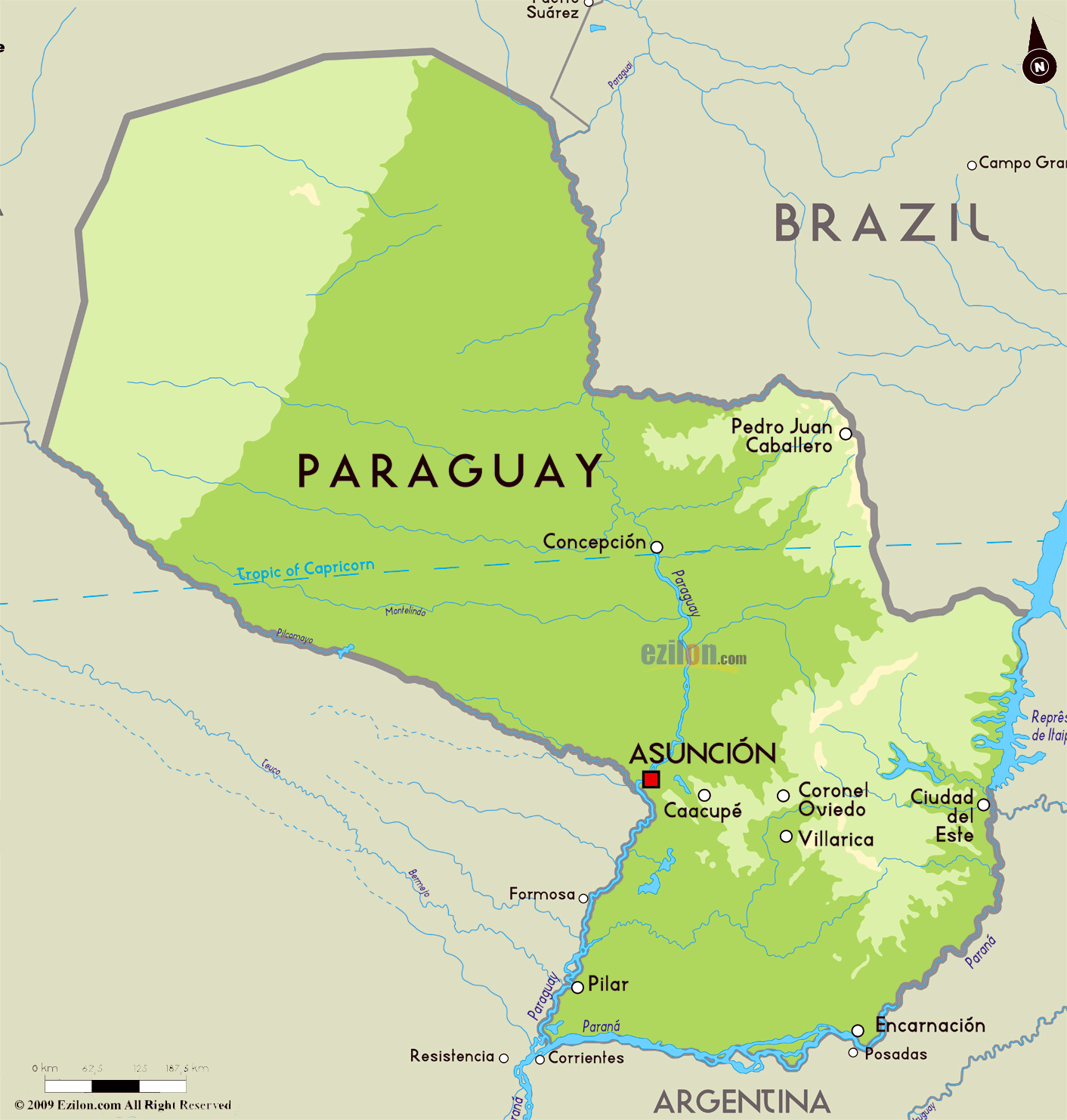
Paraguay is frequently overlooked in global headlines, dismissed as a landlocked nation of roughly seven million people sandwiched between Brazil and Argentina. That dismissal is a mistake. Geopolitically and economically, the country punches far above its demographic weight.
First, there is energy. Paraguay is one of the world’s largest net exporters of clean electricity, derived from the massive Itaipú and Yacyretá hydroelectric dams shared with Brazil and Argentina, respectively. Renegotiations over the Itaipú treaty annexes—specifically regarding tariffs and Paraguay’s right to sell excess energy directly on the open Brazilian market—represent billions of dollars in sovereign revenue. Any sudden change in the presidency immediately puts those negotiations in flux, forcing Brasília to reassess who actually holds the pen in Asunción.
Second, there is Taiwan. Paraguay remains the only country in South America—and the largest nation globally—that maintains formal diplomatic relations with Taipei rather than Beijing. For decades, Paraguayan presidents have leveraged this diplomatic recognition for aid and trade concessions, even as the country’s powerful soybean and beef exporters quietly lobbed for access to mainland Chinese markets. Every time a political crisis erupts in Asunción, diplomats in Washington, Taipei, and Beijing scramble to determine whether the incoming administration will uphold the status quo or pivot toward the People's Republic of China.
Third, there is the country’s hard-won macroeconomic reputation. Over the past two decades, Paraguay built a reputation as an island of fiscal discipline in a volatile region. Low taxes, low public debt, a stable currency (the guaraní), and steady GDP growth driven by agribusiness and maquila manufacturing earned the country investment-grade recognition from major credit rating agencies. A president under house arrest threatens to unravel that narrative overnight. Foreign direct investment relies on predictable rule of law, not the perception that the courts can be weaponized to settle factional scores.
The Judicial Weaponization Debate
Legal scholars and opposition figures in Asunción are deeply divided over the legitimacy of placing an active head of state under house arrest. Under Paraguayan constitutional law, a sitting president enjoys immunity from ordinary criminal prosecution unless stripped of that immunity by a two-thirds vote in Congress or removed via impeachment.
Critics of the move argue that bypassing or compressing these constitutional safeguards sets a dangerous precedent, turning judges and prosecutors—many of whom owe their careers to the Consejo de la Magistratura and political deals in the Senate—into kingmakers. If a judge can confine a president to his residence before a formal conviction or a completed impeachment trial, the separation of powers ceases to exist in any meaningful sense.
Supporters of the judicial intervention offer a counter-argument rooted in the reality of Paraguayan impunity. For years, civil society organizations and international watchdogs have criticized the Paraguayan justice system for acting as a shield for the politically connected while punishing petty offenders. From this perspective, holding the highest officeholder in the land to account through immediate precautionary measures—such as house arrest to prevent flight or obstruction of justice—demonstrates that no citizen, regardless of title, stands above the criminal code.
Both arguments contain a kernel of truth, which is precisely what makes the crisis so destabilizing. In a country where institutional trust is already fragile, the line between legitimate accountability and a "soft coup" (golpe blando) depends entirely on which faction controls the narrative.
Historical Echoes and the Street Factor
To gauge what happens next in Asunción, look not to the presidential palace, but to the plazas outside Congress and the highways connecting the agricultural interior to the capital. Paraguay’s democratic era since 1989 has been punctuated by moments when elite political maneuvers collided with street-level mobilization.
In March 1999, the assassination of Vice President Luis María Argaña triggered massive protests that forced President Raúl Cubas Grau to resign and flee into exile after snipers killed seven young demonstrators. In June 2012, Congress impeached and removed President Fernando Lugo in less than 48 hours over a deadly land clash in Curuguaty, prompting Mercosur and Unasur to temporarily suspend Paraguay from regional blocs. In March 2017, protesters set fire to part of the Congress building when lawmakers attempted to pass a secret constitutional amendment allowing presidential reelection.
The lesson from each of those episodes is consistent. Paraguay’s political elite can orchestrate a rapid change of leadership inside institutional walls, but they cannot always control the reaction once the public perceives that democratic norms are being bent for factional survival. The opposition—fragmented between the traditional PLRA, newer progressive movements, and populist outsider factions like Payo Cubas’s Cruzada Nacional—now faces a strategic dilemma. Does it validate the new presidency to preserve constitutional order, or does it take to the streets to demand fresh elections and an overhaul of the judicial council?
What the New Administration Inherits
The incoming president steps into the Palacio de los López with a narrowed mandate and an overflowing inbox of structural crises. Beyond stabilizing the currency and reassuring international bondholders that debt obligations will be met without interruption, the new administration must immediately confront the underlying rot that brought down its predecessor.
Organized crime and narcotics trafficking have increasingly penetrated Paraguayan state institutions over the last decade. Located along the Paraná and Paraguay river corridors, the country has become a major transshipment hub for cocaine moving from the Andes to European and African ports. High-profile assassinations—including the 2022 murder of anti-mafia prosecutor Marcelo Pecci—exposed how deeply criminal syndicates have infiltrated law enforcement, customs agencies, and political campaigns.
Putting Santiago Peña under house arrest may satisfy an immediate political or judicial imperative, but it does not dismantle the networks that fund campaigns, buy judges, and hollow out public institutions. Unless the new leadership moves swiftly to depoliticize the prosecutor’s office, enforce transparent campaign finance laws, and insulate the central bank and energy sector from partisan interference, this transfer of power will be remembered not as a triumph of the rule of law, but merely as another reshuffling of the deck in Asunción.


