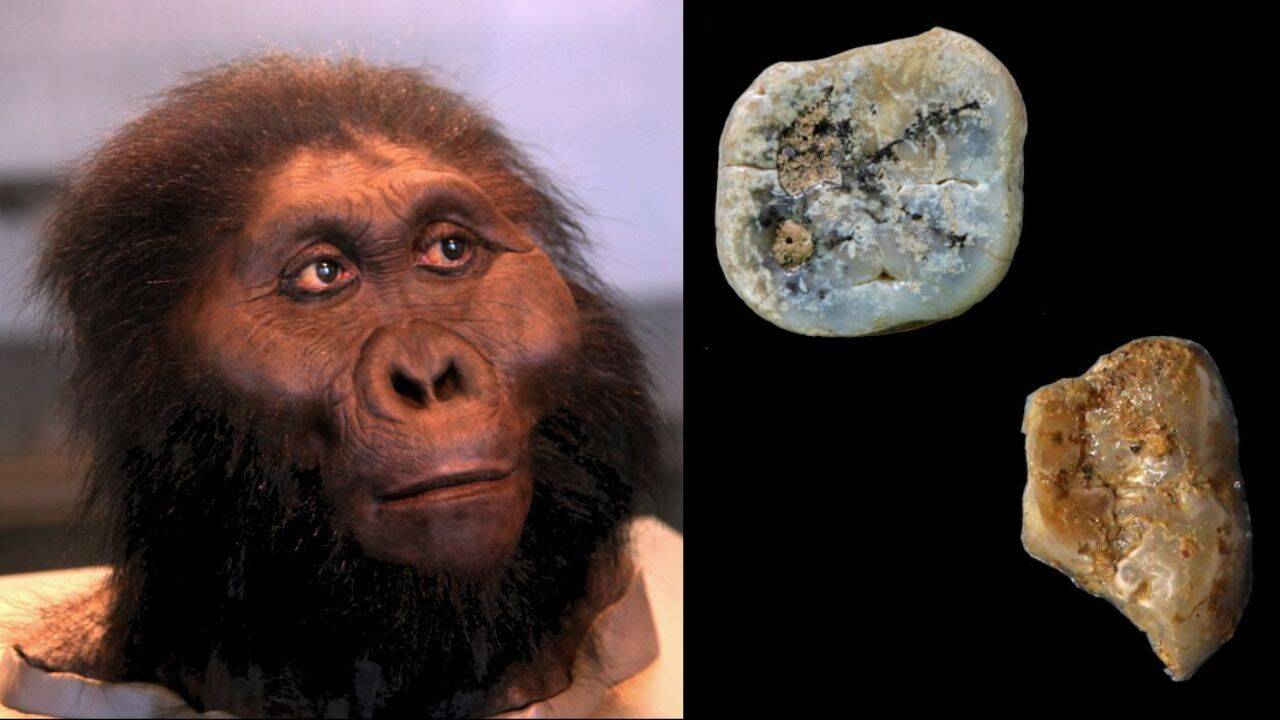
The long-held consensus that the genus Homo maintained an absolute monopoly on early lithic technology has collapsed under the weight of recent archaeological discoveries. Excavations at Nyayanga, Kenya, have recovered Oldowan stone tools dating to approximately 2.6 to 3.0 million years ago, directly associated with the fossilized remains of the robust hominin Paranthropus. This spatial and temporal convergence forces a fundamental reassessment of hominin cognitive capacities and manual mechanics. The traditional linear model of human evolution—which ties tool production exclusively to encephalization and the lineage that led directly to modern humans—fails to account for the ecological and anatomical realities of the Late Pliocene.
To determine whether Paranthropus was an active innovator or a passive bystander in the dawn of technology, we must deconstruct the archaeological record into three rigorous analytical pillars: the mechanics of the hand, the energetic demands of the diet, and the taphonomic limitations of the fossil record.
The Biomechanical Capacity for Lithic Production
Evaluating whether an extinct hominin could manufacture stone tools requires quantifying manual morphology. Tool production is not merely a function of intelligence; it is a strict mechanical optimization problem demanding specific anatomical leverage.
Paranthropus possessed a unique musculoskeletal configuration that differed significantly from both contemporary Australopithecus and early Homo. Analysis of the hand bones, particularly the first metacarpal and the phalanges, reveals a suite of traits optimized for high-force manipulation:
- Opposability Index: The ratio of thumb length to finger length in Paranthropus indicates the physical capability for a precision grip. This allowed the opposable thumb to press firmly against the pads of the index and middle fingers, a prerequisite for stabilizing a stone core.
- Muscular Insertion Sites: Robust attachment sites for the flexor pollicis longus—the muscle responsible for flexing the thumb—demonstrate the capacity to exert powerful force during the striking phase of stone knapping.
- Apical Tufts: The distal phalanges feature expanded, spatulate tips. This expanded surface area redistributed the intense mechanical stress generated when striking a quartz or chert cobble to flake off a sharp edge.
These anatomical metrics indicate that Paranthropus possessed the physical architecture required for lithic mastery. The presence of these traits proves that manual dexterity evolved independently of massive brain expansion, neutralizing the argument that toolmaking required a Homo-sized brain.
The Dietary Energetics Driving Innovation
Technology does not emerge in a vacuum; it is driven by metabolic necessity. The classic view categorized Paranthropus as a specialized vegetarian, utilizing massive molars and powerful jaw muscles to process tough, fibrous plants. This specialized masticatory apparatus was thought to preclude the need for butchery tools.
Isotopic analysis and microwear studies of Paranthropus enamel dismantle this simplistic view. The dietary strategy of Paranthropus was highly variable, shifting dynamically based on seasonal resource availability.
[Pliocene Environmental Change] -> [C4 Grassland Expansion]
                                      |
       +------------------------------+------------------------------+
       |                                                             |
       v                                                             v
[Homo Strategy: Dietary Realignment]                         [Paranthropus Strategy: Dual-Track Processing]
 - Megafauna Scavenging                                       - Megapreprocessing via Lithics (Nyayanga Hippopotamus)
 - Absolute Dependency on Flakes                              - Mechanical Mastication (Fallback Foods)
The environmental shift of the Late Pliocene caused a widespread reduction in closed woodlands and an expansion of open C4 grasslands. This transition created severe nutritional bottlenecks. While Homo met this challenge by increasingly relying on faunal meat consumption via scavenging, Paranthropus deployed a dual-track strategy.
The discovery of butchered hippopotamus bones alongside Paranthropus remains at Nyayanga establishes a clear correlation between stone tools and megafauna processing. Paranthropus lacked the sharp, shearing carnassial teeth of specialized predators. Processing a thick-hided carcass required an external processing mechanism. Oldowan flakes functioned as an exosomatic digestive apparatus, allowing Paranthropus to slice skin, sever tendons, and scrape meat from bone.
Furthermore, stone tools served an equally vital role in processing underground storage organs (USOs) like tubers and roots. Processing these grit-encrusted, fibrous resources with stone tools reduced the energetic cost of digestion, maximizing the caloric return per hour of foraging. Tool use was not an evolutionary luxury; it was a critical strategy to mitigate nutritional stress during seasonal scarcities.
Taphonomic Constraints and Correlation Hazards
Establishing a definitive causal link between an extinct species and an artifact assemblage requires navigating severe taphonomic limitations. In paleoanthropology, spatial association does not automatically equal behavioral authorship.
The co-occurrence of Paranthropus teeth and Oldowan tools at Nyayanga presents two distinct scenarios. The first scenario is that Paranthropus manufactured and utilized the tools to process the associated animal remains. The second scenario posits that early Homo created the tools, used them, and Paranthropus individuals were simply victims of predation or natural depositional forces at the same site.
To resolve this ambiguity, analysts must evaluate the site using a probability matrix based on skeletal abundance and taphonomic integrity:
- Skeletal Representation: At Nyayanga, Paranthropus elements are the only hominin remains recovered in direct contact with the tool-bearing horizons. No Homo fossils have been identified within the same stratigraphic unit.
- Artifact Transport Dynamics: The low-energy sedimentary context indicates that the tools and fossils were not washed in from disparate locations. They were deposited together in a stable floodplain environment, representing a snapshot of localized behavior.
- Hominin Diversity Metrics: The Late Pliocene landscape hosted multiple hominin taxa concurrently. This taxonomic overlapping means that even if Paranthropus made the Nyayanga tools, it does not rule out the possibility that early Homo or Australopithecus variants were independently inventing or copying the same technological solutions elsewhere.
The evidence highly favors Paranthropus involvement, but the inherent fragmentation of the fossil record prevents absolute certainty. The absence of Homo at the site provides strong circumstantial support, yet the possibility of an elusive, unpreserved Homo population remains a permanent analytical variable.
The Evolutionary Model Shift
Acknowledging Paranthropus as a potential toolmaker disrupts the foundational narrative of human evolution. For decades, the onset of lithic technology was inextricably linked to the encephalization trend that defines our genus. The data from Nyayanga suggests a different evolutionary model: hominin tool use is an ancestral trait or a parallel development triggered by shared ecological pressures, rather than a unique breakthrough of the Homo lineage.
Traditional Model:
[Encephalization (Homo)] ---> [Lithic Innovation] ---> [Dietary Expansion]

Emerging Model:
[Ecological Pressure] ---> [Manual Dexterity] ---> [Lithic Innovation (Multi-lineage)]
This structural shift requires a reassessment of cognitive evolution. Producing Oldowan tools demands a clear understanding of fracture mechanics, raw material selection, and sequential planning. The knapper must identify the proper striking platform, maintain a precise angle, and deliver the correct amount of force to detach a functional flake. If Paranthropus executed these tasks, the cognitive architecture required for complex tool manufacturing was fully developed prior to the massive brain expansion seen in later hominins.
Strategic Framework for Future Pliocene Research
To definitively resolve the multi-lineage tool hypothesis, Paleoanthropological research must move away from opportunistic fossil hunting and adopt a systematic, high-density analytical framework.
Field research teams must prioritize high-resolution microscopic wear analysis on all recovered Pliocene artifacts to identify specific use-wear signatures, distinguishing between wood working, bone defleshing, and tuber processing. This must be paired with widespread 3D geometric morphometric analysis of hominin hand fossils across all contemporary genera to map functional capabilities with higher statistical precision.
Finally, excavation strategies must focus on sites dating between 2.6 and 3.3 million years ago in sedimentary basins outside the main East African Rift Valley. This will verify if the technological behaviors seen at Nyayanga were a localized anomaly or a widespread adaptation across the African continent. Only by systematically testing the boundaries of manual anatomy against artifact distribution can we accurately map the true distribution of early technological mastery.