The grass at Fort Carlton does not remember the sound of the quills scratching against sheepskin. One hundred and fifty years have passed since the Cree, Assiniboine, and Saulteaux leaders sat down with representatives of the Crown under a sprawling prairie sky to commit their peoples to an uneasy future.
Back then, the bison herds were thinning to ghosts. Famine was no longer a distant threat; it was a shadow lengthening across the lodges. The chiefs who negotiated Treaty 6 were visionaries of survival. They did not sign away their world for a handful of silver or temporary annuities. They bargained for a covenant of shared stewardship, securing provisions for pestilence, agricultural tools, education, and a medicine chest to guard their descendants against the sicknesses blowing in with the settlers. Meanwhile, you can read related stories here: Why The Semitruck Child Neglect Case Shocks Us And What It Reveals About Broken Systems.
They wrote survival into law.
Step back into that August heat of 1876. Imagine the heavy air inside the makeshift council tents, thick with tobacco smoke and the weight of generational responsibility. The negotiators for the Crown wanted land to build a nation from sea to sea. The Indigenous leaders wanted assurance that their children would not starve when the old ways crumbled. It was an agreement born of immense desperation and profound hope, anchored by a sacred understanding that as long as the sun shines, the grass grows, and the rivers flow, the compact would hold. To understand the full picture, we recommend the recent report by Al Jazeera.
Except, it did not always hold.
Decades of broken promises, restrictive policies, and deliberate cultural erasure followed. The medicine chest became a symbol of administrative neglect. The spirit and intent of the treaty were buried under mountains of bureaucratic indifference.
Yet, something miraculous happened. The people outlived the policies. They kept their languages, their ceremonies, and their fierce sense of nationhood alive in the kitchen corners, the hidden valleys, and the round dance circles.
Now, the calendar turns to a milestone anniversary. The original parchment has returned to Fort Carlton for the first time in a century and a half, resting under glass like a fragile heirloom. Dignitaries, elders, drummers, and youth gather beneath the Saskatchewan sun to look upon those faded brown ink strokes.
Speeches are spoken. Apologies are offered. Ministers acknowledge that the Crown has often been an unreliable partner.
Words are easy. Reality is complex.
Consider what happens when the ceremonies end and the television cameras pack away. Modern tensions strain the old fabric. Political friction brews across the provincial borders, with modern leadership squabbling over referendums and ignored invitations while Indigenous nations look directly to federal accountabilities for justice. The map of central Alberta and Saskatchewan is crisscrossed with highways, pipelines, and barbed wire, far removed from the unfenced plains of 1876.
The anniversary is not merely a birthday party for a historical document. It is a mirror.
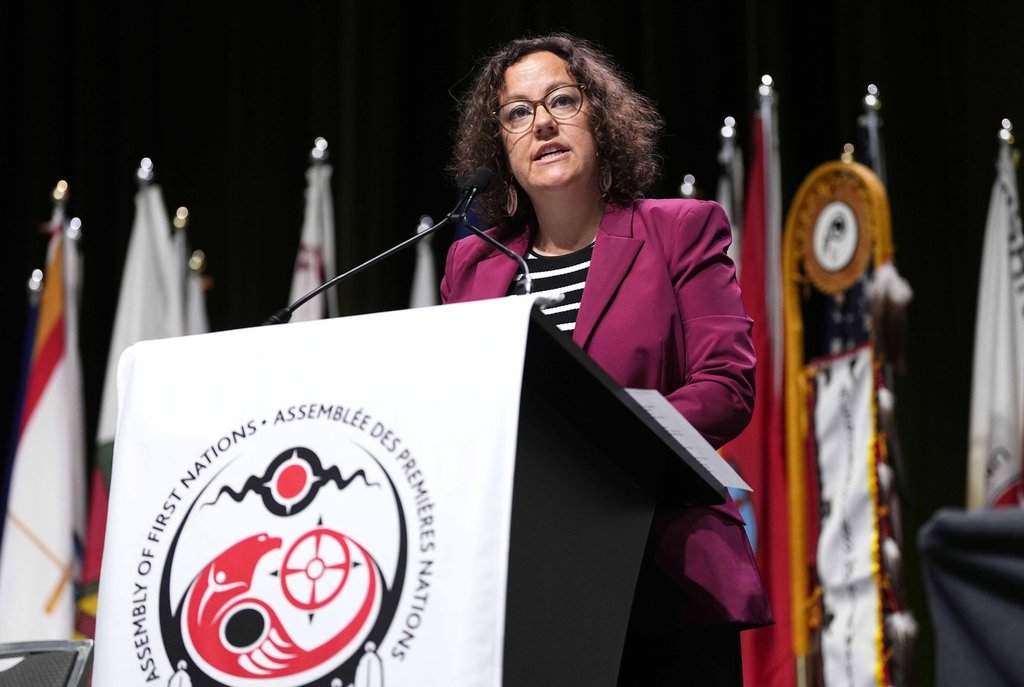
It forces a reckoning with the gap between what was promised and what was lived. When a grand chief stands up to call out political absence, it is a reminder that sovereignty was never surrendered; it was shared on specific terms. Those terms remain unfulfilled in their truest spirit.
Listen closely.
In the beat of the hand drum echoing across the North Saskatchewan River, past the bronze memorial sculptures and the newly planted healing gardens, the past is not resting quietly in a museum archive. It is demanding a better tomorrow.
We are all treaty people. That phrase is frequently spoken, yet rarely unpacked. It means that every person living on these lands shares the benefits of that historic bargain, and therefore shares the burden of its repair.
The parchment will fade further with time. The ink may blur. But the rivers continue to flow, carrying the unkept and keepable promises toward an unwritten horizon.
,webp/012/644/292/1280x720.5.jpg)