Words carry weight. When you stand in federal parliament, those words carry consequences that stretch far beyond the chamber walls.
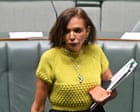
Federal minister Anne Aly recently stepped forward with a sobering revelation that shocked the country. In just one single week, she received 19 distinct death threats. This alarming surge did not happen in a vacuum. It followed a fiery parliamentary attack where a coalition member used violent, medieval imagery, declaring that Aly and the prime minister should be "shamed and stoned in the square".
Politicians expect rough and tumble debate. They expect fierce disagreements over policy, taxation, and economic management. But a clear line separates aggressive political posturing from incitement. When physical violence and brutal methods traditionally used to execute women overseas are invoked on the floor of parliament, the safety of public figures evaporates instantly.
The Tax Office Flashpoint That Sparked the Outrage
To understand how political discourse deteriorated so rapidly, you have to look at the underlying policy dispute. The Australian Taxation Office announced a controversial shift regarding credit card payments for tax bills, sparking intense blowback from small business owners and opposition MPs.
Opponents argued the move burdened struggling enterprises already dealing with rising operational costs. As Small Business Minister, Anne Aly found herself on the defensive line defending the government's broader economic stance.
During the parliamentary showdown preceding question time, Liberal National MP Angie Bell launched an attack over the tax decision. Bell utilized the phrasing about stoning, targeting Aly and the prime minister directly. The Speaker of the House swiftly forced a withdrawal of the remarks after government figures raised alarms over the explicit use of physically violent imagery. Bell later admitted the phrasing was a poor choice of words uttered in the heat of the moment and noted she immediately withdrew the comment.
An apology inside the chamber doesn't erase the digital echo chamber outside.
Why Words Matter More Than Ever Online
The moment violent metaphors leave a politician's mouth, they travel at lightspeed across social media platforms. Supporters and extremists alike consume these soundbites without context. For public figures from minority backgrounds or female politicians, the vitriol multiplies exponentially.
Anne Aly didn't just brush off the backlash as standard political noise. She called out the language as inherently racist and misogynistic. She pointed out a grim reality. Australia proudly stands against violence against women and condemns brutal regimes that employ stoning. Hearing those exact methods invoked metaphorically against a female cabinet minister crosses an unforgivable ethical boundary.
Security agencies have warned about this trend for years. Politically motivated hostility is rising. Lawmakers increasingly require heightened security protocols at their homes, electorate offices, and public events. When safety crumbles, qualified people—particularly women and diverse candidates—begin questioning whether public service is worth the personal risk.
The Broader Impact on Political Culture
Pointing fingers won't fix a broken system. The opposition argued that focusing on the rhetoric serves as a convenient distraction from small business pain. They contend that public frustration over economic pressures drives the anger, rather than a single speech in parliament.
There's a kernel of truth in public anger. Small businesses are hurting. Inflation and regulatory changes squeeze margins daily. But weaponizing medieval forms of execution against political opponents does nothing to balance a ledger or lower a tax bill. It only fuels an already volatile environment where online threats transform into real-world danger.
If toxic discourse becomes normalized, rational debate dies. Elected representatives should elevate the standard of discussion, not race to the bottom for a fleeting headline. Clean up the rhetoric before the damage becomes irreversible.